Mexican Fish Tacos: Regional Styles Compared
A fish taco lives or dies on one contrast: hot, just-cooked fish against cool, fresh toppings, eaten before that contrast fades. Get the fish right and serve it at once, and even a learner’s taco tastes alive.
I am Wasim Abbas Bhatti, the Fish’s Chef, and let me place myself honestly. Mexican cooking is not my home ground. I did not grow up with these kitchens, I have not trained in them, and I will not dress this page up as an insider’s account. What I am is a fish cook with more than twenty years at the stove who has learned these tacos the way home cooks learn them: by cooking them, comparing the styles, and watching what the fish needs. This guide compares the two roads I actually use — the battered, Baja-style road and the plainer grilled road — at method level, inside Fish Recipes from Around the World.
Table of Contents
This is not a measured recipe card or one kitchen’s true taco. It is a fish cook’s comparison: which fish to buy, how each style treats it, and the rules that decide whether your taco is crisp and steaming — or soft and over.
The Two Roads, Side by Side
When people say “fish tacos,” they are usually picturing one of two builds.
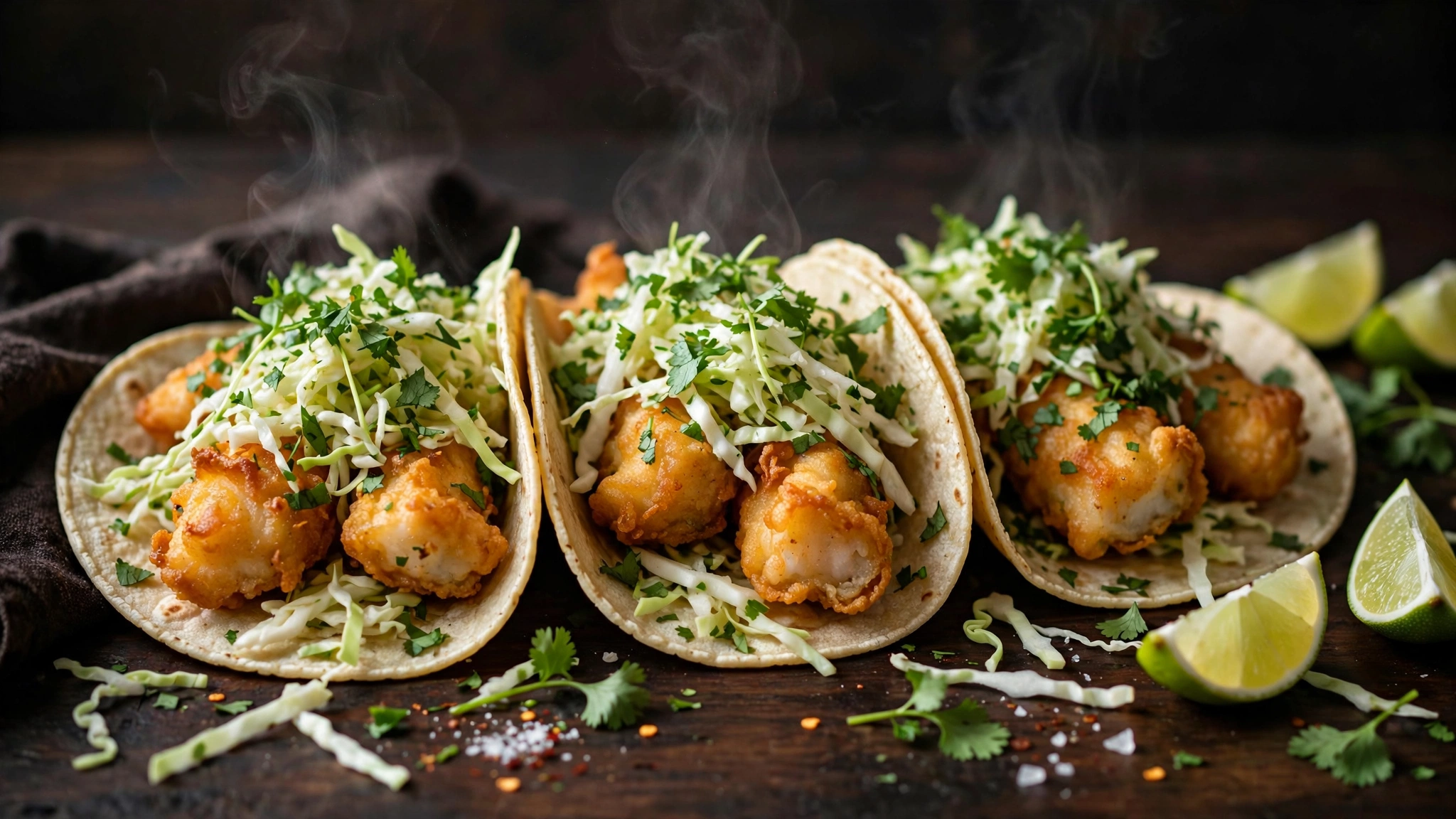
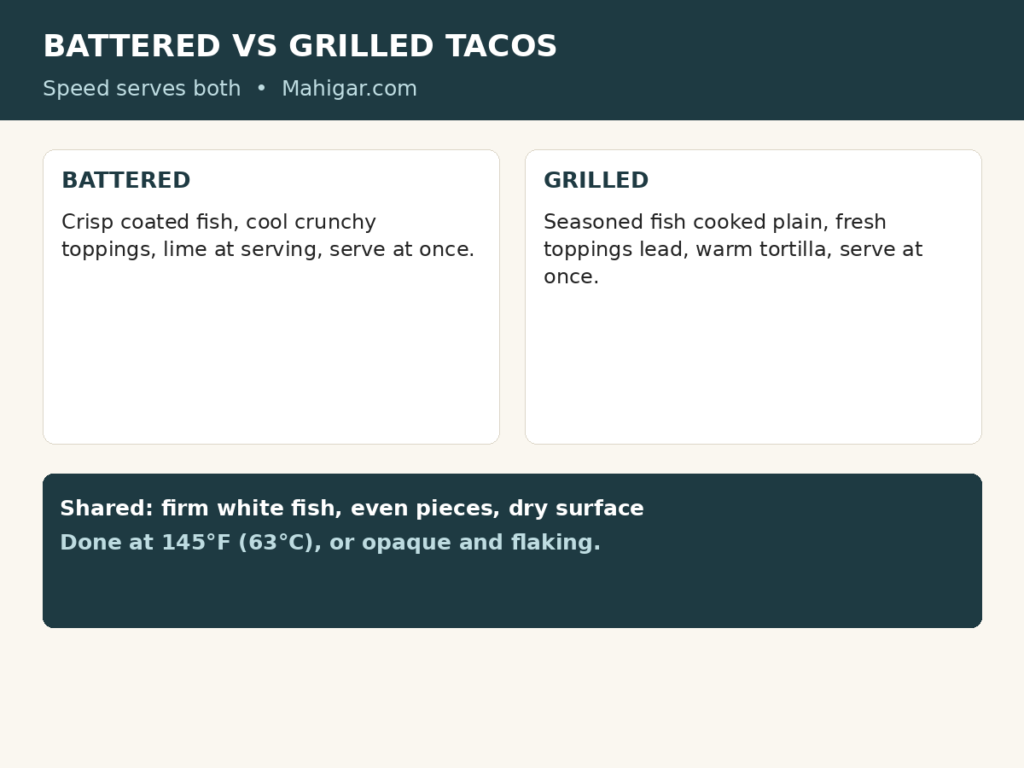
The battered road — the Baja-style shorthand. “Baja-style” is the name most home cooks know for the battered, fried fish taco: white fish in a crisp coat, warm tortilla, cool crunchy toppings, something bright at serving. I use the name as kitchen shorthand for that build, nothing more. Its pleasure is texture — shattering coat, soft fish, cold crunch — and it forgives nothing about timing. A battered taco that waits is a taco going soft.
The grilled road. Here the fish goes to the heat plainly — seasoned, on a grill or in a hot pan, no coat. The toppings carry more of the dish, and the fish flavour is clearer because nothing stands between it and you. That means the fish must be fresh and cooked with care. There is no crust to hide behind.
What both roads share. Firm white fish. Even pieces. A dry surface. Quick, confident heat. Warm tortillas. Cold toppings ready first. And serving the moment the fish is done.
One boundary: regional Mexican cooking is far richer than two builds. Real regional detail deserves proper research and cooks who know those kitchens from inside. This page compares methods a home cook can copy honestly; it does not pretend to map a country’s food.
Choosing the Fish: Traits, Not Names
Tacos are a fast dish, so choose fish the way I teach across Mahigar: by traits.
Firm and white. The piece must hold together through quick cooking and one confident handling. Firm white fish — the cod-and-haddock kind of flesh, and any firm fillet that flakes in clean pieces — behaves best. The species-by-species matching lives in Fish Species Guide: What to Buy and How to Cook Each One; here the rule is simpler: if the raw fillet already falls apart at a touch, it will not survive taco cooking.
Even pieces. Small pieces cook fast only if they are close in thickness. A thick chunk beside a thin strip means one is dry while the other is still glassy. Cut even pieces before any heat starts; the portioning discipline is taught in Fish Prep and Butchery: Every Skill You Need.
Fresh, because there is nowhere to hide. A taco is lightly dressed food. Old fish under fresh toppings is still old fish. Buy fillets that look moist, smell clean and mild, and spring back when pressed.
Skin and bones, settled at the board. Skinless pieces are the easy taco choice, and every piece gets a fingertip check for pin bones. Taco eating is fast, hand-held eating; nobody should meet a bone mid-bite.
Before the Heat: The Setup That Decides Everything
Fish tacos punish a cook who starts the fish before the table is ready, so I set up in this order.
The toppings go first. Whatever cool, fresh things your table uses — shredded cabbage, fresh herbs, onion if you like it, lime cut and waiting — are ready before the fish is touched. Bright flavours belong at the end, and I will not hand you a formula and call it the real one. Your house version, made fresh, is the honest one here.
The tortillas are warmed and kept covered, so they bend instead of cracking. The fish is cut even, checked for bones, and patted dry at the last moment — moisture is the enemy of both roads. Wet fish steams its coat soft on the battered road and steams instead of colouring on the grilled road. Dry surface, then heat.
Only then does the fish meet the pan or grill. Everything after this point moves quickly, which is why it had to be calm before it.
The Battered Road: Crisp Coat, Immediate Serving
On the battered road, the coat is the contract: crisp outside, soft fish inside, eaten while both are true.
The pieces go into the heat in one uncrowded layer — crowded pieces steam each other and the coat turns pale and heavy. I turn them once, when the underside has set, and I do not fuss with them before that. Every extra move breaks a young crust. Done fish comes straight out and goes into the warm tortillas with the cold toppings over it.
What goes wrong is almost always one of three things: the fish went in wet, the pan was crowded, or the tacos waited while someone finished a side dish. There are no side dishes on battered-taco night. The taco is the event.
The Grilled Road: Plain Fish, Fresh Leadership
The grilled road is for beautiful fish, with nothing in its way.
The seasoned pieces cook plainly — grill or hot pan, dry surface, room around each piece, one turn if the fish is firm enough. Without a coat, the surface should take a little colour and the flesh should stay moist. Seasoning stays simple and the toppings do more talking.
This road is kinder for a learner: no batter to manage, just fresh fish, honest heat, and taking it off on time. If your fish is delicate rather than firm, cook it in a pan where you can lift it gently, or choose a firmer fish next time. A taco is no place to fight breaking fish.
The Doneness Rule That Covers Both Roads
Styles change. The finish line does not.
Fin fish is done at 145°F (63°C) in the thickest part, or when the flesh is opaque and flakes easily — battered, grilled, or cooked any other way. The full chart is in Safe Internal Cooking Temperatures for Every Type of Fish. On small taco pieces the thickest part of the biggest piece is your test piece; check that one, not the thin strips that finished earlier.
Two warnings. Colour is a weak judge — a battered coat can look deep golden while the centre lags, and plain fish can look pale while done. Read the flake and, on thick pieces, the thermometer. And taco fish keeps cooking from its own heat while it waits. Cook, assemble, eat. That order is the recipe underneath every fish taco.
My Home Fish-Taco Sequence
Cut even pieces
Firm white fish, skinless, bone-checked, pieces close in thickness.
Dry the surface
Pat the fish dry at the last moment, whichever road you are cooking.
Cook quick and hot
One uncrowded layer, one confident turn; battered pieces go straight to the tortilla, grilled pieces come off as they finish.
Check the biggest piece
Done at 145°F (63°C), or opaque and flaking easily.
Warm the base
Soft, warm tortillas waiting and covered before the fish starts.
Top fresh
Cool crunchy toppings and herbs over the hot fish; lime squeezed at the table.
Serve at once
Assemble and eat while the hot-and-cold contrast is alive.
What to Avoid, Whichever Road You Take
Do not let cooked fish sit while you make toppings — the contrast is the dish, and it dies waiting. Do not cut pieces unevenly and blame the pan when half are dry. Do not season old fish brightly and call the lime a rescue; no topping honestly fixes tired fish. And do not stack or cover hot battered fish, which traps steam and softens the coat.
Last, the limit I will keep repeating: this page will not tell you that your kitchen has produced a region’s true taco. Most bad fish tacos fail on fish choice, wet surfaces, and waiting — not on authenticity.
Frequently Asked Questions
What fish is best for tacos?
Firm white fish that flakes in clean pieces and holds together through quick cooking. Choose by traits — firm, fresh, even-cut — rather than chasing one name.
Are battered or grilled fish tacos better?
Neither — they are different pleasures. Battered tacos are about crisp texture; grilled tacos put the fish flavour first. Cook the road that suits your fish and your evening.
How do I stop fish tacos going soggy?
Dry the fish before cooking, do not crowd the pan, keep hot fish uncovered, and serve the moment the tacos are built. Sogginess is steam and waiting.
How do I know the fish in a taco is done?
Check the biggest piece: 145°F (63°C) in the thickest part, or flesh opaque and flaking easily. Do not judge by coat colour.
What to Check Next
Keep the taco order beside the stove: fresh firm fish, even dry pieces, toppings ready first, quick cooking, warm tortillas, serve at once. Choosing tonight’s fish? The Species Guide reads them by trait. What goes around the tacos belongs to What to Serve with Fish when that Serving guide joins the site. And for the whole world tour, go back to the World Cuisine pillar and pick your next country.
