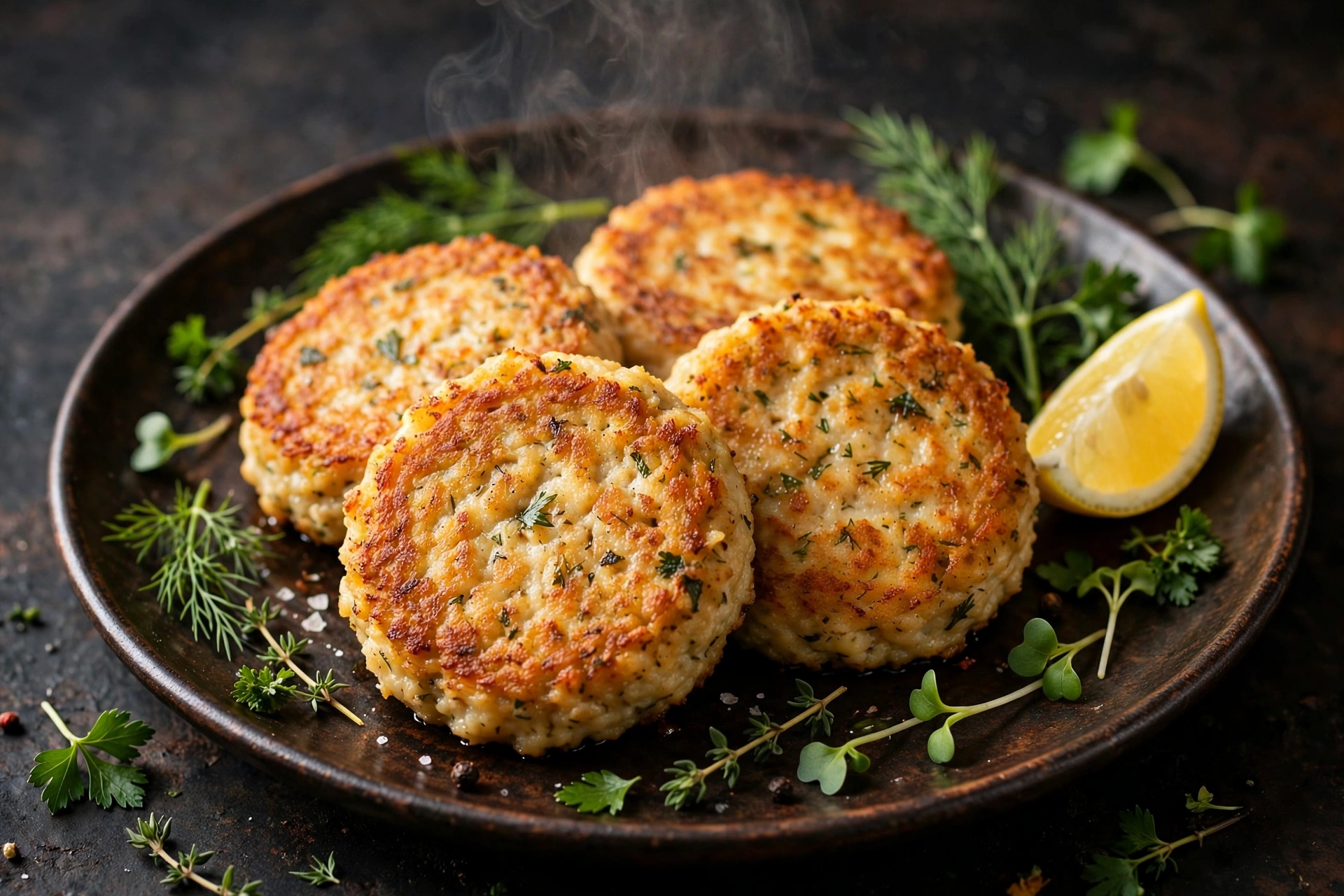
Scandinavian Fish Recipes: Gravlax and Fish Cakes
You want Scandinavian fish on your table, but the first search stops you cold: gravlax is cured fish, never cooked, and every home cure recipe you find asks you to trust ratios you cannot verify. I hear this worry from home cooks, and it is a good worry to have. A cure is no place for guesses.
I keep this guide honest and practical. I explain the cure, then I tell you to buy it ready-made from hands you trust. And I teach you the dish I cook myself: golden fish cakes from my own pan, with my full sequence, my two finish temperatures, and the mistakes I have already made so you do not repeat them. You will finish with a Nordic plate you can stand behind — cakes you cooked and checked in the centre, gravlax you bought from hands you trust.
I am Wasim Abbas Bhatti, the Fish’s Chef. I have spent more than twenty years cooking fish, but Scandinavian cooking is not my home ground, and I will not pretend to a northern kitchen’s training or family habits. What I bring to every borrowed cuisine is the same: I buy fresh fish, I handle it calmly, I cook cooked food all the way through, and I never fake the part that needs real knowledge. This guide lives inside Fish Recipes from Around the World, Mahigar’s world-cuisine hub, and it takes the safe road through this northern style.
Table of Contents
The Short Answer
| Question | Answer |
|---|---|
| What is gravlax? | Cured salmon, never cooked. I explain it; I do not teach home curing. Buy it ready-made. |
| What can I cook myself? | Fish cakes: cooked fish, folded gently, formed even, browned in the pan, served hot. |
| Finish temperatures | Plain fillet 145°F (63°C); formed fish cake 155°F (68°C) in the centre. |
| The rule of the page | Cooked food hot, cured food cold. |
Gravlax: What It Is, and What This Page Will Not Do
Gravlax is cured salmon: fish preserved by a cure and eaten without cooking. Because no heat ever arrives to do the work a pan or an oven does, I do not teach home curing on this page. That is the whole decision, and I stand behind it.
I have eaten good gravlax, and I respect the craft behind it. But curing is not cooking. The safety of cured fish rests on sourcing, cleanliness, cold control, and a proven method, and a home cure is no place for guesses or half-remembered ratios. That is why this article deliberately gives no salt or sugar ratio, no cure time, no pressing weight, and no freezing shortcut. Those numbers matter too much to invent, and my rule is simple: I never publish a curing ratio I have not verified against proper food-safety sources.
So my honest beginner’s route is this: buy gravlax ready-made from a trusted fishmonger or a reputable producer, keep it cold, and respect the seller’s use-by guidance. Learn the flavour first. Learn the craft only when the safety knowledge is properly sourced.
One distinction I make at the counter: gravlax and smoked salmon lox are neighbours, not twins. Both can arrive as silky salmon slices, but the making is different, and I would never quietly use a recipe written for one to make the other.
The Teachable Dish: Cooked Fish Cakes
Fish cakes are the dish I can teach you safely: cooked fish, folded gently, formed into even cakes, browned in the pan, and served hot. If gravlax is the craft I respect from a distance, fish cakes are the craft I know with my hands.
These cakes taught me more fish discipline than almost any other dish. What they teach is bigger than one cuisine: even thickness, a dry enough surface, patience in the pan, and a finish you check instead of guess. Those habits travel back into every fried fillet, curry, and whole fish I cook.
They also taught me restraint. I season with a light hand the first time and taste what the fish itself brings. I will not hand you a “traditional” seasoning ratio I have not earned. Use mild flavours your kitchen already trusts, and adjust next time.
Choosing the Fish: Firm, Fresh, and Boneless-Checked
I choose firm, fresh fish that flakes into real pieces, and I check every piece for bones before it ever sees heat. Fish cakes stand or fall before the pan heats, and I have learned to do the deciding at the counter, not in the pan.
Firm fish holds a cake. I buy fish with flesh that flakes into pieces instead of dissolving into paste. Fresh fillets, or a whole fish I portion myself, both work for me, as long as the flesh is firm and clean-smelling. My species-by-species matching of fish to jobs lives in Fish Species Guide: What to Buy and How to Cook Each One; on this page, one rule leads: if the fish cannot make honest flakes, I put it in a gentler dish.
Freshness is non-negotiable, twice over. I keep raw fish at 40°F (4°C) or below and use it within 1–2 days; cooked fish keeps 3–4 days in the fridge under the same cold rule. If a fillet smells sour or of ammonia, feels slimy, or keeps the dent when I press it, I throw it out. I never try to hide a bad fish inside cakes, because a cake spreads one fault through the whole batch.
Bones are a prep job, not a serving surprise. I run my fingertip along every piece for pin bones before the fish is cooked and flaked. Once fish becomes flakes, a missed bone hides, and I do not want it found at the table. Every board skill behind that check is taught in Fish Prep and Butchery: Every Skill You Need. I still check children’s portions myself, even after the prep.
Even cakes are even cooking. I form my cakes close in size and thickness. A fat cake beside a thin one means one lags in the centre while the other dries, and no amount of pan skill fixes that.
My Cooked Fish-Cake Sequence
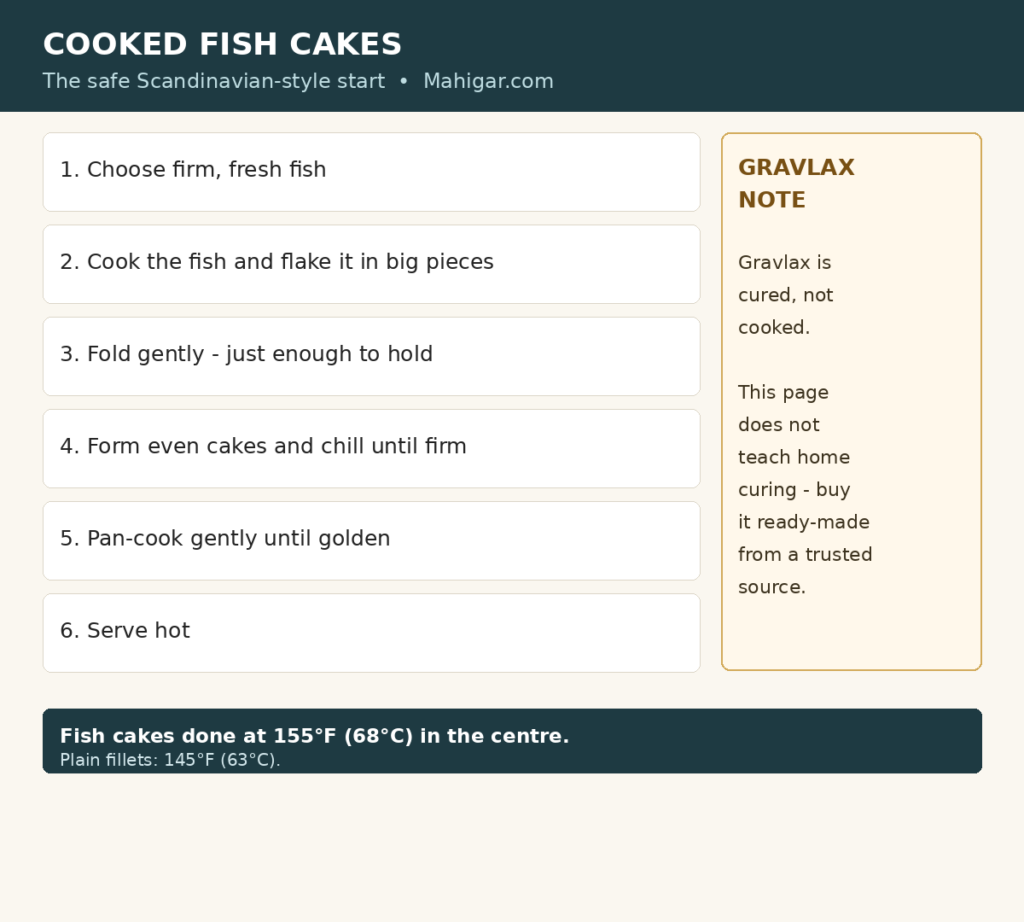
I cook the fish simply first.
I cook firm fillets just to done — opaque and flaking, the plain-fillet finish in the next section — then I let them cool enough to handle.
I flake in big pieces.
I lift the flesh apart with a fork in honest flakes. Then I check again, slowly, for any bone that survived prep.
I fold gently; I do not mash.
I combine the flakes with just enough binding help to hold together. My mixture should look like fish held together, not paste.
I form even cakes.
I shape cakes of similar size and thickness so the batch finishes together.
I chill until firm.
I rest the formed cakes cold until they feel set enough to move without bending. Cold cakes enter the pan bravely; warm cakes slump, and I have learned that the hard way.
I pan-cook gently.
I cook in a hot, lightly oiled pan with room around each cake. I let the first side take colour before I turn — one calm turn, no poking.
I finish and serve hot.
I check the centre as below, rest the cakes only a moment, and serve at once with lemon.
Done Means Done: Two Numbers, No Guessing
I use two finish lines on this page, and they are not interchangeable. A plain fillet — including the fish I cook first for flaking — is done at 145°F (63°C) in the thickest part, or when the flesh is opaque and flakes easily. A formed fish cake is a ground-and-shaped food, so I take the centre to 155°F (68°C), firm and opaque all the way through. The full chart, with the reasoning by food type, lives in Safe Internal Cooking Temperatures for Every Type of Fish.
Why do I hold cakes to the higher bar? Shaping mixes the outside of the fish through the middle, so the centre of a cake deserves the ground-fish standard, not the fillet standard. And browning is not proof: I have seen cakes look beautifully golden while the centre still lagged. I probe the thickest cake sideways into its middle, keep the tip in the mixture and off the pan, and I serve the batch only when the centre is right. If one cake is low, the batch waits. Fish cakes rebuild their reputation in the pan far better than they forgive a raw centre.
And I say it once more for the cured fish across the page: gravlax has no doneness number, because it is never cooked. That is exactly why it stays a buy-it-ready dish for beginners in my kitchen.
Serving the Northern Way, at Home-Kitchen Level
I serve the cakes the moment they are done, while the crust still has its voice. Lemon over hot fish, fresh herbs if my kitchen has them, and something simple and fresh beside the plate. That is as far as I dress this up, because I will not pretend to a Scandinavian table I did not grow up at.
If gravlax is part of the same meal, I let it be the bought, trusted, ready-made plate it should be for now: served cold, handled cold, and returned to the fridge promptly instead of warming on the table while the cakes cook. In my kitchen the rule is plain: cooked food hot, cured food cold, and no dish asked to pretend it is the other.
Frequently Asked Questions
Can I make gravlax at home as a beginner?
Not from my page. Gravlax is cured raw fish, and a safe home cure needs proven ratios, times, and handling controls from proper food-safety sources. Until Mahigar publishes researched curing guidance, I say buy gravlax ready-made from a trusted source and keep it cold.
What temperature should fish cakes reach?
I take the centre of a formed fish cake to 155°F (68°C), firm and opaque all through. A plain fillet is 145°F (63°C). Golden colour alone is never my doneness test.
What fish is best for fish cakes?
I choose firm, fresh fish that flakes into real pieces and holds a shape. I pick by freshness and firmness first; very delicate fish that falls to paste gets gentle steaming or baking in my kitchen, not a cake.
Why do my fish cakes fall apart in the pan?
In my kitchen this almost always means they went in too warm or too wet, or I moved them before the first side set. I chill the formed cakes until firm, give each cake room in the pan, and turn once, calmly.
What to Check Next
When you are ready, I plate this page the honest way: cakes I cooked myself, golden and checked in the centre, and gravlax bought from hands I trust. Then keep travelling through the World Cuisine hub with me. Gentle Japanese-style fish, Mediterranean whole fish, and the bold southern fries all solve the same northern problem in warmer accents: fresh fish, right-sized pieces, and a finish you can stand behind.

One Comment