Sea Bass: How to Buy and Cook It Well
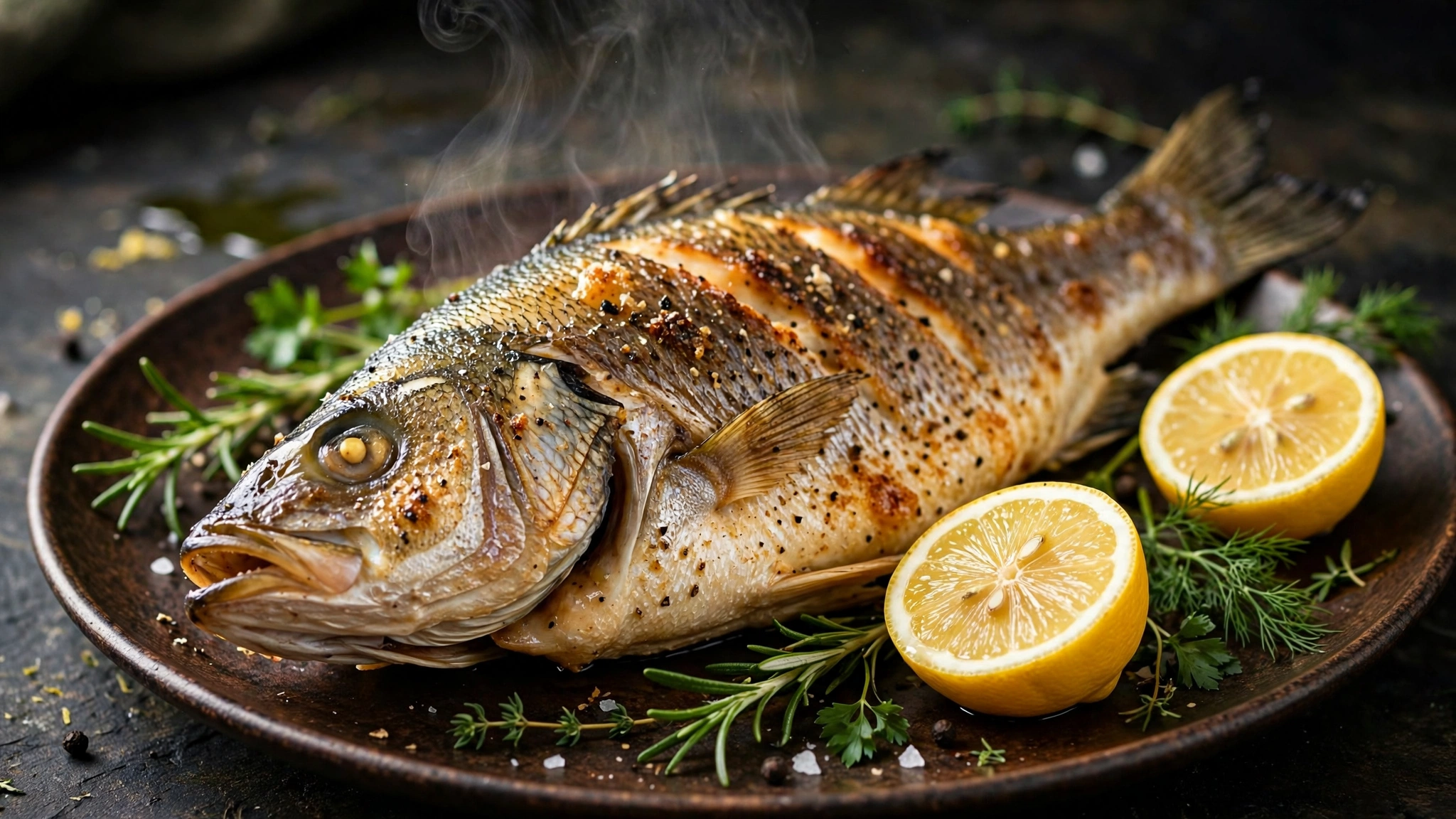
Sea bass is the fish I choose when I want a quiet plate: clean-tasting, gentle, and delicate, with flesh that flakes in soft white layers when you stop on time. Treat it kindly, and it tastes like the cook knew exactly what they were doing.
I am Wasim Abbas Bhatti, the Fish’s Chef. I have cooked fish for more than twenty years, and sea bass is one of the whole fish I hand to someone who wants flavour without a fight. This profile sits inside Fish Species Guide: What to Buy and How to Cook Each One, where species are sorted by the jobs they do best.
Table of Contents
What Sea Bass Is Like
Good sea bass has white, delicate flesh, a clean taste, and flakes that separate without turning to mush. It is milder than an oily fish and softer than a firm steak fish. Whole fish and fillets both work, but they ask for slightly different handling: a whole fish gives you skin and bones to protect the flesh; a fillet gives you speed and nowhere to hide if you overcook it.
At the counter, I judge sea bass by freshness first and name second. The flesh should look moist, not dry or gaping, and a whole fish should smell like clean sea water. A fresh one is elegant; a tired one is just soft.
The Name Problem: “Sea Bass” Is Not One Promise
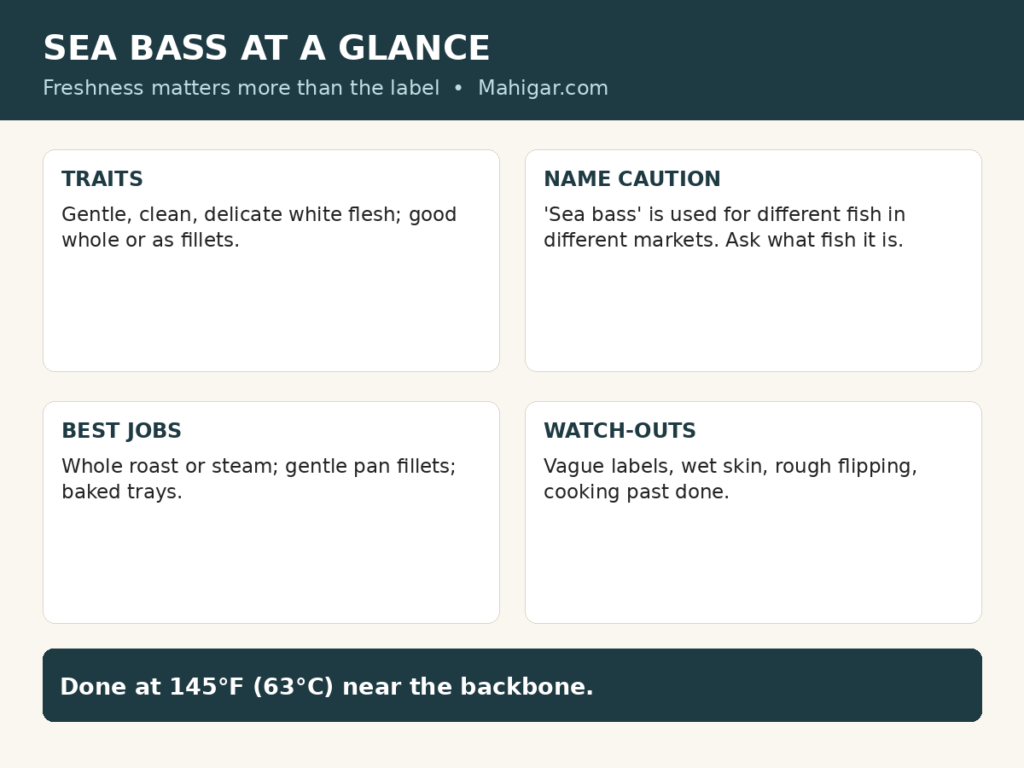
Here is the confusion buyers meet. “Sea bass” is used for different fish in different markets, so the label alone does not tell you exactly what is in front of you. That does not make the fish bad. It means you should ask a plain question — what fish is this? — and then buy by the freshness checks below, not by the name alone.
I keep branzino separate on this site for a reason. In the Species pillar, branzino is the European sea bass, a close relation most often sold whole and roasted whole. A fish labelled only “sea bass” may be a different market fish, so do not buy one expecting the branzino profile to match it exactly.
Buying Checks: Freshness You Can See
For a whole sea bass, look for clear, bright eyes, not cloudy or sunken. Gills should look clean and red. Skin should shine, with scales sitting tight. Press the flesh gently: it should spring back. A dent that stays means the fish is tired, and a sour or heavy smell means choose another fish.
Fillets need the same honesty: moist flesh, no gaping flakes, no dry edges, and no strong smell through the wrapping. On skin-on fillets, the skin should look bright and sit flat, not curled or dull. Buy from a busy counter — delicate fish does not improve while it waits.
Bones, Skin, and Gentle Prep
A whole sea bass has one central frame, and once cooked, the flesh lifts away in clean sections. Fillets can carry a line of pin bones, so run a fingertip along the flesh before serving and let an adult check children’s portions. Sea bass is kinder at the table than fine-boned carp, but “kinder” never means careless.
The skin is thin and useful. Scaled and dried well, it protects a whole fish and can crisp lightly in a pan; wet skin steams and tears. Scaling, gutting, scoring, and whole-fish prep are taught in Fish Prep and Butchery: Every Skill You Need. Score shallowly, dry well, and season the cavity too.
The Safety Frame: Mercury and Doneness
On mercury, I will not pretend the label is clearer than it is. Because “sea bass” is used for different fish in different markets, this profile does not assign generic sea bass a mercury category. The official FDA/EPA framework, including the fish that advice names directly, is in Mercury in Fish: Safe Levels by Species. Ask what fish you are buying, then check that name there. This is general information, not medical advice.
Doneness is simpler. Like every fin fish on my site, sea bass is done at 145°F (63°C), or when the flesh is opaque and flakes easily. On a whole fish, measure near the backbone, tip in flesh and not touching bone. The full chart is in Safe Internal Cooking Temperatures for Every Type of Fish.
Best Ways to Cook Sea Bass
Whole, roasted or steamed: the lead method
This is my first choice. A whole sea bass, scaled, gutted, scored, dried, and seasoned, roasts or steams into a gentle centrepiece. Skin guards the flesh, bones help it stay moist, and the fish needs little more than salt, herbs, citrus, and a careful hand at the finish.
Gentle pan fillets
Skin-on fillets suit a hot pan when the skin is dry and the pan has room. Lay the fillet down, let the skin set, and turn once with support — or serve it skin-side up without forcing a second crisp. Thin fillets finish fast, so start checking before you think they are ready.
Baked trays and gentle sauces
Sea bass bakes well in one layer and takes gentle sauces kindly. It does not want a heavy coat or a long, unattended bake. Season enough to lift the flavour, not bury it.
My Whole Sea Bass Routine
-
Ask what fish it is, then buy it fresh
Clear eyes, red gills, firm springy flesh, mild sea smell.
-
Scale, gut, and clean it
Rinse briefly in cold water and pat very dry.
-
Score the thick part
Two or three shallow cuts on each side.
-
Season inside and out
Salt, herbs or a gentle spice blend, a little fat over the skin. Lemon at serving.
-
Roast or steam with room
Crowded or wet skin will not finish well.
-
Check near the backbone
Done at 145°F (63°C) in the thickest flesh, or opaque and flaking there.
-
Rest briefly and serve whole
Lift flesh from the frame in sections; check pieces for pin bones before serving children.
What to Avoid With Sea Bass
Do not overpower it. Sea bass carries gentle seasoning beautifully and disappears under a heavy hand. If the fish is fresh, let the fish be the flavour.
Do not cook it wet, crowded, or too long. Wet skin steams instead of crisping, a crowded pan tears fillets, and two extra minutes can take sea bass from silky to dry. Pat it dry, give it room, and check early.
Do not buy it on the name alone. Ask what fish it is and walk away from cloudy eyes, dull skin, soft flesh, or a heavy smell. The name starts the conversation; it does not end it.
If Sea Bass Is Not Available
Choose by job, not by name. For the same gentle whole-fish job, branzino is the closest relation in this pillar — European sea bass, usually roasted whole. For a firmer celebration whole fish, red snapper holds together with more confidence. For a mild weeknight fillet, tilapia is thinner and plainer, so give it a quicker hand. Whatever you choose, run the same freshness checks.
Frequently Asked Questions
Is sea bass the same as branzino?
Not always. On this site, branzino is kept separate as European sea bass, a close relation most often sold whole and roasted whole. A fish labelled only “sea bass” may be a different market fish.
How do I know sea bass is fresh?
Whole fish: clear bright eyes, clean red gills, shiny skin, springy flesh, mild sea smell. Fillets: moist flesh, no gaping, no dry edges, no strong smell. When in doubt, choose another fish.
Is sea bass high in mercury?
This profile does not assign generic “sea bass” a category, because the label is used for different fish. Check the exact fish name against the FDA/EPA framework in my Mercury guide. General information, not medical advice.
Why did my sea bass turn dry or fall apart?
It cooked past done, started wet, or was flipped too roughly. Dry the skin, give it room, turn once with support, and check early — 145°F (63°C), or opaque and flaking.
What to Check Next
Keep the sea bass order beside the counter and stove: ask what fish it is, freshness before name, dry skin before heat, done checked near the backbone. Buy it honestly and stop on time.
