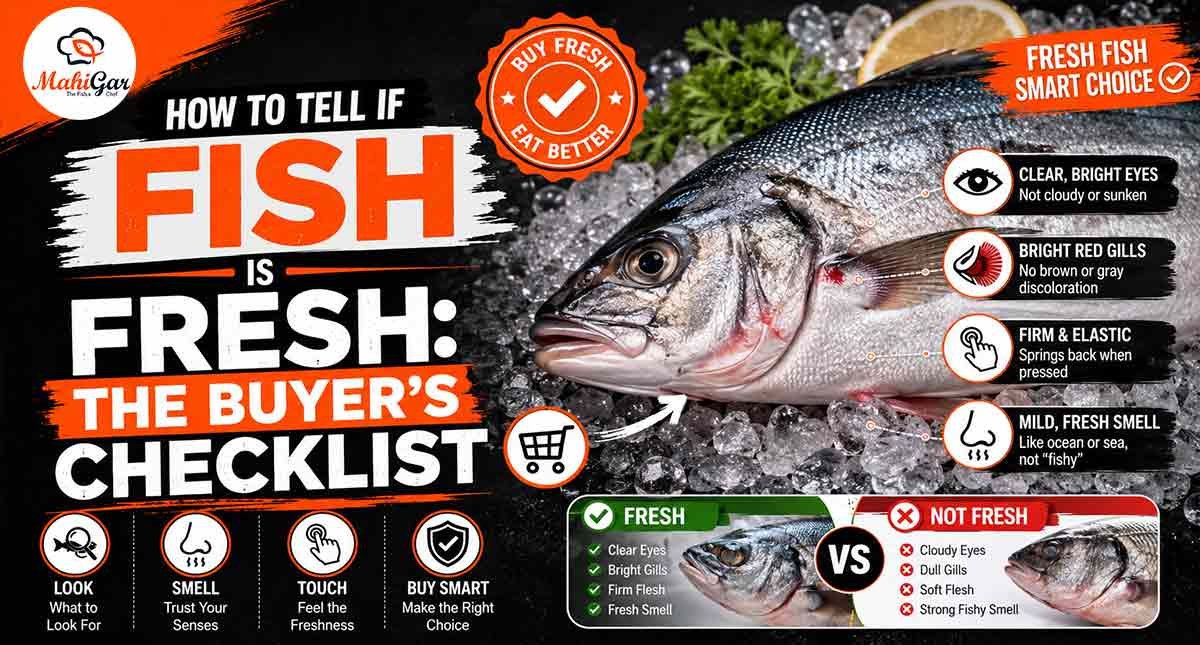
How to Tell if Fish Is Fresh: The Buyer’s Checklist
The fastest way to tell if fish is fresh is to trust your nose before anything else. Fresh fish should smell clean and mild, almost like ocean or river water, never sharp, sour, or like ammonia. That single check alone catches most bad fish before you even need to look closer.
I use this same checklist every time I buy fish, whether I’m picking through a market stall or standing at a grocery counter: smell first, then eyes and gills on whole fish, then texture on everything. It takes less than a minute once it’s a habit, and it’s saved me from a bad dinner more times than I can count.
Table of Contents
What Should Fresh Fish Smell Like?
Fresh fish should smell clean and mild, like the ocean, a lake, or a river, depending on where it’s from, never sharp, sour, or like ammonia. Fish sold as “previously frozen” won’t necessarily show every other sign of freshness, but the FDA is clear that it should still smell fresh and mild, not fishy, sour, or rancid. Smell is the one test that holds up regardless of whether the fish was ever frozen.
I always ask to smell fish directly before I buy it, even at counters I’ve shopped at for years. A seller who’s confident in their fish will let you do this without hesitation; one who hesitates or discourages it is telling you something. If I catch even a hint of ammonia, I don’t buy it that smell doesn’t cook out, no matter what the recipe or the marinade promises.
What Do Fresh Fish Eyes Look Like?
On whole fish, the eyes should be clear, bright, and slightly bulging. Cloudy, sunken, or dull eyes are one of the clearest signs a fish has been sitting too long. Eyes cloud and lose their bulge fairly quickly after a fish is caught, and larger fish tend to show this change faster than smaller ones, which makes it one of the most reliable checks you can do at a glance.
This is one of the biggest reasons I still buy whole fish whenever I can, even though it means more prep work at home. A fillet can’t show you this at all, and it’s often the single fastest tell I have.
How Do You Check the Gills?
Lift the gill flap and look for bright red or pink gills with no strong odor. Brown, gray, or dull gills, especially with visible sliminess, are a reliable sign a whole fish is past its best.
Not every counter will let you lift the gills yourself, but most will do it for you if you ask, and I always ask, especially for a fish I don’t buy often. It only takes a second, and gill color is much harder for a seller to disguise than skin color.
How Should Fresh Fish Feel When You Press It?
Press the flesh gently with a finger; fresh fish should spring back immediately, leaving no dent. If your fingerprint stays behind, or the flesh feels soft, mushy, or slimy, the fish is already breaking down.
This test works on whole fish and fillets alike, which makes it one of the most useful checks you have when eyes and gills aren’t available to look at. I press every fillet I buy, right through the packaging if it’s wrapped; a good fishmonger won’t mind, and it’s told me more than the sell-by date ever has.
What About Skin and Color?
Skin should look tight, moist, and slightly shiny, with scales that stay firmly attached rather than flaking off. What color doesn’t reliably tell you is freshness on its own? A fish’s color can be affected by its diet, its environment, and even packaging treatments, so vibrant color by itself isn’t proof of quality the way smell, eyes, and texture are.
This surprises a lot of people, since “bright pink” is what most of us are trained to look for with salmon especially. I’ve learned to treat color as the last thing I check, not the first; it’s useful information, but it’s the easiest one to be misled by.
How Do You Check Freshness in Fillets?
Since fillets don’t have eyes or gills to check, lean on smell, texture, and edges instead. Fresh fillets should have firm flesh, a natural red blood line (or red flesh, in the case of fresh tuna), and no discoloration, darkening, or drying around the edges.
Fillets also spoil faster than whole fish simply because more surface area has been exposed to air. I check the edges specifically for any browning or a dried-out look that’s usually the very first place a fillet starts to go bad, well before the smell changes.
How Do You Tell If Shrimp and Shellfish Are Fresh?
Shrimp should smell clean and mild, feel firm, and have shells that are intact rather than broken or mushy at the joints. Avoid any with black spots near the head or shells that feel slimy. For clams, mussels, and oysters in the shell, the shell should be tightly closed, or should close on its own when you tap it; discard any that stay open.
Shellfish spoils faster than most fish, and it’s less forgiving if you get it wrong. Treat it stricter than everything else on this list: any hint of ammonia or sourness, and it goes back, no second-guessing.
Common Mistakes People Make When Judging Freshness
The biggest mistake is trusting the sell-by date over your own senses. A date tells you when a package should be pulled from a shelf, not how the fish inside was actually handled before that. The second is judging only by color, which, as covered above, can be misleading on its own.
I made a version of this mistake myself early on: picking whichever fillet looked the most vibrant pink in the case, without checking anything else. It took a few disappointing dinners to learn that smell and texture tell you far more than color ever will. Now color is the last thing I check, not the first, and it’s rare that I get a bad piece of fish anymore.
Quick Reference: The Fresh Fish Checklist
• Smell: clean and mild, never sour or ammonia-like
• Eyes (whole fish): clear, bright, slightly bulging
• Gills (whole fish): bright red or pink, no strong odor
• Flesh: firm, springs back when pressed, no lingering dent
• Skin: tight, moist, slightly shiny; scales stay attached
• Fillets: firm, red blood line intact, no darkening at the edges
• Shellfish: shells intact and firm; shells closed, or close when tapped
Frequently Asked Questions
Does a bad smell go away once you cook the fish?
No. If raw fish smells sour or like ammonia, cooking won’t fix it, and it shouldn’t be eaten. Treat a bad smell as a hard stop, not a maybe.
Is it normal for frozen fish to look different from fresh fish?
Yes. Previously-frozen fish may not show every classic sign of freshness, like bright eyes or firm gills, but per FDA guidance it should still smell fresh and mild — that’s the test that still applies regardless.
Can you still eat fish with slightly cloudy eyes?
Cloudy eyes alone don’t necessarily mean the fish is unsafe, but they do mean it’s past its best. Check smell and texture too rather than relying on eyes alone, especially since eyes aren’t available at all once a fish is filleted.
Does this checklist work the same for wild and farmed fish?
Yes. Freshness signs come from handling and time since catch or harvest, not from whether the fish was wild-caught or farmed, so the same checklist applies to both.
What to Check Next
Once you’ve confirmed a piece of fish is genuinely fresh, the next decision is often whether fresh is even what you need — properly frozen fish can match or beat “fresh” fish that’s spent days in transit. That full comparison is in Fresh vs Frozen Fish: Which Is Actually Better?
For freshness guidance specific to the species you’re cooking, from salmon to tilapia to rohu, the Fish Species Buying and Cooking Profiles hub covers what to look for one species at a time. And for the complete buying process this checklist is one part of, start with The Complete Guide to Buying Fish and Seafood.

4 Comments