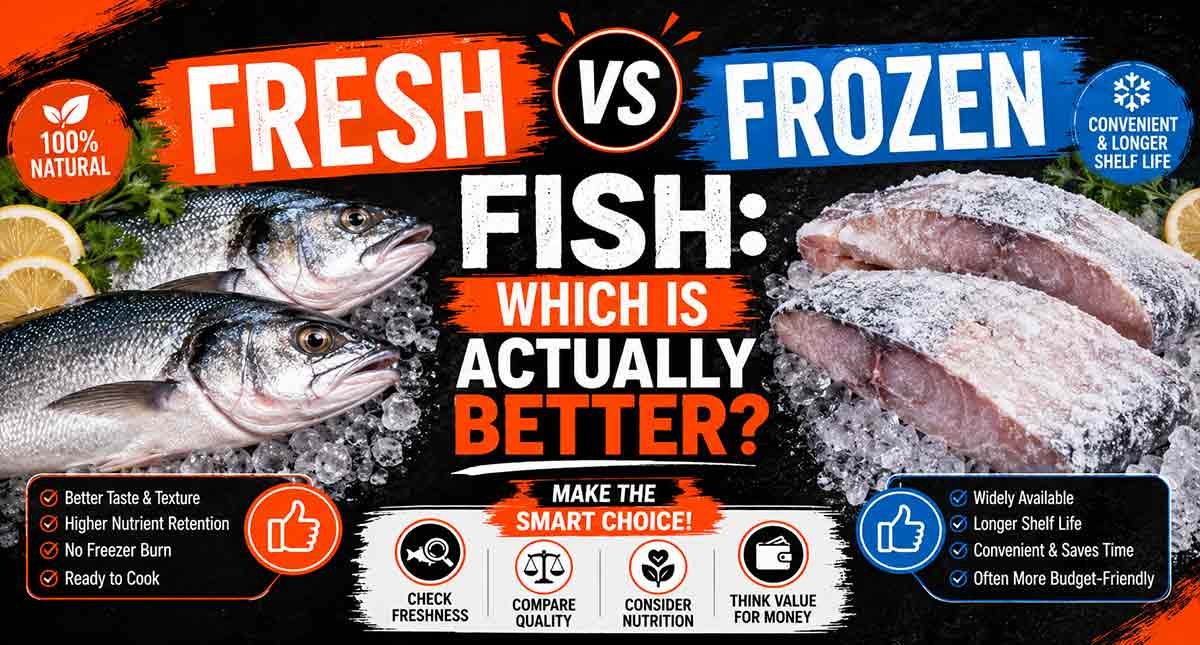
Fresh vs Frozen Fish: Which Is Actually Better?
Properly frozen fish is usually just as good as fresh, and often better than “fresh” fish that’s spent days getting to the counter. The quality difference people notice has almost nothing to do with fresh versus frozen as categories; it comes down to how the fish was handled and how many times it went from frozen to thawed and back again.
I keep a stock of good flash-frozen fillets in my own freezer for exactly this reason. It’s rarely the compromise people assume it is, and once you know what “properly frozen” actually means, buying frozen stops feeling like settling.
Table of Contents
What Does “Fresh” Actually Mean at the Store?
“Fresh” only tells you the fish has never been frozen; it says nothing about how many days ago it was caught. Depending on where you live, fish labeled fresh may have traveled for several days, across multiple handlers, before it reaches your counter, sitting on ice the entire way rather than at a stable, safe freezing temperature.
That’s not automatically a problem; ice-packed transport can keep fish in good condition for a surprising amount of time. But it does mean “fresh” isn’t a guarantee of recency. A well-handled frozen fillet caught yesterday can genuinely be in better condition than a fresh-labeled fillet that’s four days into transit.
What Does “Properly Frozen” Actually Mean?
Properly frozen means flash-frozen, brought down to freezing temperature within minutes to hours, usually right on the boat, rather than frozen slowly in a standard freezer. The speed of freezing is what matters, not the fact of freezing itself.
When fish freezes quickly, the water inside its cells forms many small ice crystals that don’t damage the cell structure. When it freezes slowly, the water has time to form large, jagged crystals that puncture cell walls, which is exactly what causes the mushy, watery texture people associate with “frozen fish,” and blame on freezing itself rather than on how it was frozen.
Why Does Frozen Fish Get a Bad Reputation?
Most of the bad frozen-fish experiences people remember come from repeated freeze-thaw cycles, not from freezing itself. Research on fish tissue microstructure has found that each freeze-thaw cycle increases ice crystal size and cell damage, measurably raising moisture loss during cooking and accelerating spoilage indicators, and the damage compounds with every additional cycle.
This is what actually happens with a lot of poorly handled “fresh” fish at the counter, ironically: fish gets frozen for transport, thawed for display so it looks “fresh,” and sometimes frozen again if it doesn’t sell. A fillet you freeze once yourself, properly, and thaw exactly one time before cooking almost always beats that cycle.
Does Freezing Affect Nutrition?
Barely, if the fish was properly frozen. Findings widely cited from the National Fisheries Institute note that freezing fish causes minimal loss of the omega-3 fatty acids that make it worth eating in the first place, whether the fish is later baked, broiled, or steamed. Protein content isn’t meaningfully affected by freezing either; freezing halts spoilage processes rather than breaking nutrients down.
If anything, freezing can protect certain fats from the slow oxidation that happens during extended fresh storage. The bigger nutrition risk with fish generally is overcooking, not freezing.
Does Freezing Affect Taste and Texture?
Done properly, the difference is small enough that most people can’t reliably tell in a blind taste test, and in dishes with sauce, spice, or a marinade doing real work, the difference all but disappears. Where you can sometimes tell is in very simple preparations eaten close to raw, where texture is the whole point.
That’s exactly why I reach for frozen fillets for curries, gravies, and anything with a real spice blend behind it, and I’m more selective about freshness when a fish is going to be the entire dish with almost nothing else on the plate.
When Does Fresh Actually Win?
Fresh has a real, specific edge in a few situations: dishes meant to be eaten raw or very lightly cooked, extremely delicate fish where even careful freezing changes the texture noticeably, and any case where you have direct access to a genuinely trustworthy source a boat, a market you know well, or fish you’ve caught yourself.
Worth knowing, though: fish meant to be eaten raw is often required to be frozen first specifically to kill parasites that cooking would otherwise handle; in that case, freezing isn’t the compromise- it’s the safety step.
How Do You Spot Properly Frozen Fish at the Store?
• No visible ice crystals or frost inside the packaging is a sign it thawed and refroze at some point
• Tight, vacuum-sealed packaging rather than a loose bag with excess air
• Flesh that looks solid and evenly colored, not patchy, dry, or grayish at the edges (freezer burn)
• A “flash-frozen” or “frozen at sea” label, which tells you it was frozen fast, not slowly at a warehouse days later
• No strong odor once thawed; the smell test still applies exactly the way it does for fresh fish
So Which Should You Actually Buy?
For anything going into a curry, a gravy, a fry-up, or a dish with real spice behind it, buy whichever is genuinely better handled, which is very often the frozen option. For a dish where the fish itself is the whole point, prioritize a source you trust over the fresh-or-frozen label entirely.
Either way, if you’re working from frozen, how you thaw and cook it matters as much as the fish itself. The full method is in How to Cook Fish from Frozen and Make It Taste Amazing.
Frequently Asked Questions
Does freezing kill parasites in fish?
Yes, sustained freezing is effective against parasites that survive refrigeration, which is exactly why fish intended to be eaten raw or undercooked is generally required to be frozen first. This is one case where freezing is a safety advantage over fresh, not a compromise.
Can you refreeze fish once it’s already been thawed?
Generally not recommended without a specific safe method, since it’s exactly the repeated freeze-thaw cycle that damages texture and accelerates spoilage. The full answer, including the one situation where it is safe, is in Can You Refreeze Fish After Thawing? The Real Answer.
Is the “fresh” label ever misleading?
Not technically false, but often misleading in practice; it guarantees the fish was never frozen, not that it was caught recently. A well-handled frozen fillet is frequently “fresher,” in any meaningful sense, than fresh-labeled fish that’s spent days in transit.
Do you need to cook frozen fish differently than fresh?
Slightly, mainly around thawing method and adjusting for the extra moisture frozen fish can release during cooking. The complete method is covered in How to Cook Fish from Frozen and Make It Taste Amazing.
What to Check Next
For the full buying process this comparison is one part of, start with The Complete Guide to Buying Fish and Seafood. And whichever you buy, the freshness checklist in How to Tell if Fish Is Fresh: The Buyer’s Checklist still applies once it’s thawed.
