Swordfish: Buying and Cooking Guide
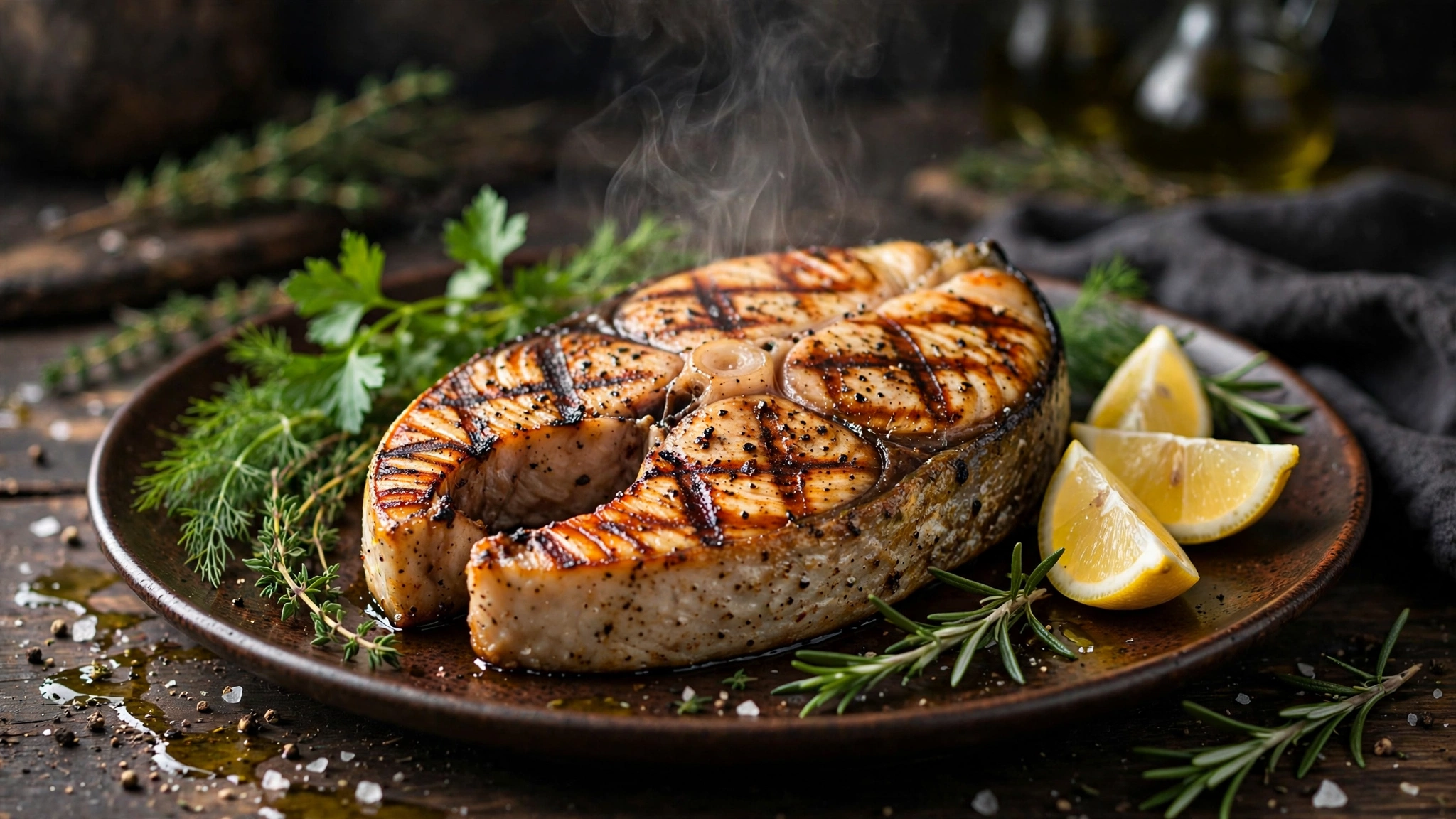
Swordfish is the fish I point to when someone says they want fish that behaves like meat. It comes in thick steaks, dense and meaty, with flesh that stands up to a grill and a strong marinade without falling apart. It is not a delicate fish and does not want delicate handling. It wants a firm hand, honest heat, and one decision made before you buy it: how this fish fits your table’s mercury planning.
I am Wasim Abbas Bhatti, the Fish’s Chef. Swordfish is the steak fish I respect most and serve most carefully. This profile sits inside Fish Species Guide: What to Buy and How to Cook Each One, where species are sorted by the jobs they do best. Swordfish’s job is confident heat — planned, not casual.
Table of Contents
What Swordfish Is Like at the Counter
You will almost always meet swordfish as a steak: a thick, round or oval cut with the skin around the edge and dense flesh that looks closer to a meat steak than to a fillet. The flesh is firm — pale to light pink before cooking, white when cooked — with a mild but present flavour, stronger than a gentle white fish and cleaner than an oily one. It does not flake into soft sheets the way cod does. It cuts into meaty pieces that hold together on a plate.
That density is the whole character of the fish. It takes char, holds a rub, and sits beside bold flavours without disappearing. Dense flesh cooks slowly at the centre, then dries firmly once it passes done. Treat it like the thick steak it is.
Buying Checks: A Good Steak Shows Itself
Bones, Skin, and Prep
Mostly solid flesh; check by fingertip. Thick skin usually removed; see Fish Prep and Butchery: Every Skill You Need. Pat dry; keep thickness even.
The Safety Frame: Mercury First, Then Doneness
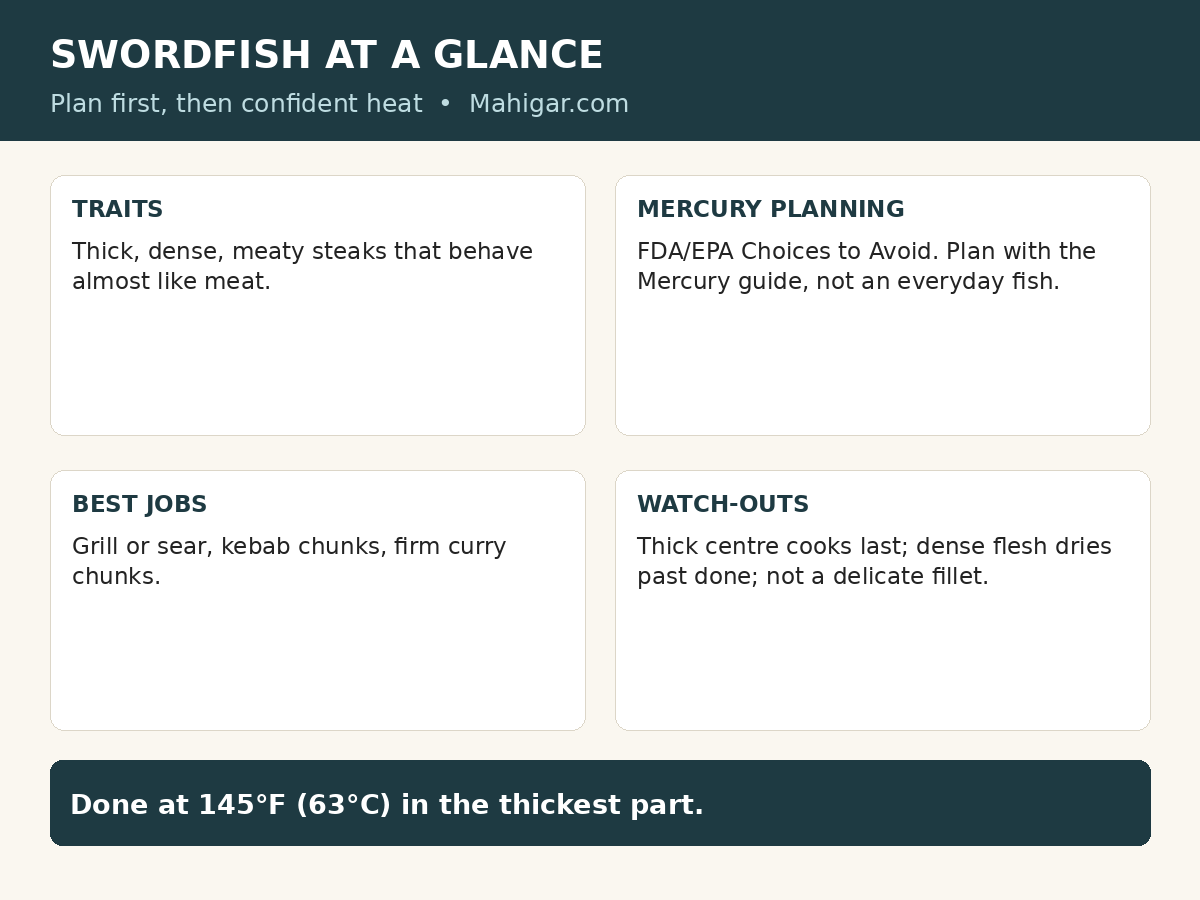
Highest-mercury group per Mercury in Fish: Safe Levels by Species. Doneness per Safe Internal Cooking Temperatures for Every Type of Fish; finish thickest part opaque.
Best Ways to Cook Swordfish
Grill or sear: the lead method
Direct heat, real char, meat-like cut.
Kebabs and curry chunks
Cut thick; keep even; add late; stop at opaque.
What to Avoid
- Delicate steaming.
- Cooking past opaque.
- Ignoring the thick centre.
- Wet fish on heat.
- Everyday use without a mercury plan.
If You Cannot Find Swordfish
Swap by job: mahi mahi for grilling; firm fish cut large for curry.
Frequently Asked Questions
What to Check Next
Dense steak fish for confident heat with a mercury plan first.
Choose even steaks
Season close to cooking
Heat grill or pan
Lay down and leave
Turn once
Check thickest part
Rest and serve
Why does my swordfish come out dry and tough?
Because dense steak flesh dries firmly once it passes done. Dry the steak, match the thickness, probe the centre early, and stop at opaque and just flaking.
Is swordfish safe to eat, given the mercury warnings?
It is in the highest-mercury planning group; treat it as a deliberate choice and see the Mercury guide. General information, not medical advice.
Should I eat the skin on swordfish?
Usually not. The skin is thick and tough, and most cooks remove it before serving.
How do I know when a thick swordfish steak is done?
Probe the centre of the thickest part until opaque and just flakes. Check earlier than you expect, then rest briefly.
Press the flesh. A good swordfish steak feels firm and dense, springing back rather than staying dented. The surface should look moist, not dry, chalky, or gaping at the edges. The smell should be clean and mild — never sour, sharp, or heavy. A tired swordfish steak announces itself before it reaches the pan, and no marinade fixes that.
Even thickness matters more here than on almost any other fish I cook: a thick centre and a thin edge never finish together. Choose steaks of matching thickness, or cut a large steak into even portions before heat. Buy from a busy counter, and ask questions when a label is vague.

One Comment