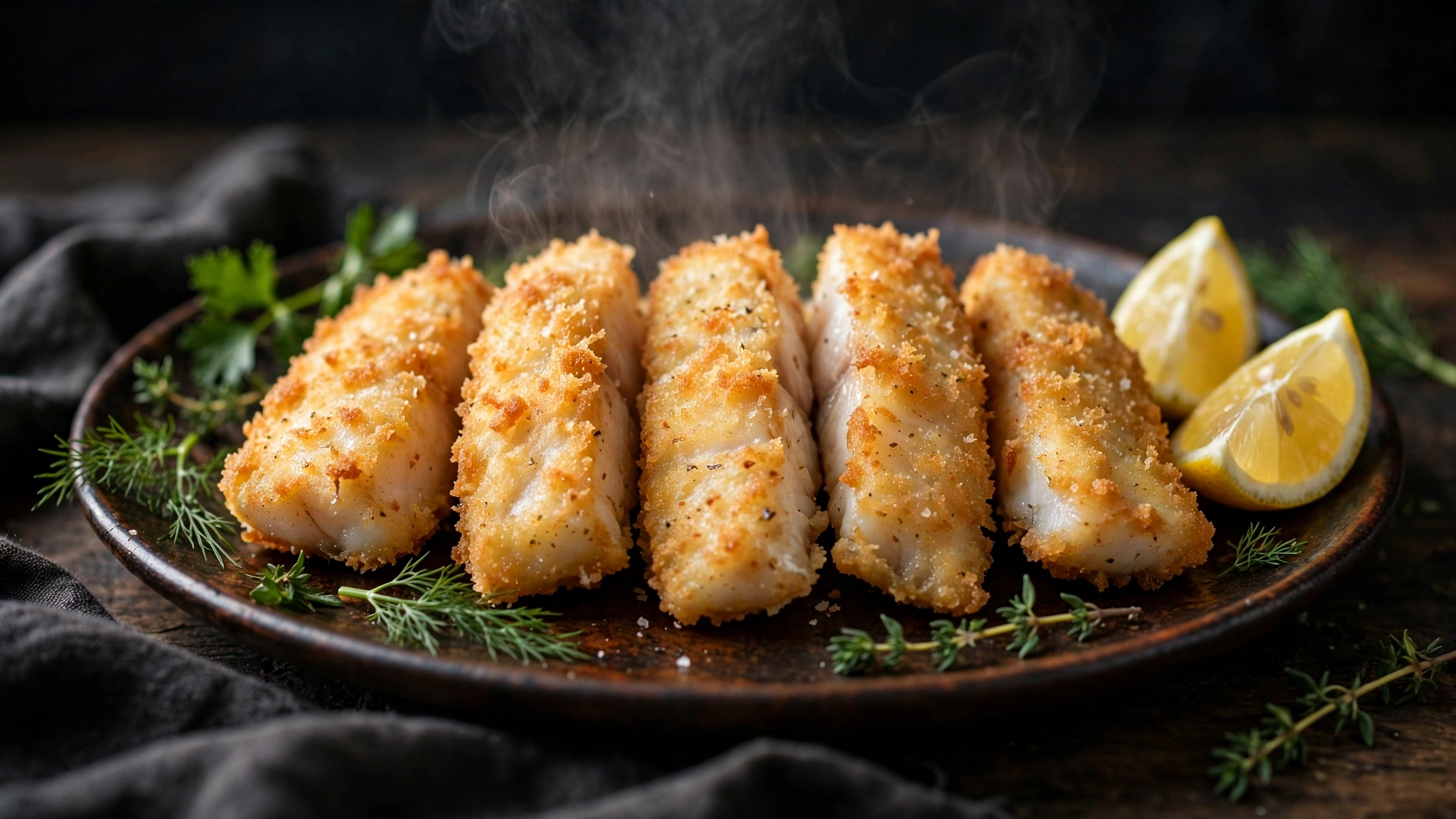
Haddock vs Cod: What’s the Difference?
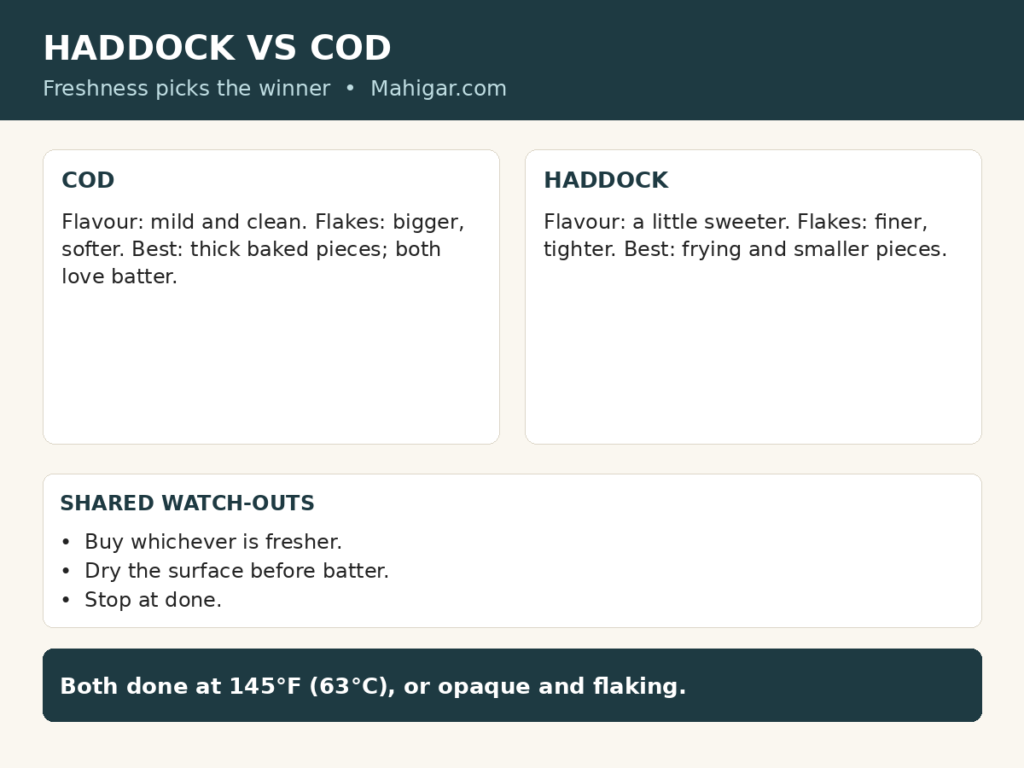
Haddock and cod are cousins, and at the counter they can look like the same fish in two coats. Both are mild, white, and flaky. Both love batter. The honest differences are small but real: cod is the milder fish, with bigger, softer flakes. Haddock tastes a little sweeter, with finer, tighter flakes and slightly more flavour of its own. And one rule beats both names: buy whichever fish is fresher that day.
I am Wasim Abbas Bhatti, the Fish’s Chef. I have cooked both fish for more than twenty years — in batter, in trays, and in family curries. This comparison sits inside Fish Species Guide: What to Buy and How to Cook Each One, where species are matched to the jobs they do best. Cod and haddock share most jobs — which is exactly why the small differences are worth knowing.
Table of Contents
At the Counter: What You Actually See
Both fish arrive as pale, white fillets, and a tired cod looks much like a tired haddock. A few general cues help, but treat them as hints, not proof.
Cod fillets are often cut from a larger fish, so pieces tend to be thicker, with broad flakes already visible in the raw flesh, which looks soft and loose-grained. Haddock fillets are often a little smaller and thinner, with a finer, tighter grain. In some markets haddock is sold skin-on to help tell it apart; in many, both fish arrive skinless, and then the label does all the talking.
That is the first honest lesson here: if both fillets are skinless, white, and wrapped, most cooks cannot swear which is which by looking. Buy the fish in front of you, not the name with your eyes closed. The freshness checks below matter more than the word on the ticket.
Flavour and Texture, Side by Side
This is where the two fish quietly part company.
Cod is the milder of the two. The flavour is clean and gentle, and the flesh separates into big, soft flakes. Because it says so little on its own, cod takes batter, sauce, and seasoning politely — the coating leads, the fish follows.
Haddock has a little more to say. Cooks often describe it as slightly sweeter, and I agree: there is a touch more flavour in the flesh itself. The flakes are finer and tighter than cod’s, and the texture feels a shade firmer in the mouth. On a plain plate, that finer flake and gentle sweetness are how I know haddock is in front of me.
Neither difference is large. The gap grows clearer when the fish is cooked plainly — baked or steamed with little on it — because batter and strong sauce hide most of what separates them.
Buying Checks for Both Fish
The checks are the same for cod and haddock, because freshness does not read labels.
Look for moist flesh with no dry, curled edges and no gaping flakes. Press gently: the flesh should spring back, not hold a dent. The smell should be mild and clean, like sea water — never sour, heavy, or strong through the wrapping. On skin-on pieces, skin should look bright and tight.
Then apply the rule that settles the argument: choose the fresher fish, whichever name it carries. A bright, just-cut haddock beats a tired cod every time, and a fresh cod beats a haddock that has waited too long. Species is the second question. Freshness is the first.
Bones, Skin, and Prep
Both fish are kind at the table. Each carries one central frame and a line of pin bones along the fillet, and neither asks you to manage carp-family fine bones. Still, run a fingertip over every fillet before cooking, pick out what you feel, and let an adult check children’s portions.
Pieces from the two fish often differ in thickness, and thickness — not species — decides the cooking time. Cut or sort pieces so thick cooks with thick and thin with thin; even portioning is taught step by step in Fish Prep and Butchery: Every Skill You Need. Pat the surface very dry before batter or pan: white fish weeps as it sits, and a wet surface steams instead of crisping.
Best Jobs: Where Each One Shines
Start with the shared truth: both are classic batter-and-fry fish. If tonight is fish and chips, either one will make the table happy. For the full home method, see British Fish and Chips at Home.
Within that, kitchen habit gives each fish a small home ground. Cod’s thick pieces and big flakes suit baking, tray roasts, and chunky dishes where the fish must hold together in chunks. Haddock’s finer flakes and slightly firmer bite suit frying and smaller pieces, where it stays neat in the batter and eats a little denser.
At my own table the brighter fish usually comes home. When both are equally fresh and the dish is plain, I reach for haddock if I want the fish to speak a little louder, and cod when the sauce, batter, or spice blend is the star.
The Shared Fry Routine for Cod or Haddock
Choose even pieces.
Thick with thick, thin with thin, so every piece finishes together.
Dry the surface well.
Pat both sides; a dry fillet takes batter and browns instead of steaming.
Season the fish, then coat it.
A light, even batter or crumb — enough to protect the flesh, not bury it.
Fry once, in one layer.
Give each piece room. Crowded fish steams and the coating goes soft.
Do not move it early.
Let the coating set before you turn or lift the piece; one confident turn is enough.
Check the thickest piece.
Done means 145°F (63°C), or flesh that is opaque and flakes gently.
Rest it briefly and serve hot.
Lemon at the table, not in the pan.
Can You Swap One for the Other?
Yes — in most home recipes, cod and haddock swap without drama. Battered fish, baked trays, fish cakes, gentle curries: either fish will do the job. Match the thickness, keep the surface dry, stop at done.
The swap only asks for two small thoughts. If the dish is very plain and the fish is the flavour, haddock’s gentle sweetness shows a little more. If the pieces are thick and you need big, soft flakes that hold in chunks, cod’s shape helps. Everything else is freshness and handling.
The Safety Frame: Mercury and Doneness
On mercury, these two are among the calmer names at the counter. In the FDA/EPA categories set out in Mercury in Fish: Safe Levels by Species, both cod and haddock sit among the Best Choices — the lower-mercury group. The full chart, including servings for children and pregnancy, is in that guide. This is general information, not medical advice.
Doneness is the same finish line for both: 145°F (63°C) in the thickest part, or flesh that is opaque and flakes easily. The full chart is in Safe Internal Cooking Temperatures for Every Type of Fish. White fish dries quickly past that point, so probe the thickest piece and stop on time.
What to Avoid
- Buying the name instead of the fish. A tired “premium” fillet loses to a fresh everyday one every time.
- Cooking mixed thicknesses as one batch. Thin tails finish long before thick centres; sort the pieces first.
- Battering wet fish. Surface water turns coating soft and makes the fish steam in its own jacket.
- Cooking past done. Both fish go from moist flakes to dry and tight quickly; the thermometer ends the guessing.
Frequently Asked Questions
Which tastes better, haddock or cod?
Neither wins for everyone. Cod is milder, with bigger, softer flakes. Haddock is slightly sweeter, with finer, tighter flakes and a touch more flavour. Haddock speaks a little louder in plain dishes; cod carries a sauce or batter quietly. Fresher beats both.
Which is better for fish and chips?
Both are classic frying fish. Haddock’s finer flakes and slightly firmer bite keep small fried pieces neat; thicker cod pieces fry well too and give big, soft flakes. Choose the fresher fish, and match the thickness.
Can I substitute haddock for cod in a recipe?
Yes. In battered fish, baked trays, fish cakes, and gentle curries, the two swap easily. Match piece thickness, dry the surface well, and cook to the same finish — 145°F (63°C), or opaque and flaking.
How can I tell cod and haddock apart at the counter?
Sometimes you cannot, and that is the honest answer. Cod pieces often come thicker, with broad, loose flakes; haddock is often a little thinner with a finer grain, and is sometimes sold skin-on to help tell it apart. When both are skinless and wrapped, trust freshness checks more than the label.
What to Check Next
Use this order at the counter: freshness first, job second, name third. The freshest white fish, matched to tonight’s dish — batter, bake, or tray — will taste better than the “right” species bought tired.
When you are ready to take this comparison into a full dish, the British-style fried fish in my World Cuisine pillar is the natural next plate. Back at the hub, the Species pillar sorts every other fish the same honest way: read the traits, choose the job, then cook to 145°F and stop.
