Monkfish: The ‘Poor Man’s Lobster’ Explained
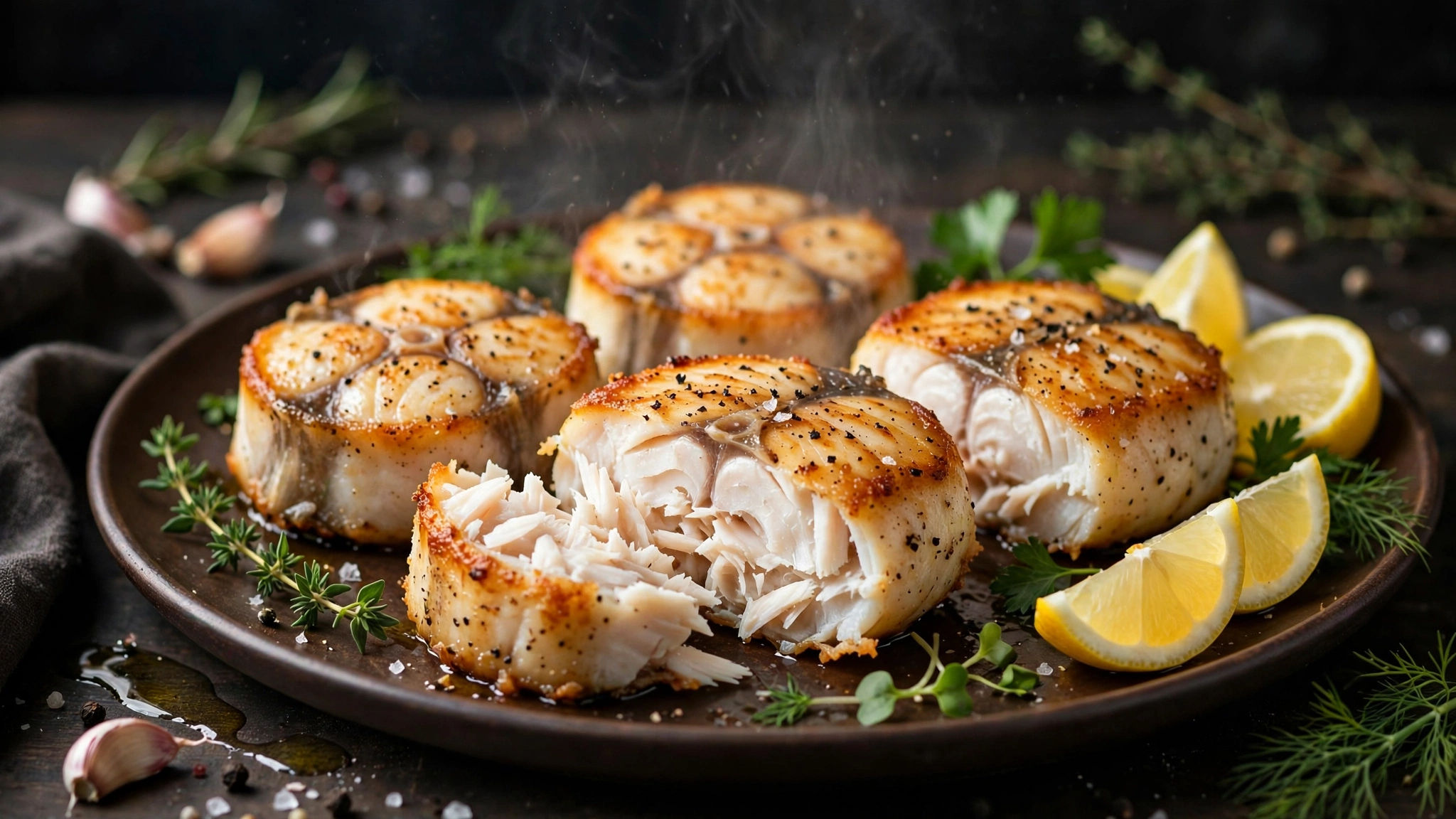
Monkfish is the fish cooks call the “poor man’s lobster,” and the nickname is half true. The flesh is firm, dense, and meaty, with big flakes that hold together the way lobster tail does — but it is still fish, and it still asks to be cooked like fish. Treat it as a firm, confident piece of seafood and it will reward you. Treat it as a cheap lobster copy and you will miss what it actually does well.
I am Wasim Abbas Bhatti, the Fish’s Chef. This profile sits inside Fish Species Guide: What to Buy and How to Cook Each One, where each species is matched to the work it does best. Monkfish’s best work is the firm jobs: roasting, searing, and chunks that hold their shape in a sauce.
Table of Contents
What Monkfish Is Like — and What It Is Not
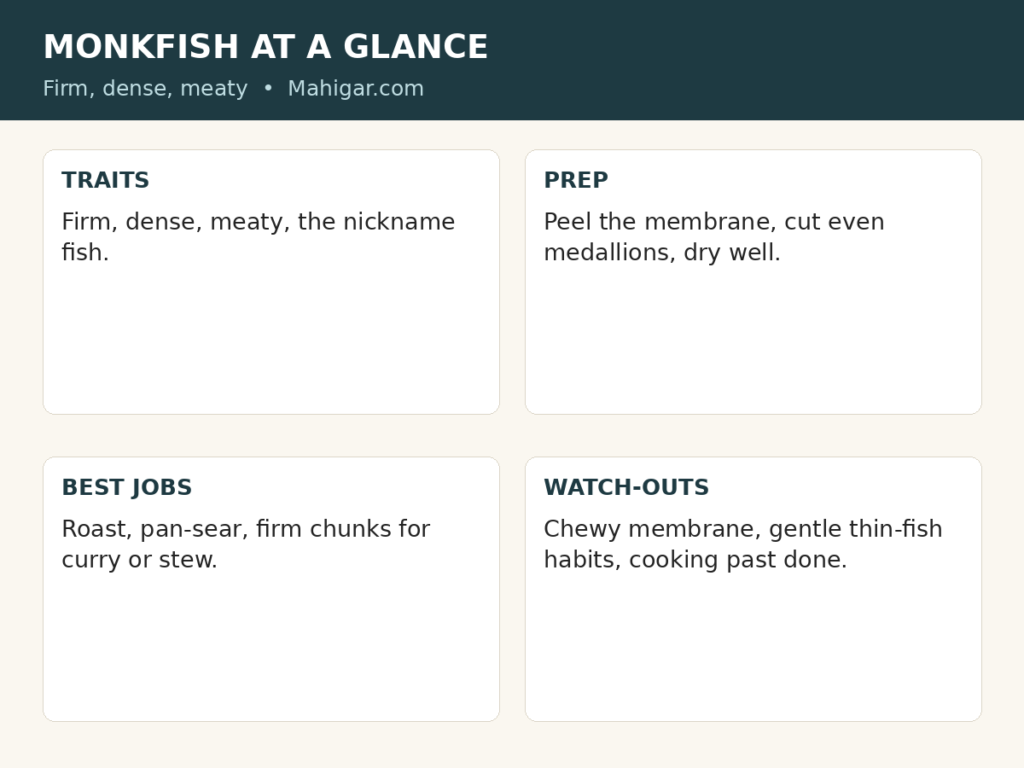
Start with the honest part. Monkfish does not taste like lobster. Lobster has its own sweet, rich flavour, and monkfish has a milder, cleaner one. What the two share is texture: dense, firm flesh that cuts into meaty pieces and chews with real substance. That is where the comparison holds, and that is where it stops.
What you get is a lean, firm white fish with a satisfying bite. It does not flake into soft layers the way cod does, and it does not fall apart when you move it in a pan. For cooks who find delicate fish frustrating — fish that breaks when you look at it — monkfish is a relief.
One more honesty note: I will not tell you monkfish is a bargain or that it costs any particular thing. Prices change by market and season, and that is not what this page is for. Buy it for its texture and its firmness, not for the nickname.
Buying Monkfish: Look for the Tail
At the home cook’s counter, monkfish usually arrives as the tail — a thick, tapered piece of firm white flesh, sometimes whole, sometimes already cut into medallions. That is the part you cook, and it is the part this guide is about.
Buy it the way you buy any good fish. The flesh should look moist and pale, with a clean sheen — not grey, dried at the edges, or sitting in milky liquid. Press it gently: monkfish is naturally firm, so it should feel solid and spring back, never soft or mushy. The smell should be mild and clean, like sea water. A sour or strong smell means choose another piece, whatever the label promises.
If the tail still wears its thin outer membrane, do not let that scare you — you will remove it at home, and the next section shows how. But do look under it where you can: bright, clean flesh is what you are paying for.
Prep: Peel the Membrane, Cut Even Pieces
This is the step that decides whether monkfish eats firm and pleasant or tight and chewy. The tail is wrapped in a thin, tough membrane. Cooked with it on, that membrane shrinks and squeezes the flesh, and it chews like rubber. Peeled off, the same fish cooks tender-firm and clean.
The method is simple and belongs to the board, not the stove. Dry the tail so it does not slip. Slip the tip of a knife under the membrane at one end, lift a flap, grip that flap with a towel or a piece of kitchen paper for hold, and pull the membrane away in strips, working around the tail. It comes off in sheets, the way the skin comes off a fillet. If a strip resists, slide the knife flat under it rather than tearing into the flesh. Thin grey patches that cling tight can be trimmed with the knife.
When the tail is clean, cut it across into even medallions — pieces of matching thickness, so they all finish together. Then pat every piece very dry. Monkfish weeps surface moisture as it sits, and a wet medallion steams in the pan instead of browning. Membrane removal, even portioning, and drying are all taught step by step in Fish Prep and Butchery: Every Skill You Need.
Do not skip the membrane to save two minutes. That shortcut is the single most common reason people cook monkfish once and never buy it again.
Best Ways to Cook Monkfish
Roast: the lead method
Monkfish was built for the oven. Even medallions, dried and seasoned, one layer on a hot tray or in an oven pan, roasted until just done — the firm flesh browns gently at the edges and stays juicy inside. It is the calmest way to cook it and the method this profile builds its routine around.
Pan-sear for a crisp edge
A hot pan, a little room between pieces, and one confident turn give monkfish a golden crust while the centre stays firm and moist. Sear it the way you would a firm steak fish: dry surface, hot surface, no moving the piece until it releases.
Curry and stew chunks
Because the flesh is dense, monkfish chunks hold together in a simmering sauce where a flaky fish would dissolve. Cut pieces, add them to a built curry or stew sauce, and let them poach in the liquid. They come out firm and spoon-tender, still in one piece — a genuinely useful trick for saucy dishes.
My Monkfish Roast Routine
-
Start with firm, fresh fish
Moist pale flesh, mild smell. If it smells strong, choose another piece.
-
Peel the membrane
Knife under the edge, grip with a towel, pull in strips. Trim any clinging grey patches.
-
Cut even medallions
Match the thickness so every piece finishes together.
-
Pat very dry and season
Salt and your spice hand, close to cooking time.
-
Roast in one layer
Room between the pieces on a hot tray or oven pan, so they roast instead of steaming.
-
Check the thickest medallion
Done at 145°F (63°C), or opaque and flaking. Off the heat as soon as it gets there.
What to Avoid With Monkfish
Do not cook it with the membrane on — that is the chewy, tight result people blame on the fish. Do not treat it like a thin, delicate fillet either, with gentle poaching and no colour; monkfish wants honest heat and a dry surface. And do not keep cooking past done “to be safe”: firm fish goes dry and stringy like any other when it travels too far. The dense texture forgives more than sole does, but done is still done.
The Safety Frame: Mercury and Doneness
On mercury, monkfish is one of the fish the FDA/EPA chart names directly: it sits among the Good Choices, at one serving a week for the groups that advice is written for, with no other fish that week. I am not adding numbers or changing that placing — the full chart, the serving sizes, and the pregnancy and children guidance are in Mercury in Fish: Safe Levels by Species. Read that before building a weekly habit around any fish in that group.
Doneness is the same anchor as everywhere on Mahigar: monkfish is done at 145°F (63°C) in the thickest medallion, or opaque and flaking, as set out in Safe Internal Cooking Temperatures for Every Type of Fish. Thick pieces can look set at the surface while the centre lags, so check the middle of the thickest piece, not the edge.
If Monkfish Is Not Available
Choose by job, not by nickname. For roasting and searing, any firm white fish you can cut into even, thick pieces will do the work — the firm-and-meaty group in the Species Guide is where to look. For curry chunks, pick a firm fish that holds together in sauce rather than a soft fillet that will dissolve into it.
If what you actually wanted was lobster, be honest with yourself and buy lobster when the occasion asks for it. Monkfish is a good fish in its own right; it does not need a borrowed name to earn its plate.
Frequently Asked Questions
Does monkfish really taste like lobster?
Not exactly — and it is better to know that before you buy. The texture is the honest part of the nickname: firm, dense, meaty flakes. The flavour is milder and cleaner than lobster’s rich sweetness. Cook it for what it is — a firm white fish — and it will not disappoint you.
Why is my monkfish chewy?
Almost always the membrane. The thin skin around the tail shrinks in the heat and squeezes the flesh tight. Peel it off in strips before cooking, trim any clinging patches, and the same fish eats firm and tender instead of rubbery.
How do I know monkfish is done?
Probe the thickest medallion: 145°F (63°C), or flesh that is opaque and flaking when you press it gently. The surface can look finished while the centre of a thick piece still lags, so check the middle, not the edge.
Is monkfish high in mercury?
The FDA/EPA chart places monkfish among the Good Choices — one serving a week for the sensitive groups, and no other fish that week. The full chart and serving guidance, including pregnancy and children, are in my Mercury guide. This is general information, not medical advice.
What to Check Next
Keep the monkfish order beside the board: firm fresh tail, membrane peeled, even medallions, dried well, honest heat, off at done. Choosing from the whole counter tonight — firm, flaky, delicate, or rich? Go back to the Species Guide and read the five traits. Monkfish is the firm, meaty end of that map; cook it like you know that.

One Comment