Basa and Pangasius: What You’re Actually Buying
Basa and pangasius are the mild, soft, white fillets you meet everywhere in South Asian shops — in freezer cases, at fish counters, in family curries and quick weekday fries. Gentle flavour, soft flesh, very little asked of the cook. They also carry a reputation problem, and most of it starts with the name on the label.
I am Wasim Abbas Bhatti, the Fish’s Chef. Pangasius is one of the fish of my own markets, and I have cooked it for years. This profile sits inside Fish Species Guide: What to Buy and How to Cook Each One, where each species is matched to the work it does best. For basa and pangasius, the honest work is simple: buy fresh, dry well, fry crisp or curry gently, and never let a label do your thinking for you.
Table of Contents
What These Fish Are Like
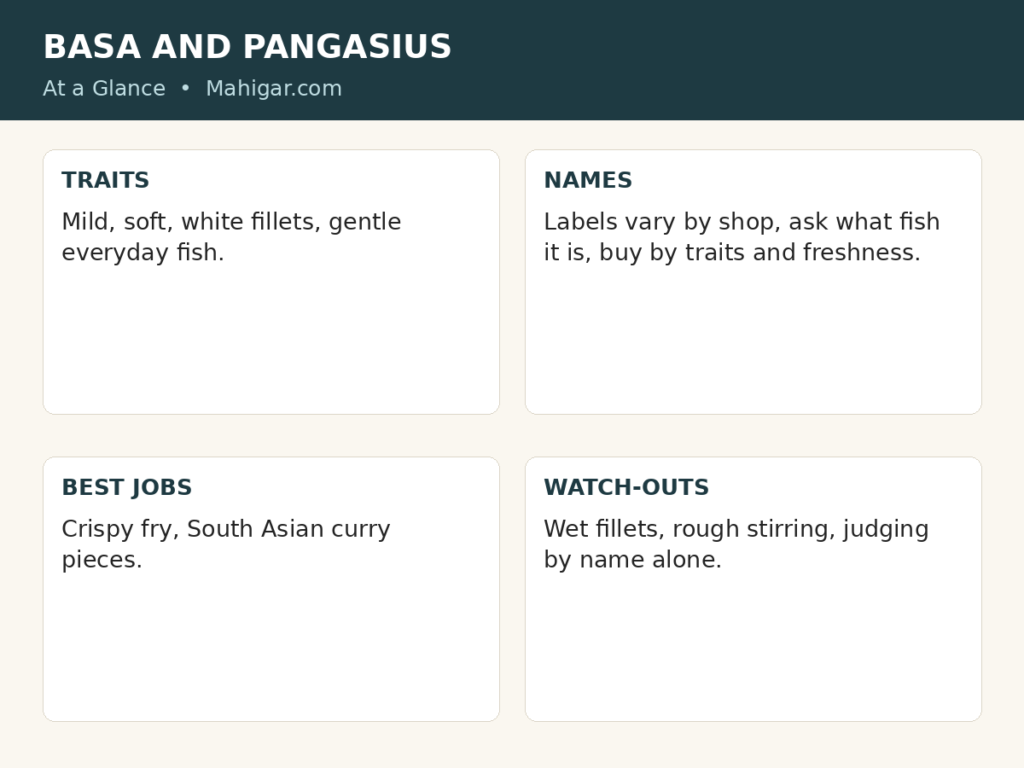
At kitchen level, think of basa and pangasius as soft, mild, white fish. The flesh is pale, the flavour gentle — a quiet background, not a bold statement — and the texture softer than a firm steak fish like swordfish or mahi mahi. Cooked on time, it flakes into moist, tender pieces. Cooked roughly or too long, it turns watery and falls apart.
That mildness is why our kitchens like it: it takes a spice coat politely, carries a curry sauce, and pleases eaters who find stronger fish too much. It is an everyday fish, not a celebration fish — and most family cooking is everyday cooking. One warning: soft flesh forgives rough handling. Stir it hard, flip it five times, or leave it in its own liquid, and it falls apart. Treat it gently and it eats tender.
The Names: Basa, Pangasius, and Honest Labels
Here is where buyers get tangled. “Pangasius” is the name you see on wholesale and export labels. “Basa” is the market name most shoppers know — on the freezer bag and the counter ticket. In many shops the two names point at the same kind of mild freshwater fillet; in others, labels are looser, and a mild white fillet may wear whichever name the seller thinks you recognise.
Do not let a label settle the question. Ask one plain question — what fish is this? — then buy by traits and freshness, not by the word on the ticket. A fresh fillet under an honest name beats a tired fillet under a famous one.
I will not invent a farming story for you either. You will read confident claims online about how every basa is raised. I have not inspected those farms, and neither has most of the internet. What a home cook can judge is the fillet, the shop, and the freshness.
Buying Checks for Basa and Pangasius
Buy these fillets the way you buy any good fish: eyes, fingers, nose.
Look for pale, moist flesh with a clean sheen and no dry, curled, or darkened edges; plump, not shrunken or separating into tired layers. Press gently: soft fish still springs a little; flesh that holds a deep dent or feels mushy has waited too long.
Smell settles it. Fresh basa smells mild and clean — almost nothing at all. A sour, heavy, or strong smell through the wrapping means choose another piece. Frozen packs should feel solid and clean, with no heavy frost or pooled liquid — signs of thawing and refreezing on the journey.
Buy from a counter that turns over fast. A mild fish shows every hour of tired handling. Freshness is not one of the checks for this fish. It is the check.
Bones, Skin, and Prep
Basa and pangasius usually reach the home kitchen as skinless fillets. Like other catfish-family fish, a whole fish carries a central frame and a line of pin bones — but I will not promise you a boneless fillet, because no honest cook should. Run a fingertip along the centre of every fillet, pull out what you feel, and let an adult check children’s portions. That habit is taught step by step in Fish Prep and Butchery: Every Skill You Need.
The prep that matters most is dryness. These fillets weep moisture as they sit. Pat them very dry, portion them close in thickness, and season late — right before the pan or pot. A wet fillet steams grey; a dry one takes a golden crust. That difference explains most disappointing basa ever served.
Best Ways to Cook Basa and Pangasius
Crispy fry: the lead job
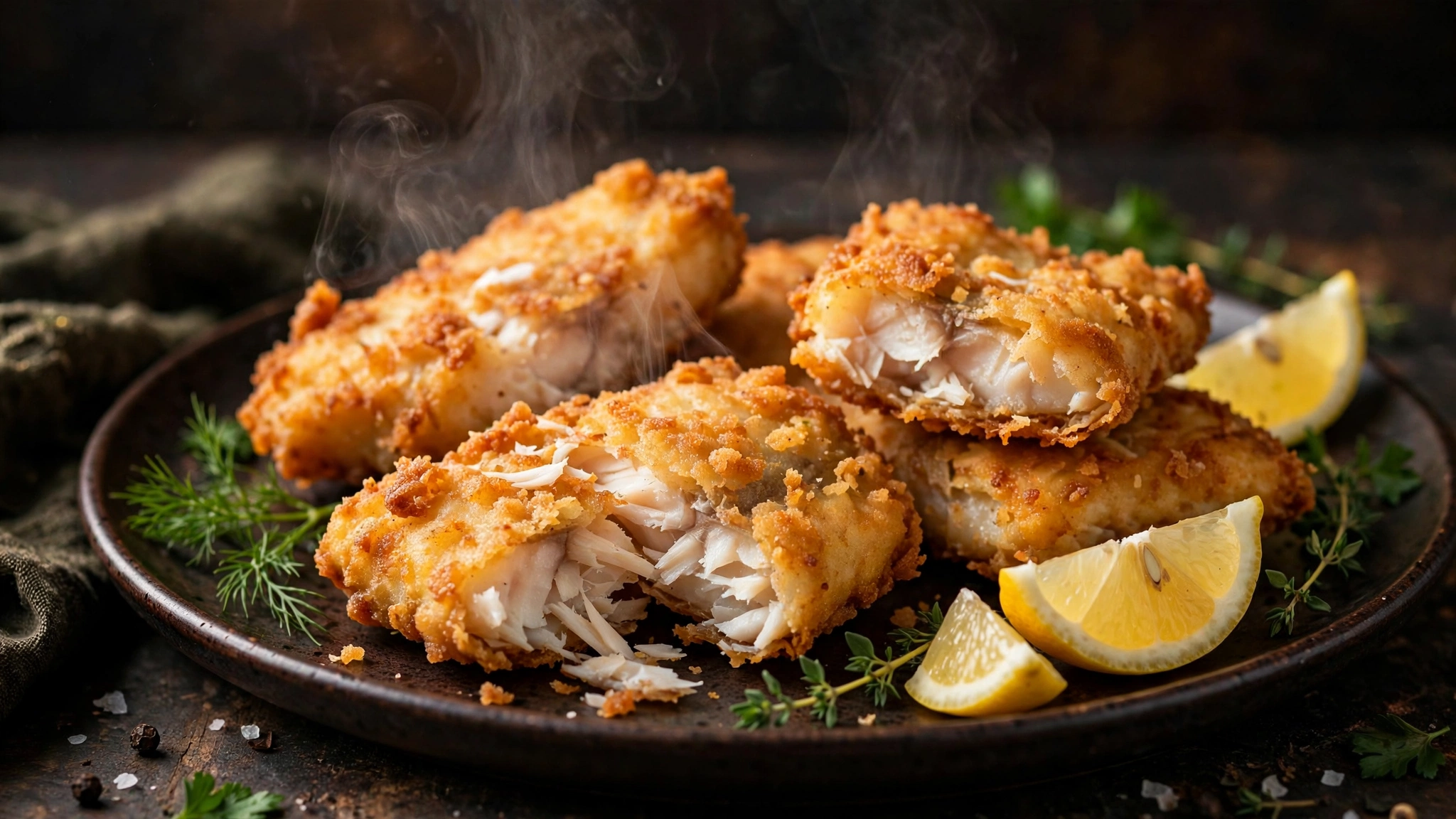
This is the fillet’s best work. A light spice coat — salt, turmeric, chilli, your house blend if you have one — on very dry pieces, hot oil, one layer, no crowding. The crust turns golden and crisp while the inside stays soft and moist. Lemon and sliced onion at serving, and a fish people call “plain” suddenly is not.
South Asian curry: gentle hands
Basa and pangasius pieces sit happily in a South Asian curry if you respect their softness. Build the masala fully first, slide the pieces in one layer, spoon sauce over instead of stirring, and let them poach. Firm fish can take a spoon; this fish asks for a swirl of the pot. A one-layer tray bake, checked early, and gentle steaming also work — stop the moment the thickest part turns opaque and flakes.
My Crispy Fried Basa Routine
Crispy fried basa in seven checks: dry, seasoned late, fried once and served at 145 degrees Fahrenheit.
-
Choose fresh fillets
Mild, clean smell; flesh that springs back. If it smells heavy, choose another fish.
-
Portion evenly
Pieces close in thickness, so thick and thin do not finish at different times.
-
Pat very dry
Kitchen paper on both sides. This is the crispness step — do not skip it.
-
Season late
Salt, turmeric, chilli, or your house blend, right before cooking.
-
Fry in one layer
Hot oil, no crowding, no moving the pieces until the crust sets.
-
Flip once, gently
One turn, then straight out when done.
-
Check and serve
Done at 145 degrees, or opaque and flaking. Lemon and onion at the table.
The Safety Frame: Mercury and Doneness
Now the keyword question: is basa safe to eat? The FDA/EPA chart does not name basa or pangasius, and I will not assign them a category or a mercury number I do not have. What I can give you is the principle, labelled as a principle: pangasius is a farmed, fast-growing, non-predatory fish — the profile that generally collects less mercury than a large, old predator. The official chart, with servings for children and pregnancy, is in Mercury in Fish: Safe Levels by Species.
Doneness is the same as for every fin fish here: 145°F (63°C) in the thickest part, or opaque and flaking easily, with the full chart in Safe Internal Cooking Temperatures for Every Type of Fish. A soft fish is not a raw fish — judge by the check, not by tenderness. This is general information, not medical advice; for pregnancy, children, or health conditions, follow official guidance and your doctor.
What to Avoid With Basa and Pangasius
Do not judge this fish by its name — judge the fillet in front of you. Do not cook it wet; a soaked, dripping fillet will steam and break, and you will blame the species for a handling mistake. Do not stir it hard in curry. And do not buy tired basa because it is the budget option: a mild fish has nowhere to hide staleness, so the cheapest tired fillet is the worst bargain at the counter.
If Basa Is Not Available
Choose by job. For the same mild, gentle fillet work, tilapia is the nearest everyday swap — similar softness, similar kindness to children and nervous eaters. For curry pieces that hold their shape more firmly, a firm white fish cut in chunks does the job with a braver hand. Buy whichever is fresher that day; with mild fish, freshness is the flavour.
Frequently Asked Questions
Are basa and pangasius the same fish?
Names overlap in shops: Pangasius is the trade label, basa the shopper name. Ask what fish it is, then judge freshness, not the ticket.
Is basa safe to eat?
Not named on the FDA/EPA chart, so no category assigned. Farmed, fast-growing profile; follow the Mercury guide and official advice.
Why does my basa fall apart?
Usually handling: wet fillet, crowded pan, hard stirring, or early flip. Dry well, single layer, flip once, spoon sauce over.
What is the best way to cook basa fillets?
Crispy fry on very dry, even pieces is the lead method; gentle curry or checked tray bake also work.
What to Check Next
Keep the order I use: name second, freshness first, dryness always. Check the Mercury guide for the official safety frame, use the Species pillar to match any fish to its best job, and let the Prep pillar handle pin bones and portioning. When Mahigar’s World Cuisine profiles publish, this page will cross-link to the Pakistani-style fish cooking it points to — mild fish, strong spice, honest buying.

One Comment