Fish Allergies: Symptoms and Safe Alternatives
The scariest question in my kitchen has never been about cooking. It is the one that comes after the meal: hives on a child’s arms, a swollen lip, a stomach gone wrong, and nobody at the table can say whether the fish did it, the shellfish did it, or the fish was simply bad. I have watched that confusion harden into a lifetime fear of all seafood, and I have watched it turn into dangerous guessing. So this guide does the sorting job plainly: a true fish allergy, a shellfish allergy, and the allergy-like poisoning from poorly chilled fish, three problems that can feel alike after a meal.
A fish allergy is the first of the three: your immune system mistaking a protein in finned fish (cod, salmon, tuna, and their cousins) for a threat. The allergy bodies I read for this guide, ACAAI, FARE, and NHS inform, describe reactions that usually begin within minutes and can turn life-threatening. A fish allergy is managed with avoidance, kitchen care, and a doctor’s plan, and it is not the same as a shellfish allergy or the allergy-like poisoning from badly handled fish.
I am Wasim Abbas Bhatti, the Fish’s Chef. I have cooked fish for more than twenty years, and guests with fish allergies have eaten at my table. My authority is the kitchen: labels, boards, pans, and honest alternatives. The medical side belongs to doctors. This guide sits inside Fish Nutrition and Health: The Complete Guide, Mahigar’s nutrition hub.
One note before anything else, repeated through this page: this is general information, not medical advice. If you think fish may be an allergy problem for you or your child, see a doctor or allergist before your next fish meal. Do not test the question at the table.
Table of Contents
What a Fish Allergy Actually Is
NHS inform explains a food allergy plainly: the immune system mistakenly treats food proteins as a threat, produces an antibody called IgE, and releases chemicals, histamine among them, that cause the symptoms. FARE describes the same picture for fish: fish proteins bind to the allergic person’s IgE antibodies and trigger the body’s defences.
Two kitchen facts follow. First, the problem is a protein, not spoilage. Fresh, perfectly cooked fish can still trigger it, which is why “just cook it well” is no strategy and guidance manages this by avoidance. Second, the group is finned fish: cod, salmon, tuna, haddock, tilapia, trout, and their relatives. ACAAI notes doctors typically advise avoiding finned fish generally, unless an allergist tests specific varieties.
The Symptoms: What People Notice
Allergy sources describe a recognisable pattern. ACAAI lists hives or a skin rash; nausea, stomach cramps, vomiting or diarrhoea; a stuffy or runny nose and sneezing; headaches; and asthma symptoms. NHS inform’s list adds tingling or itching in the mouth, swelling of the face, mouth, or throat, difficulty swallowing, wheezing or shortness of breath, and dizziness.
Timing is a clue: NHS inform says symptoms almost always develop a few seconds or minutes after eating. Reactions can be mild or very severe; both ACAAI and FARE say so, and one that starts mild can still become serious.
No website can tell you whether a past reaction was an allergy. Write down what you ate and what happened, and take it to a doctor or allergist before fish is on your plate again. General information, not medical advice.
The Emergency End of the Scale: Anaphylaxis
The severe form is called anaphylaxis, and every source treats it the same way: a medical emergency that, as NHS inform says, can come on suddenly and worsen very quickly. The danger signs are swelling of the throat and tongue, difficulty breathing, a tight throat or trouble swallowing, feeling faint or dizzy, and collapse.
ACAAI is direct about emergency treatment: only epinephrine can reverse the symptoms of anaphylaxis. It is doctor-prescribed, given with an auto-injector, and an ambulance should be called. If you or your child has been prescribed one, your doctor’s plan, not a food blog, governs that moment. Breathing trouble after any meal means emergency first, questions later.
Fish Allergy Is Not Shellfish Allergy
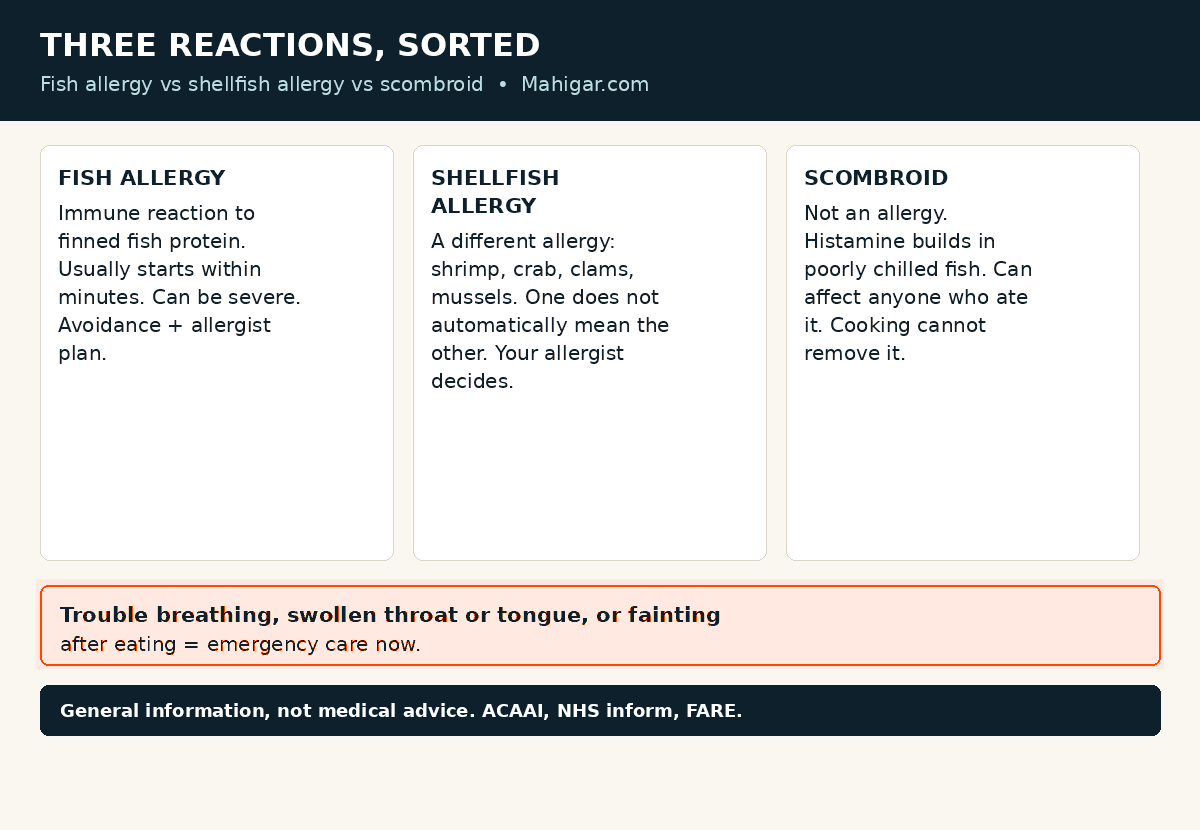
This is the distinction readers ask me about most. FARE states that finned fish and shellfish are not closely related, and being allergic to one does not always mean avoiding both, with the important condition that your allergist sets the restrictions. ACAAI adds that one person can still have both, just as someone can be allergic to both eggs and peanuts.
Shellfish is its own group: crustaceans such as shrimp, crab, and lobster, and molluscs such as clams, mussels, and oysters. The two allergies involve different proteins and different avoid-lists, so guessing fails both ways: cutting out safe food for no reason, or eating a problem food. Your allergist decides which seafoods belong on your plate, before you shop; handling the allowed ones is taught in How to Prep Shrimp, Crab, and Shellfish at Home.
And It Is Not Fish Poisoning, Either
A third look-alike has its own Mahigar guide. Scombroid is poisoning, not allergy: when tuna, mackerel, and similar fish are not chilled properly after the catch, histamine builds up in the flesh, causing flushing, itching, headache, cramps, and stomach upset that feel like an allergic reaction. Anyone who ate that fish can react, often several people at one meal, and cooking cannot remove histamine once formed.
That overlap is exactly why self-diagnosis fails: a reaction after tuna could be an allergy, histamine in that particular fish, or ordinary spoilage bacteria. Only a doctor can sort a real case. Mahigar’s safety guide, Fish Food Poisoning: Symptoms, Causes, and Prevention, covers how poisoning happens and how the cold chain prevents it.
Where Fish Hides: Labels and Surprises
For a cook, this is the section that changes shopping habits. Fish does not only arrive as a fillet. ACAAI lists the usual hiding places: Worcestershire sauce, Caesar salad, imitation crab (surimi, a processed fish paste), and Asian dishes built on fish-based stocks. Sauces and ready meals vary by brand, so the habit is simple: read the label every time, and ask when there is no label to read.
In the United States, packaged foods must name the specific type of fish under the allergen labelling law ACAAI describes, making the ingredient list genuinely useful, if you read it. Two more cautions from the same source: fish gelatin can itself be an allergy issue for some people, and fish oil supplements are not automatic safe territory, so consult your allergist first. Both are “ask first” items, not kitchen experiments.
The Shared Kitchen: Habits That Reduce Accidents
Most homes cook for more than one person, so this is where my twenty years are useful. These are the habits I have used at my own table when allergy guests were eating with us. None of this is medical treatment. It is kitchen discipline that lowers the chance of the wrong food reaching the wrong plate.
Read and ask. Labels on everything packaged, every time; a direct question to whoever is selling or serving the food. ACAAI’s restaurant advice: tell whoever handles your food about the allergy, and ask whether what you plan to eat has touched the fish you react to.
Keep fish separate in a fish-sharing kitchen. Separate board and knife for fish, surfaces wiped before the allergy-safe food is prepped, fish stored covered and apart in the fridge, and the allergy-safe portion cooked first or in a clean pan, not in oil that has just fried fish.
Be extra careful where fish is everywhere. ACAAI notes seafood restaurants carry a high cross-contact risk during preparation, and fish protein can even be released into the air where fish cooks. At a fish stall or busy seafood counter, clear questions are not fussiness; they are the system working.
Eating Well Without Fish: Safe Alternatives
A fish-free plate should never be a sad or poor one. Think about what fish was doing in the diet, and fill each job with something else.
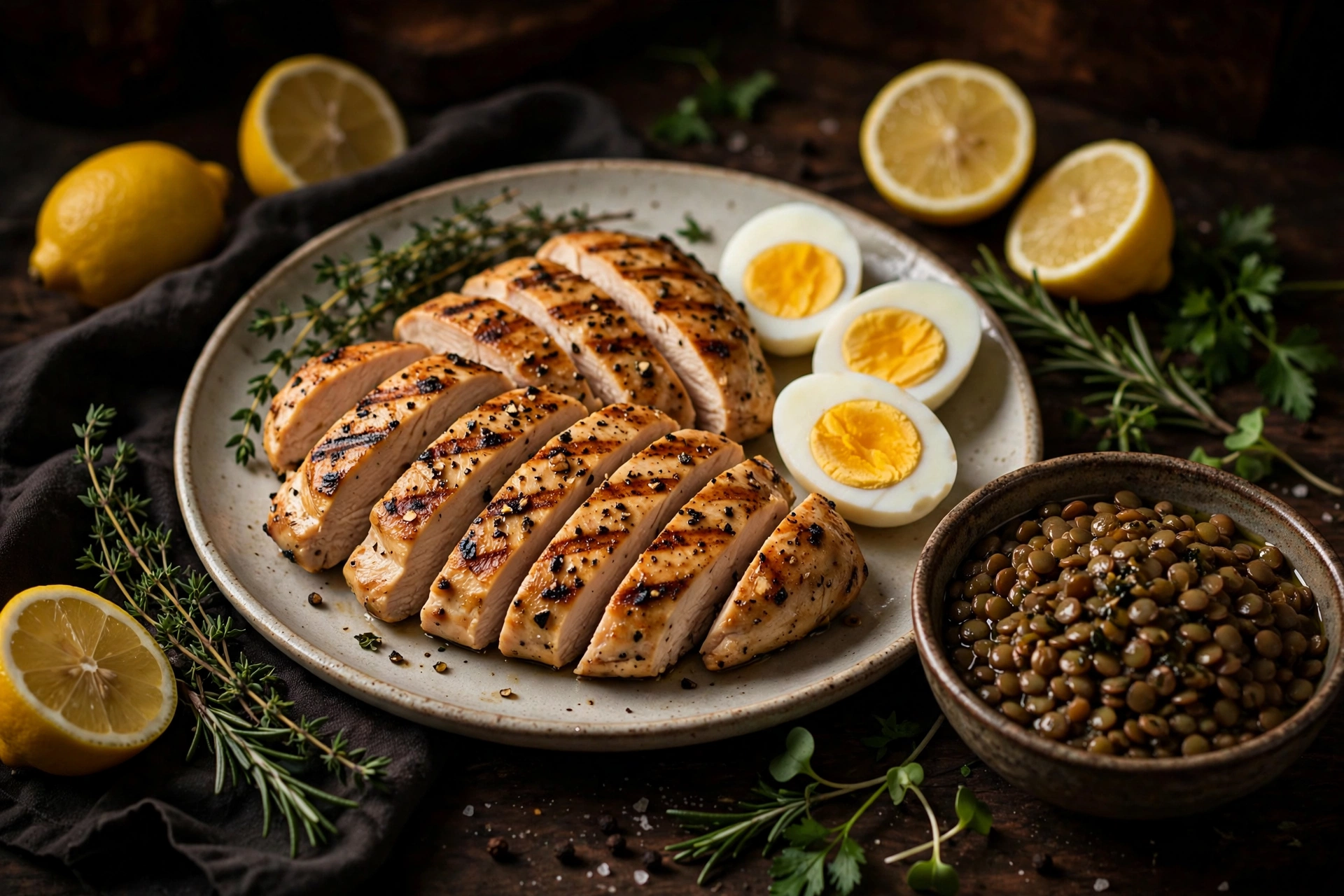
The protein job is the easy one. Eggs, poultry, meat, lentils, beans, chickpeas, and tofu all provide protein. The protein group is wide, and fish was only ever one member of it.
The omega-3 job needs honesty. The EPA and DHA that make oily fish famous come mostly from fish and seafood; flax, chia, and walnuts provide a different omega-3 (ALA). Whether you need more (an algae-based supplement is one option doctors sometimes discuss) is a question for your doctor or dietitian. What oily fish contributes is ranked in Omega-3 Rich Fish, Ranked by Species.
The quiet jobs (vitamin D, vitamin B12, and the calcium in bone-in canned fish) spread across a varied diet: eggs and meat carry B12, dairy or fortified alternatives carry calcium, and vitamin D planning is exactly where involving your doctor or a dietitian, as NHS inform advises before big diet changes, earns its keep.
If You Think Fish Is Your Problem
Let me end where I began, because this matters most. Do not run the experiment yourself: a “small test piece to see what happens” is exactly what guidance warns against by insisting food challenges happen only under medical supervision.
The route the sources describe is straightforward: see your GP or doctor, who can refer you to an allergy clinic or allergist where appropriate. An allergist can take your history, test properly, and tell you which fish, if any, must be avoided and what your emergency plan should be. NHS inform also warns against commercial home allergy testing kits; even a reliable-looking result needs a professional to interpret it. Until that appointment, leave fish off your plate and use the alternatives above. General information, not medical advice: diagnosis first, kitchen habits second.
Frequently Asked Questions
Yes. FARE notes fish allergy often first appears in adult life, and NHS inform adds that adult-onset food allergies are likely lifelong. Any new reaction to fish deserves a doctor’s assessment before the next fish meal. General information, not medical advice.
Not automatically. FARE and ACAAI both explain the two are separate, unrelated allergies, though one person can have both, and cross-contact matters. Your allergist decides your avoid-list; do not write it yourself.
No. Scombroid histamine poisoning from poorly chilled fish can look like an allergic reaction and can affect anyone who ate that fish; spoilage bacteria are a third pattern. Only a doctor can tell them apart in a real case.
Stop eating the food. Trouble breathing, a swollen throat or tongue, faintness, or collapse is an emergency: use a prescribed epinephrine auto-injector if you have one, exactly as your doctor taught you, and call emergency services. ACAAI is clear that only epinephrine reverses anaphylaxis. Get assessed by a doctor even if you feel better.
What to Check Next
If this page is yours, the order is: doctor or allergist first, kitchen habits second, alternatives always on the table. The hub above walks through the nutrition questions fish would have answered, and the safety guide covers the poisoning look-alike. If fish is simply not your problem, the rest of Mahigar is where it belongs: cooked properly, at 145°F, for people who can enjoy it.
Sources used (named in text, not medical advice): ACAAI, “Fish Allergy” (symptom list; strict avoidance and allergist-set restrictions; FALCPA labelling naming the specific fish; hidden fish in Worcestershire sauce, Caesar salad, surimi/imitation crab, and Asian fish-based stocks; fish gelatin caution and allergist consultation before fish oil supplements; diagnosis by allergist with skin-prick or blood tests and medically supervised food challenges only; cross-contact guidance including telling food handlers, asking about risk, seafood-restaurant caution, and airborne protein where fish cooks; fish and shellfish allergies unrelated; epinephrine as the only treatment that reverses anaphylaxis, doctor-prescribed, with an ambulance call). FARE, “Fish” (finned fish among the most common food allergies; fish protein binding IgE and triggering reactions from mild to very severe; finned fish and shellfish not closely related, one allergy not automatically meaning avoidance of both, cross-contact care, allergist-set restrictions). NHS inform, “Food allergy” (immune system/IgE/histamine explanation; common symptoms and the fuller symptom list; onset a few seconds or minutes after eating; anaphylaxis as a sudden medical emergency requiring emergency services; GP diagnosis with allergy-clinic referral; commercial testing kits not recommended; dietitian involvement before major diet changes). Scombroid facts rest on Mahigar Article 05, itself sourced to CDC and FDA material (histamine forming in poorly chilled fish, allergy-like symptoms, anyone eating the fish can react, cooking cannot remove it).
