Heart-Healthy Fish Recipes (Low Sodium and Low Fat)
The saltiest thing in my kitchen never looked dangerous. It came in a tin with a cheerful label, and for years I tipped its packing liquid straight into the pan without a second thought. Nobody cooking “healthy fish” thinks about the tin. That is exactly where this guide begins.
Most heart-conscious fish cooking fails in one of two ways. Some cooks hear “oily fish” and get scared of the fat, so they boil everything lean and joyless and call it virtue. Others hear “fish is healthy” and stop thinking entirely: batter-fried on Friday, salt shaken at the stove, bottled sauce poured over all of it. Both miss the point. The heart-conscious plate was never about fear, and never about virtue. It is about three smaller decisions: which fish, cooked how, and salted by whom.
This guide builds the plate the way the health bodies describe it. One oily fish in the week, for the omega-3 fats the American Heart Association keeps pointing at. Gentle cooking, so the fat on the plate is the fat the fish was born with. And salt added by your own hand, not a factory’s. It sits inside Fish Recipes for Every Diet and Lifestyle, Mahigar’s diet hub, and it stays at the level a cook can defend: dinner ideas and kitchen practice, not measured recipe cards. Your own heart questions belong to your doctor. What I can do is build the plate honestly.
Table of Contents
What “Heart-Healthy” Means on a Fish Plate (and What It Does Not)
Start with what the health bodies actually say, because this article will not go one word past them.
The American Heart Association says regularly eating fish and seafood is consistently associated with a lower risk of cardiovascular disease, and it recommends 2 servings of fish per week, particularly fatty fish, with a serving counted as 3 ounces cooked. The EPA, carrying the joint FDA and EPA advice, puts it this way: strong evidence shows eating fish as part of a healthy eating pattern may have heart-health benefits. The NHS asks for at least 2 portions of fish a week, including 1 oily portion.
Read the wording slowly, because it is the whole discipline of this page: associated with, may have benefits, as part of a healthy eating pattern. No source I trust promises that a fish dinner prevents or treats heart disease, and this page will not promise it either. The wider evidence, stated carefully, is gathered in Health Benefits of Eating Fish, Backed by Research. What a cook controls is narrower and more useful: which fish, cooked how, salted by whom.
One more honest line: “low sodium and low fat” in my title describes how these dinners are built, not a medical grade stamped on a fillet. No plate leaves my kitchen carrying a disease claim.
The Oily Fish Does the Heavy Lifting
The AHA’s “particularly fatty fish” is the engine of the heart-conscious week. Fatty fish carry the long-chain omega-3 fats, EPA and DHA, that the heart guidance keeps returning to. On Mahigar those fish are already ranked from USDA data, not from my memory.
The short version: Atlantic mackerel and farmed Atlantic salmon sit at the very top for EPA and DHA per 100 grams; Atlantic herring and anchovies are high; canned sardines, rainbow trout, and Pacific oysters are good sources; cod and tilapia are lean fish with very little omega-3, excellent protein, a different job. The full table, every figure sourced entry by entry, is Omega-3 Rich Fish, Ranked by Species.
One name warning rides with this list, and it matters: Atlantic mackerel is not king mackerel. Atlantic mackerel is a Best Choice. King mackerel is a Choices to Avoid predator. Check the exact name on the fish, not just the word “mackerel.”
In practice, one oily fish in the week, salmon, sardines, trout, herring, or Atlantic mackerel, does most of the omega-3 work the AHA points at, and the second fish can be lean, mild, and cheap. Every fish in that rotation is a Best Choice, so the heart habit and the mercury habit are the same habit.
“Low Fat” Is Mostly Decided by the Cooking Method
Here is the cook’s truth the title stands on: the fat a fish is born with and the fat on the finished plate are two different questions.
Lean white fish, cod, tilapia, haddock and their kin, are naturally low in fat. The NHS calls white fish a low-fat alternative to red or processed meat. Oily fish carry more fat, and that fat is where their EPA and DHA live, so a heart-conscious week keeps both kinds on the menu. No fish on my counter is fat-free, and I will not call one so.
What moves the plate’s fat far more than the species is the method. The NHS is blunt: steamed, baked, or grilled fish is a healthier choice than fried fish, and frying can increase fat content, especially in batter. So the everyday methods are the gentle ones: grill, bake, steam, or a plain pan with a little oil. The battered fry is what it honestly is in my house too: a treat, not the routine. The sibling pattern shakes hands here: Keto and Low-Carb Fish Recipes builds the same plain-cooked, no-batter plates from the low-carb direction.
“Low Sodium” Is Decided by Your Hand, Not the Fish
Sodium is where recipe pages most often wave their hands, so let me be exact instead. I will not print a sodium figure for any fresh fish or any finished dish. Those numbers would have to come from laboratory entries opened for the purpose, and inventing them helps nobody’s heart. What cooking does qualify me to teach is where the salt on a fish plate actually comes from, because almost none of it is the fish.
The fish itself: fresh or plain frozen fish, seasoned at home, starts as the cook’s blank page. The salt that lands on it is the salt you chose.
Your hand: salt late and at the table, deliberately, where you can taste it. A smaller amount, consciously placed, flavours more than a heavy hand during cooking that nobody notices.
The bottles and packets: marinades, bottled sauces, pre-seasoned fillets, and spice mixes carry salt chosen by a factory. Read their labels the way you would read a price. The label, not the recipe name, has the final word.
The tins: canned fish carries its packing salt with it, and the honest comparison lives in the USDA figures Mahigar already verified for the exact canned entries, per 100 grams drained. Canned sardines in oil, with bone: 307 mg. Canned pink salmon, drained solids: 381 mg. Canned anchovies in oil: 3,668 mg, and note that anchovies are a salt-cured flavouring eaten in small amounts, not a serving fish. Canned light tuna: the USDA entry is a “without salt” form at 50 mg, which understates the salted tin on most shelves, so your tin’s own label governs.
That is the whole low-sodium method: plain fish, your own salt hand, labels read. The AHA’s direction of travel, without pretending a food blog measured your dinner.
Five Heart-Conscious Plates I Actually Cook
Ideas, not recipe cards. Species, method, and company, the way I build them at home.
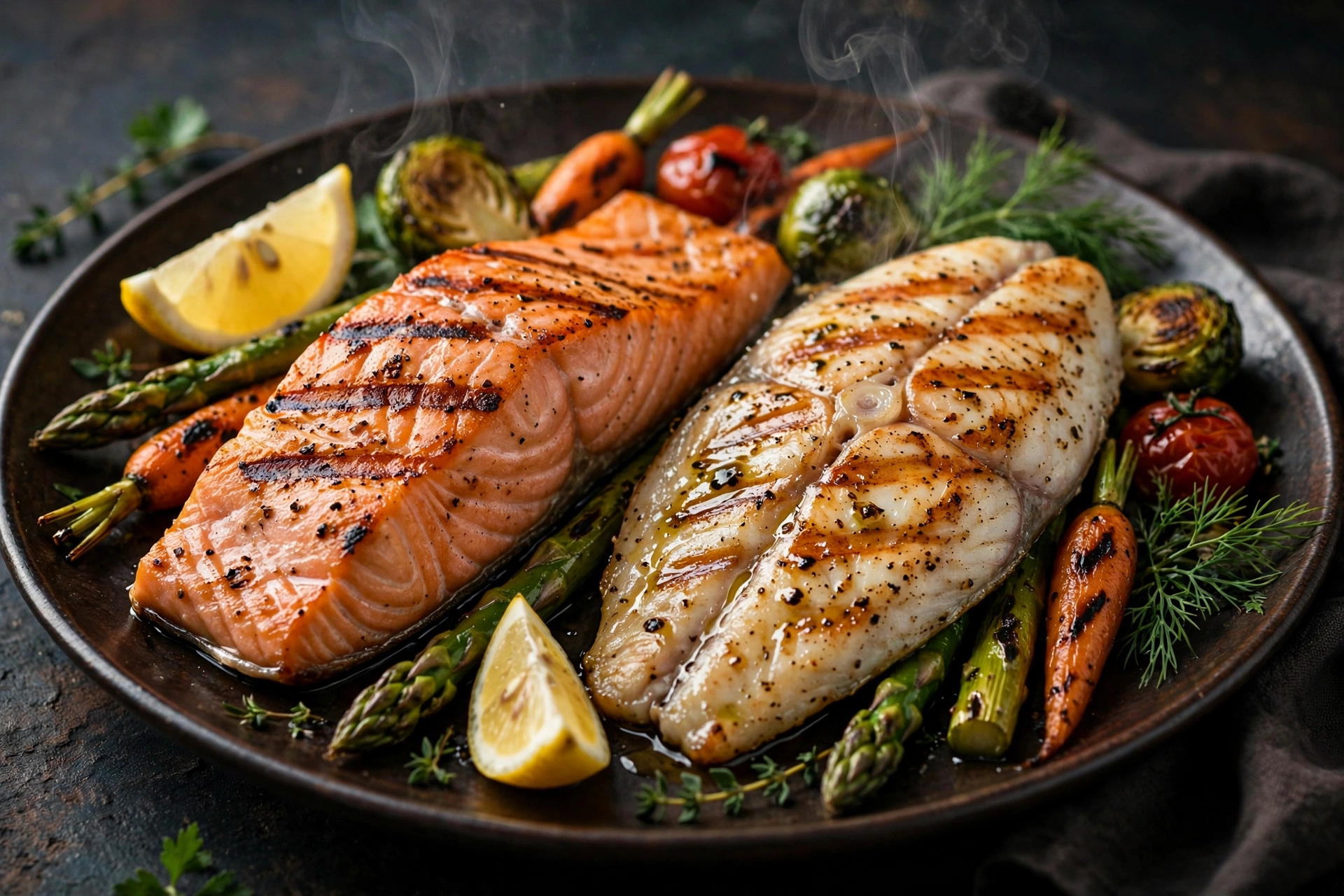
Grilled salmon, greens, lemon. The week’s oily anchor. Even-cut salmon, dry surface, grilled to 145°F (63°C), opaque and flaking. Greens and seasonal vegetables beside it, lemon over all. The AHA counts a serving as 3 ounces cooked: cook a proper portion and let the weekly pattern do the work.
Baked cod or tilapia with vegetables. The lean night. White fillets baked with tomatoes, onions, and herbs. Moist heat, no batter, no frying to speak of. The plate that proves low fat can still taste like dinner.
The sardine tin plate. Open tin, lemon, chilli, herbs, salad beside it. The soft bones bring calcium the fillets do not, and the tin’s label, checked once when you choose your brand, carries the sodium honesty from the section above.
Trout, gently. Rainbow trout baked or steamed with herbs, for eaters who find salmon strong. Moderate omega-3, mild flesh, a Best Choice. The kindest first oily fish a wary table will accept.
Atlantic mackerel, when the counter has it. The strongest omega-3 fish on Mahigar’s ranked table, grilled plainly. Its richness means a smaller portion satisfies. Atlantic, always. King mackerel never enters this house for this job.
Safety Still Comes First
Heart-conscious cooking changes nothing about safety. Fin fish is finished at 145°F (63°C), or opaque and flaking. Fish is kept at 40°F (4°C) or below: raw fish one to two days, cooked fish three to four. The rotation stays inside the FDA and EPA categories: Best Choices two to three times a week, a Good Choice once, Choices to Avoid not at all. The full chart is in Mercury in Fish: Safe Levels by Species. A heart habit built on the avoid list is no habit at all.
Frequently Asked Questions
Which fish is best for heart health?
The oily ones do the specific omega-3 job. On the USDA figures opened for Mahigar’s ranking, Atlantic mackerel and farmed Atlantic salmon carry the most EPA and DHA per 100 grams, with herring, anchovies, canned sardines, and trout behind them, and every one is an FDA and EPA Best Choice. The AHA’s shape of the week is 2 servings of fish, particularly fatty fish, so “best” really means one oily fish most weeks, as part of a healthy eating pattern. General information, not medical advice.
How much fish should I eat for my heart?
The AHA recommends 2 servings of fish per week, particularly fatty fish, a serving at 3 ounces cooked. The NHS asks for at least 2 portions a week including 1 oily. Both describe a rhythm, not a dose, and both place fish inside a healthy eating pattern. Your own doctor’s guidance for your heart comes before any food page, this one included.
Is canned fish too salty for a heart-conscious plate?
It depends on the tin, which is why labels decide. The USDA figures Mahigar verified for the exact canned entries are 307 mg of sodium per 100 grams for sardines in oil with bone, and 381 mg for canned pink salmon, drained solids. Anchovies, at 3,668 mg, are a salty flavouring, not a serving. The USDA light-tuna entry is a no-salt-added form, so a salted tin reads higher: your tin’s label has the final word. Fresh and plain frozen fish, salted by your own hand, stay the lowest-surprise option.
Does frying fish cancel the heart benefit?
No source here uses the word “cancel.” But method moves the plate. The NHS notes that steamed, baked, or grilled fish is a healthier choice than fried fish, and that frying can increase fat content, especially in batter. My translation: cook gently most days, and keep the battered fry as the treat it is. Done still means done either way: 145°F (63°C), opaque and flaking.
What to Check Next
This week, make two small audits. Put one oily Best Choice on the menu. Read the label of the sauce you usually pour over fish. Those two habits, the right species once a week and knowing where your salt comes from, are most of the heart-conscious pattern. Take personal heart questions to your doctor, not a comment box.
