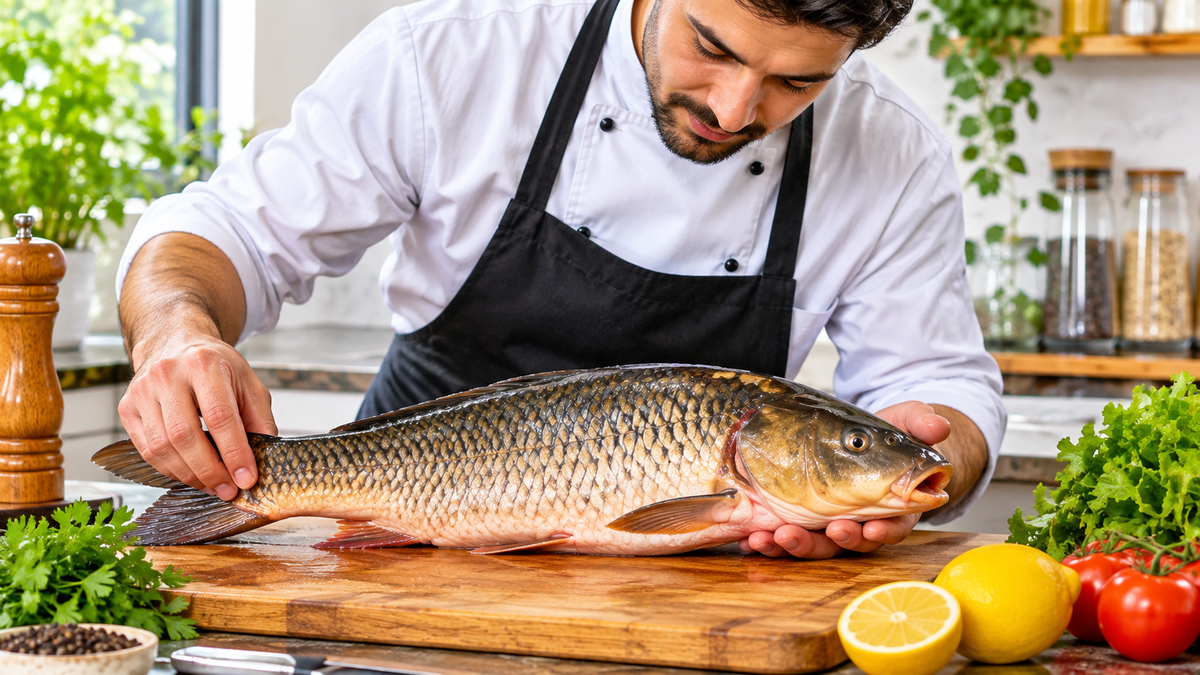
Parasites in Freshwater Fish: What Cooking Actually Kills
Can you eat a river fish without worrying about what might be living in it? Readers send me this question about fish more than almost any other, usually after a market visit or a good day on the canal, and I understand the worry. Freshwater fish can carry parasites. That is a plain fact of river and lake life, not a reason to fear the fish on your table. What matters is what you do in the kitchen, because thorough cooking kills parasites, and freezing kills them only at the exact temperatures and times set out in official guidance. This article is research led, built on FDA seafood safety guidance and CDC parasite guidance, and it sits inside my Freshwater Fish Cooking pillar so the safety side of freshwater cooking lives in one clear place. I will give you the short answer first, then the detail: which parasites freshwater fish can carry, why I never treat freshwater fish as a raw fish at home, what cooking actually does, and where freezing, marinades and home tricks honestly stand.
Table of Contents
The Short Answer: Cook It Through
Thorough cooking kills parasites in freshwater fish. Freezing can also kill them, but only at the stated temperatures for the stated times.
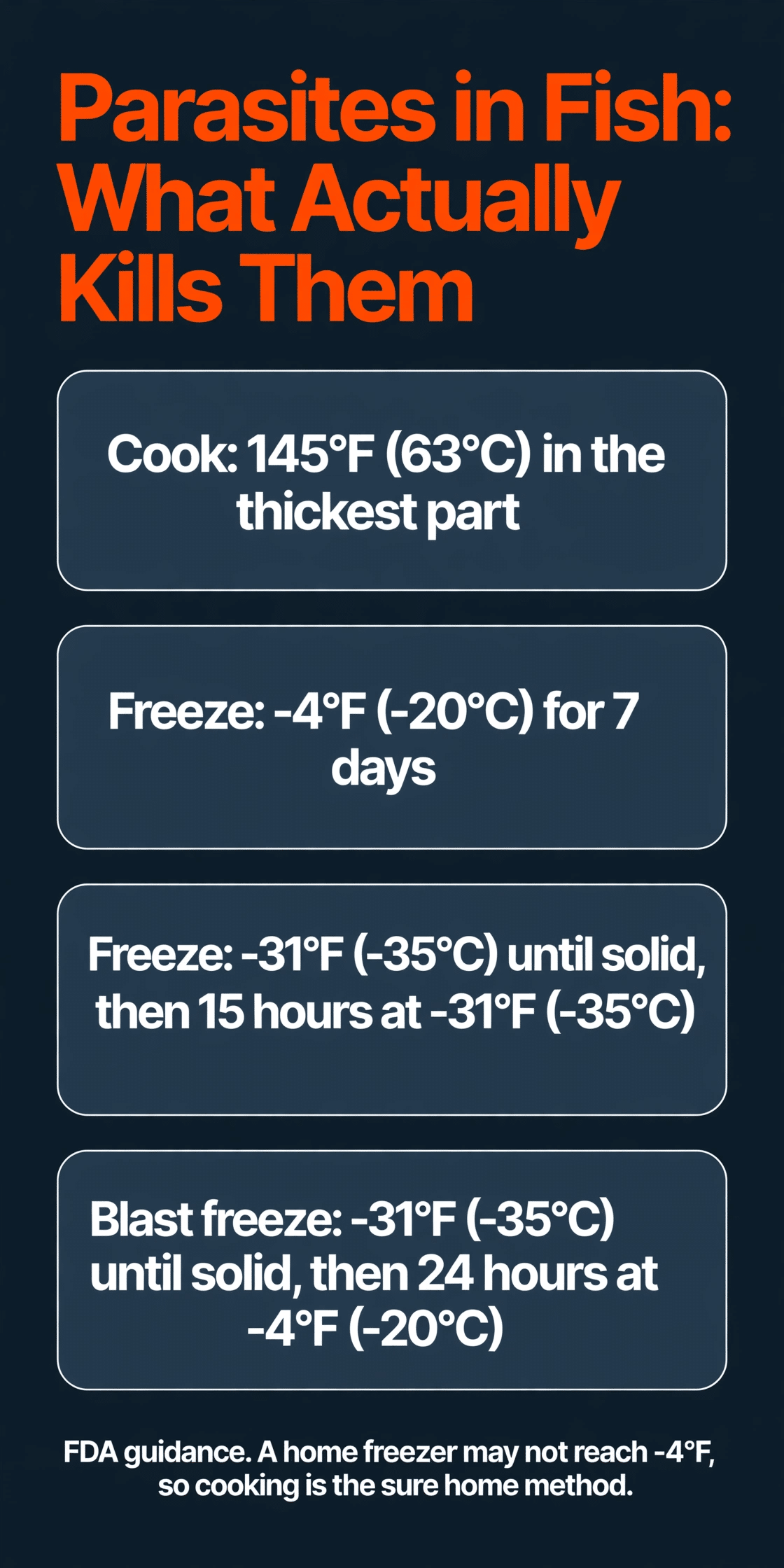
If you remember one line from this page, make it that one. FDA guidance says to cook fish to 145°F (63°C) in the thickest part, and that heat is the dependable kill step in a home kitchen. Freezing is a real second method, but it is a strict one. The FDA freezing options ask for temperatures colder than most home freezers can hold, held for set times. That is why my kitchen rule is simple: for freshwater fish, I cook it through, every time, and I treat freezing as a bonus layer of care in storage, not as my safety plan. The rest of this article explains why that rule is fair, and why it lets you enjoy river fish with confidence instead of worry.
Which Parasites Freshwater Fish Can Carry
Freshwater fish can carry a small group of parasites, and naming them plainly takes most of the fear away.
The best known is the fish tapeworm, a parasite that can live in the flesh of freshwater fish and can pass to people who eat that fish raw or undercooked. Freshwater fish can also carry flukes, small flat parasites linked in official guidance to raw or undercooked freshwater fish dishes in some parts of the world. Roundworms are the third group worth knowing. They are more often talked about with sea fish, but the kitchen lesson is the same: a visible worm in flesh is a sign to stop and deal with that fish carefully, as I cover in the inspection section below.
I am keeping this general on purpose. I am a cook, not a laboratory, and this page will not guess at how common any parasite is in any river or market, because honest numbers on that belong to health authorities, not to my kitchen. CDC parasite guidance makes the central point clearly enough for any home cook: the risk comes from eating freshwater fish raw or undercooked, and the protection comes from proper cooking and proper freezing. Species, water and season can all change the picture, which is exactly why a single firm kitchen rule beats a long list of exceptions. Cook freshwater fish through, and the argument is over before it starts.
Why Freshwater Fish Is Never a Raw Fish in My Kitchen
I never serve freshwater fish raw at home, and I advise you not to either. There is no home version of this that I trust.
Raw fish dishes depend on a controlled chain behind them: known sourcing, professional handling, and freezing carried out to the official temperatures and times before the fish is ever served raw. A home kitchen cannot copy that chain honestly. My freezer at home is a storage box, not a certified parasite destruction step, and my market fish comes with no paperwork about its life before it reached the stall. Add the parasite picture above, and the answer writes itself. Freshwater fish in my house gets cooked. It fries, it grills, it steams, it curries, and it reaches the table hot and cooked through.
This is not a loss. River fish has sweet flesh and real character when it is cooked well, and nothing about cooking it through makes it dry or dull when you handle it right. My tested cooking process transfers across species: steady heat, a thermometer in the thickest part, and resting the fish off the heat once it is done. Raw preparation is the one road I do not take with this fish, and after years of cooking it, I do not miss that road at all.
What Cooking Actually Does
Cooking kills parasites with heat, and the rule to cook by is one clear temperature, checked in the right place.
FDA guidance says to cook fish to 145°F (63°C) in the thickest part. Thickest matters. The outside of a fillet or steak can look done while the centre is still cool, and parasites survive in cool flesh, not in cooked flesh. So I push my thermometer into the deepest part of the piece, away from bone, and I wait for that reading. On a whole fish, that means the flesh deep beside the backbone. On a thick steak, it means the centre. When the thickest part reaches the mark, the whole piece has had the heat it needs.
My full temperature guide, Safe Internal Cooking Temperatures for Every Type of Fish, walks through thermometer use for every cut I cook, and I use the same process here. Heat the fish steadily, do not rush it off the pan because the surface looks ready, and let the thermometer make the decision instead of the colour of the flesh. Colour lies. Temperature does not. That single habit does more for the safety of freshwater fish in a home kitchen than any other step on this page.
The FDA Freezing Options, Explained Simply
Freezing can destroy parasites, but only when the fish is held at the stated temperature for the stated time. FDA guidance gives these options.
The first option is to freeze and store the fish at -4°F (-20°C) or below for 7 days (total time). The second option is to freeze at -31°F (-35°C) or below until solid, then store at -31°F (-35°C) or below for 15 hours. The third option is to blast freeze at -31°F (-35°C) or below until solid, then store at -4°F (-20°C) or below for 24 hours.
Read those figures slowly, because they carry the real lesson. These are deep cold figures, held without breaks. FDA guidance also notes the practical problem for home cooks: a home freezer may not reach -4°F reliably, and may not hold it evenly in every corner of the box. A freezer that feels very cold to your hand can still sit above that line. So I freeze freshwater fish at home for storage and quality, never as my parasite plan. My general freezing method is in How to Freeze Fresh Fish at Home, and it pairs with this rule: frozen at home, then cooked through after thawing. Storage cold and cooking heat are two different jobs, and I never ask one to do the work of the other.
Once thawed and cooked, handle the fish like any good fish in my kitchen. I keep my fridge at or below 40°F (4°C). Raw fish keeps 1 to 2 days refrigerated, so I cook thawed fish promptly. Cooked fish keeps 3 to 4 days in the fridge, well covered.
Marinades, Lime, Smoking and Drying Are Not Kill Steps
Acid, salt, smoke and air can change flavour and texture, but none of them is a reliable parasite kill step in a home kitchen.
This is where honest cooking advice matters most, because these methods feel like safety. A fish sitting in lime juice turns opaque and looks cooked. It is not cooked. The acid changes the surface of the flesh, but it does not heat the centre, and it does not reliably destroy parasites through the piece. Marinades work on taste, not on safety. Smoking and drying are fine old methods for flavour and keeping quality when they are done as part of a full process that ends in proper cooking or proper storage, but on their own, in a home setup, I do not trust them to make raw freshwater fish safe. Salt heavy cures belong in the same honest box: they are flavour and preservation tools, not a promise.
My rule protects you from all of this guessing. If a freshwater fish dish in my kitchen is served ready to eat, heat has done the final work. Everything before the heat is seasoning. Nothing before the heat is safety.
Inspection: Look, Trim, Decide
Your eyes are a useful first check on any freshwater fish, as long as you know what looking can and cannot do.
Before cooking, I look over the flesh in good light while I clean and portion the fish. If I see a visible worm in the flesh, I trim well around that spot on a lightly affected piece, or I set the piece aside entirely if the flesh looks heavily infested. A heavily infested fish does not belong in my pan, and I discard it. That is a kitchen decision I am comfortable making: good fish is plentiful, and no single fish is worth an argument at my table. When I write about river species like carp in Is Carp Good to Eat? and catla in Catla Fish: Cuts, Head Curry and Best Cooking Methods, the same habit runs through both: look at the flesh, choose clean fish, and cook it through.
Understand the limit of inspection too. Looking finds what is visible. It cannot clear a fish, and it cannot replace cooking, because not every parasite can be seen in raw flesh on a home board. So my order never changes: inspect, trim or discard with confidence, then cook to the mark. Eyes first, heat last, and heat has the final word.
If You Feel Ill After Eating Fish
If you feel unwell after eating fish, see a doctor and tell them what you ate. Do not try to diagnose yourself from a webpage, including this one.
Stomach illness after fish can have more than one cause, and parasites are only one possibility among several, including ordinary food poisoning from poor handling or storage. I am a cook, and my job ends at honest prevention and an honest pointer. My guide to Fish Food Poisoning: Symptoms, Causes, and Prevention explains the common causes and the prevention habits I follow in my own kitchen, and it is the right next read if handling and storage are your worry. For symptoms themselves, a doctor who can examine you is the right person, every time. Seek care promptly, sooner if symptoms feel strong or do not settle, and mention the fish, how it was stored, and how it was cooked. That detail helps the doctor help you.
Frequently Asked Questions
Does cooking really kill all parasites in freshwater fish?
Thorough cooking does. FDA guidance says to cook fish to 145°F (63°C) in the thickest part, and that heat, reached in the deepest part of the flesh, is the dependable kill step. Check with a thermometer in the thickest part, away from bone, and do not judge by colour alone.
Does freezing fish at home kill parasites?
Only at the official figures, and a home freezer may not reach them reliably. FDA guidance gives freezing at -4°F (-20°C) or below for 7 days, or at -31°F (-35°C) or below until solid and then stored at -31°F (-35°C) or below for 15 hours, or blast freezing at -31°F (-35°C) or below until solid and then storing at -4°F (-20°C) or below for 24 hours. Because home freezers may not hold -4°F, cooking is the sure home method.
Does lime juice or a marinade make raw freshwater fish safe?
No. Lime juice and marinades change the surface and the flavour of fish, and the flesh can even look cooked, but they do not heat the centre and they are not reliable kill steps for parasites. In my kitchen, freshwater fish is always cooked through before it is served.
What should I do if I see a worm in freshwater fish flesh?
Trim well around a single visible spot on an otherwise clean piece, and discard a heavily infested fish entirely. Then cook the fish you keep to 145°F (63°C) in the thickest part. Inspection helps you choose good fish, but cooking is what makes it safe.
My Closing Advice on Freshwater Fish and Parasites
Respect the fish, respect the heat, and freshwater fish stops being a worry and goes back to being dinner. My whole approach fits in one breath: choose clean fish, look it over, trim or discard without regret, never serve it raw at home, and cook it to 145°F (63°C) in the thickest part. Freezing at home is for storage, and the strict FDA freezing figures above show why it cannot carry the safety job in a home freezer. When I later build out Catch to Kitchen: How to Handle and Cook Fish You Catch Yourself, this page will be its safety backbone, because the fish you catch yourself deserves exactly the same calm, official, heat based care as the fish you buy. Cook it through, enjoy it fully, and let the river keep feeding your table.

4 Comments