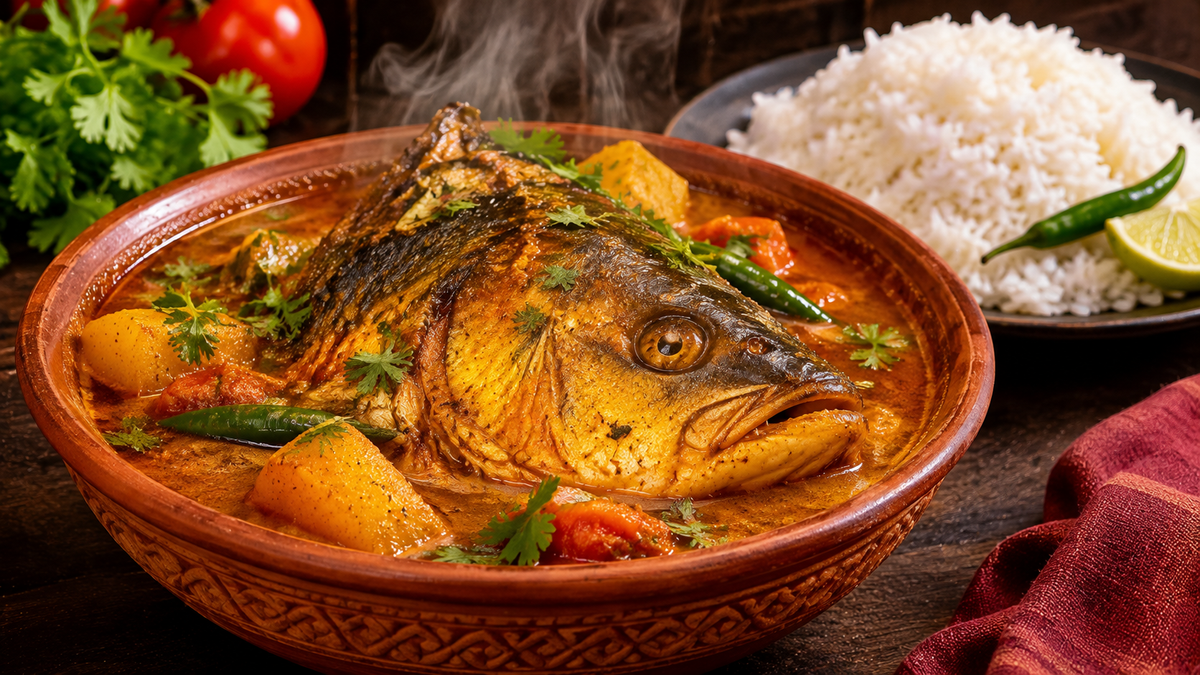
Catla Fish: Cuts, Head Curry and Best Cooking Methods
A catla on the market slab stops me every time. That broad head, built almost comically large for the body behind it, tells an experienced buyer exactly where the treasure sits before a knife is lifted. Most shoppers walk past looking for neat steaks. I look at the head and start planning a curry, because in my kitchen catla is not a fish you buy by accident. It is a fish you buy with a dish already in mind.
Fish is the heart of my cooking and of this site, and catla is one of the great freshwater fish of South Asian waters. This species guide belongs to my Freshwater Fish Cooking pillar, alongside carp, catfish and other river fish. I will show you what catla tastes like, how I buy it, which cut suits which dish, and why its famous head curry deserves its reputation, all without turning this guide into a measured recipe post. Recipes with full quantities live in their own place. This page teaches you the fish.
Table of Contents
What Catla Is
Catla is a big headed river carp of South Asian waters, prized above all for its head and its rich belly.
It belongs to the carp family, and anyone who knows its cousin rohu already understands half the story. My guide to that fish, Rohu Fish: Buying and Cooking Guide (South Asian Staple), covers the shared family character, but catla has its own shape and its own strengths. The head is wide, the mouth turns upward, and the body gives deep, meaty sections when a good seller cuts it. In rivers, ponds and markets across our region, catla is a celebration fish, the one bought when the family wants a proper curry and no one is counting pieces.
Size is part of its appeal. A good catla gives you cuts with presence: a head that can anchor a whole dish, belly pieces rich enough to need only a gentle sauce, and back steaks thick enough to hold together in a bubbling pot. Small, young fish never show you what catla can do, which is why I buy it when I find a properly grown fish fresh at a busy counter, and I leave it alone when only tired little specimens are on offer.
Flavour and Texture in My Kitchen
Catla tastes rich, mild and clean, with soft, juicy flesh that turns almost buttery in the belly and firmer in the back.
That balance is why it suits curry so well. The flesh carries spice without fighting it, and it gives back its own sweetness to the sauce. The belly is the richest part, the cut I serve to the person I most want to please, because its natural fat keeps it moist even when the sauce is bold. Back steaks are leaner and firmer, better when you want a piece that holds its edges and eats cleanly. The tail is the plainest part, still good, best when fried crisp and eaten hot.
Freshness decides everything with catla. A fresh fish tastes sweet and river clean. A fish that has waited too long tastes muddy and heavy, and no spice coat in my kitchen can fully rescue it. I would rather change the menu than serve tired catla, and that discipline is the difference between people loving this fish and people wondering why we praise it. Serve it fresh, serve it hot, and its gentle richness does the persuading for you.
The Bones, Honestly
Catla carries Y-bones in its flesh like its carp cousins, so it must be eaten slowly, in sections, with your fingers.
I will not hide this inside a species guide, because a reader who buys catla after my praise deserves my warning in the same breath. The main frame is easy to work around, but fine branched bones live inside the steaks and belly, and no cut from the seller removes them. Larger fish give larger bones that are easier to find, which is one more reason I prefer a properly grown catla, but easier to find is not the same as absent.
The full method I use, scoring, cutting small for frying, and the finger technique at the table, is in my guide to Cooking Bony Fish, and I want every catla cook to read it. At my table, catla is served in whole sections, never flaked into the sauce, a small bone plate sits beside each person, and children and new guests get flesh an adult has checked on a spare plate, or a different fish entirely. That honesty has never once spoiled a meal. Surprises spoil meals. Warnings, given kindly before the first bite, simply make people careful and relaxed.
Buying Catla Well
Buy catla from a busy counter, choose a properly grown fish with bright signs of freshness, and have it cut in front of you for the dish you plan.
My buying check is the same one I trust for every river fish. On a whole fish I look for clear bright eyes, clean red gills, firm flesh that springs back when pressed, shining skin and a mild, clean smell. Sour or strong smells end the conversation. On cut pieces I look for moist flesh with clean edges, no grey soft patches, and no pieces sitting in cloudy liquid. If the counter is quiet and the fish looks lonely, I walk to a busier shop.
Then I talk to the seller, because cutting is where a good purchase becomes a good meal. I say the dish first: head curry, belly curry, fried steaks. A good seller will then suggest the fish and the cuts to match, keeping the head whole for the curry pot, the belly in generous pieces, and the back in even steaks. Ask for pieces close in thickness, since even pieces finish together and uneven pieces leave you choosing between dry thin edges and underdone thick centres. Buy catla on the day you cook it when you can. This is a fresh fish celebration, not a freezer project.
Catla Cuts and the Dish Each Cut Suits
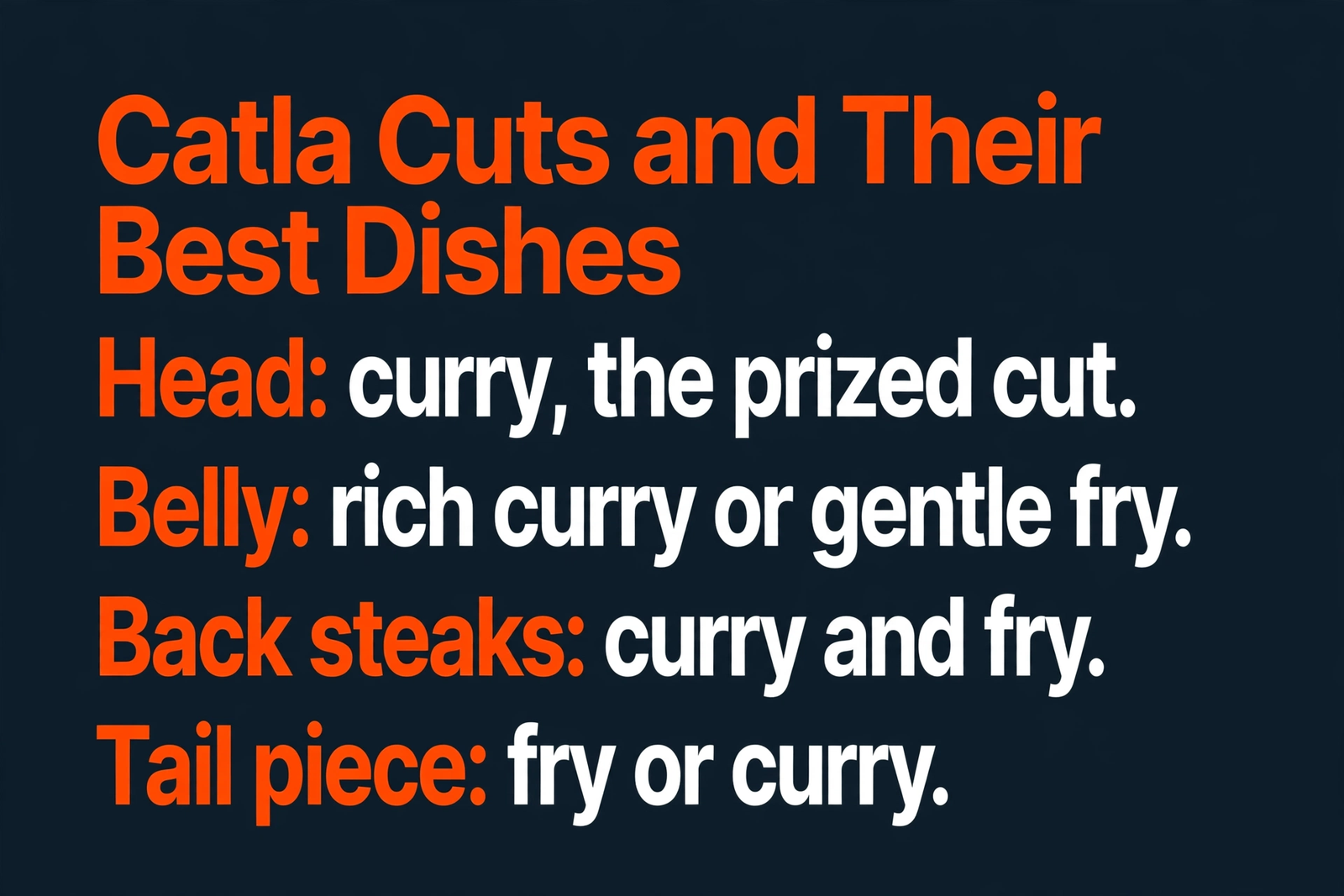
Head for curry, belly for rich curry or a gentle fry, back steaks for curry and fry, and tail piece for fry or curry: that is my whole cut map.
The head is the prized cut, and I give it a full section below. The belly comes next in richness. Its soft, fatty flesh poaches beautifully in a curry sauce and also fries gently when you want a crisp edge with a melting centre, though it needs a careful hand when turning because it is tender. Belly pieces are the ones that disappear first at my table.
Back steaks are the everyday heroes. They are firm, even and versatile, happy in a family curry and equally happy fried with a spice coat and served with lemon and onion. If you are cooking catla for the first time, start with back steaks, because they forgive small timing errors better than the delicate belly. The tail piece is leaner and closer to the fine bones, so I fry it crisp in smaller sections or send it into a curry where the sauce protects it, and I eat it with extra care. Nothing is wasted on a catla when each cut goes to the job it does best, and that respect for the whole fish is how our kitchens have always worked.
Best Cooking Methods for Catla
Curry is catla at its best, gentle frying suits the belly and steaks, and slow poaching in sauce keeps every cut moist.
My lead method is curry, built properly: the sauce cooked and tasted before the fish enters, the pieces laid in gently, the pot swirled rather than stirred, and the fish taken off the heat as soon as it is done. Catla rewards that patience with flesh that stays in proud sections and a sauce that tastes of fish in the best way. The head and belly were made for this treatment.
Frying suits back steaks and belly pieces when the surface is dried well and the oil is hot. I use a light spice coat, one layer in the pan, and a short rest on a rack or clean plate before serving. Steaming and gentle poaching suit anyone who wants catla plain and delicate, especially the belly, served with a sharp chutney or a squeeze of lemon to cut the richness.
What I avoid tells you as much. I avoid hard boiling, which breaks the sections and hides bones in flakes. I avoid heavy batter, which smothers a delicate fish and turns its richness greasy. I avoid reheating catla pieces again and again, which dries them and toughens the texture. And I avoid serving it cold, because cold catla loses the soft, juicy character that makes people love it.
The Head Curry, Explained as a Dish
A catla head curry is prized because the head gives rich, soft, varied eating, cheeks, collar and juicy sections, in a sauce that the head itself makes deeper.
Newcomers sometimes laugh at our love for the fish head until they eat a good one. The cheeks are small pillows of tender flesh. The collar, where the head meets the body, is rich and meaty. Around the bones sit soft, gelatinous bits that carry sauce like nothing else on the fish, and the head flavours the curry as it cooks, so the sauce on a head curry tastes more complete than the same sauce cooked with plain steaks. That is the secret, and it is not really a secret at all among people who grew up with this dish.
In my kitchen the head is cleaned thoroughly, split by the seller if it is large, seasoned, sometimes lightly fried first for depth in the houses that prefer it, and then settled into a well built curry sauce to poach gently. I am describing the dish here, not giving a measured recipe, because quantities belong to recipe posts and family habits differ in spice, sourness and heat. What does not differ is the eating: slowly, with fingers, working through the sections, sucking the sauce from the rich parts, and respecting the small bones in and around the head. A catla head curry is not fast food. It is the centre of a sitting, and at my table it goes to the guest of honour or to the elder who taught me to love it.
Pairing Catla with Curry Styles I Already Use
Catla suits the regional curry styles of our kitchens, from a balanced family masala to the bold flavours of Lahore and Multan.
If you want the wider map of how fish curries change across regions, my guide to Indian Fish Curry: Regional Styles Explained shows the styles side by side, and catla holds its own in most of them because its flesh is firm enough for sauce and gentle enough to let the spices speak. A tomato rich family curry flatters the belly. A sharper, more pungent style wakes up the back steaks. The head suits a fuller sauce with body, something that can coat those rich sections properly.
For the Punjabi side of my own cooking, the dishes and habits in Lahori and Multani Fish Recipes: A Regional Guide are the company catla keeps at winter tables and family gatherings, where fried steaks and strong flavours rule. I will not repeat those guides here. Use them for the regional detail, and use this page to choose the cut. Cut first, style second: that order never fails me. Plain steamed rice, fresh bread, sliced onion, lemon and a simple salad are the sides I trust, because catla in curry is already a complete statement.
Safety and Storage in My Kitchen
Cook catla to 145°F (63°C), keep your fridge at or below 40°F (4°C), and cook freshwater fish fresh and thoroughly.
Those points are fixed in my kitchen for every fish, and catla is no exception. I check the thickest steak or the deepest part of the head, because thin edges finish early and mislead you. Raw fish keeps for 1 to 2 days refrigerated, and cooked fish keeps for 3 to 4 days refrigerated, though my honest advice is to cook catla the day you buy it and eat the head curry fresh, when its texture is at its best.
Because catla is a freshwater fish, thorough cooking matters for one more reason, and I cover that subject properly in Parasites in Freshwater Fish, which every river fish cook should read once. I do not serve catla raw or lightly cured, ever, and I keep raw fish separate from ready foods while I work, washing hands, boards and knives after prep. Clean the head especially well, rinse it under cold water, and check that your seller has removed what should be removed. Care at the sink and care at the stove are the same habit, and they are what make freshwater fish a safe pleasure in a home kitchen.
Frequently Asked Questions
Does catla have many bones?
Yes, honestly, it carries fine Y-bones inside the flesh like other carp family fish, as well as its main frame. Larger fish have larger, easier to find bones, and serving catla in whole sections, eaten slowly with fingers, keeps it manageable. Children and new guests should get adult checked flesh or a different fish.
What is the best cut of catla?
The head is the prized cut for curry, loved for its cheeks, collar and rich, juicy sections. The belly is next, rich and tender for curry or a gentle fry. Back steaks are the most versatile for everyday curry and frying, and the tail piece suits a crisp fry or a protective curry sauce.
What is the best way to cook catla?
Curry is its best method in my kitchen, with the sauce built and tasted first and the pieces poached gently without stirring. Back steaks and belly also fry beautifully when dried well and cooked in hot oil in one layer. Cook every cut to 145°F (63°C) and serve it hot.
How do I choose a fresh catla at the market?
Buy from a busy counter and have the fish cut in front of you. Look for clear bright eyes, clean red gills, firm flesh that springs back, shining skin and a mild clean smell on a whole fish, and moist flesh with clean edges on cut pieces. Choose a properly grown fish so the cuts and bones are generous and easier to handle.
Closing Thoughts on Catla
Buy it fresh, cut it by the dish, and give the head the honour it has earned.
That is catla in one line from my kitchen. A big headed river carp with gentle, rich flesh, a famous head curry, belly pieces that melt into a sauce, and bones that ask for slow fingers and honest warnings. Cook it the day you buy it, serve it in sections, and it will show you why our markets have prized it for so long.
For readers who land or buy whole river fish and want the handling habits that come before cooking, our pillar Catch to Kitchen: How to Handle and Cook Fish You Catch Yourself is the companion to keep in mind now that it is live. Start with a fresh catla, back steaks for your first curry, and save the head for the cook who has earned it, which, after a few good fish, will be you.

2 Comments