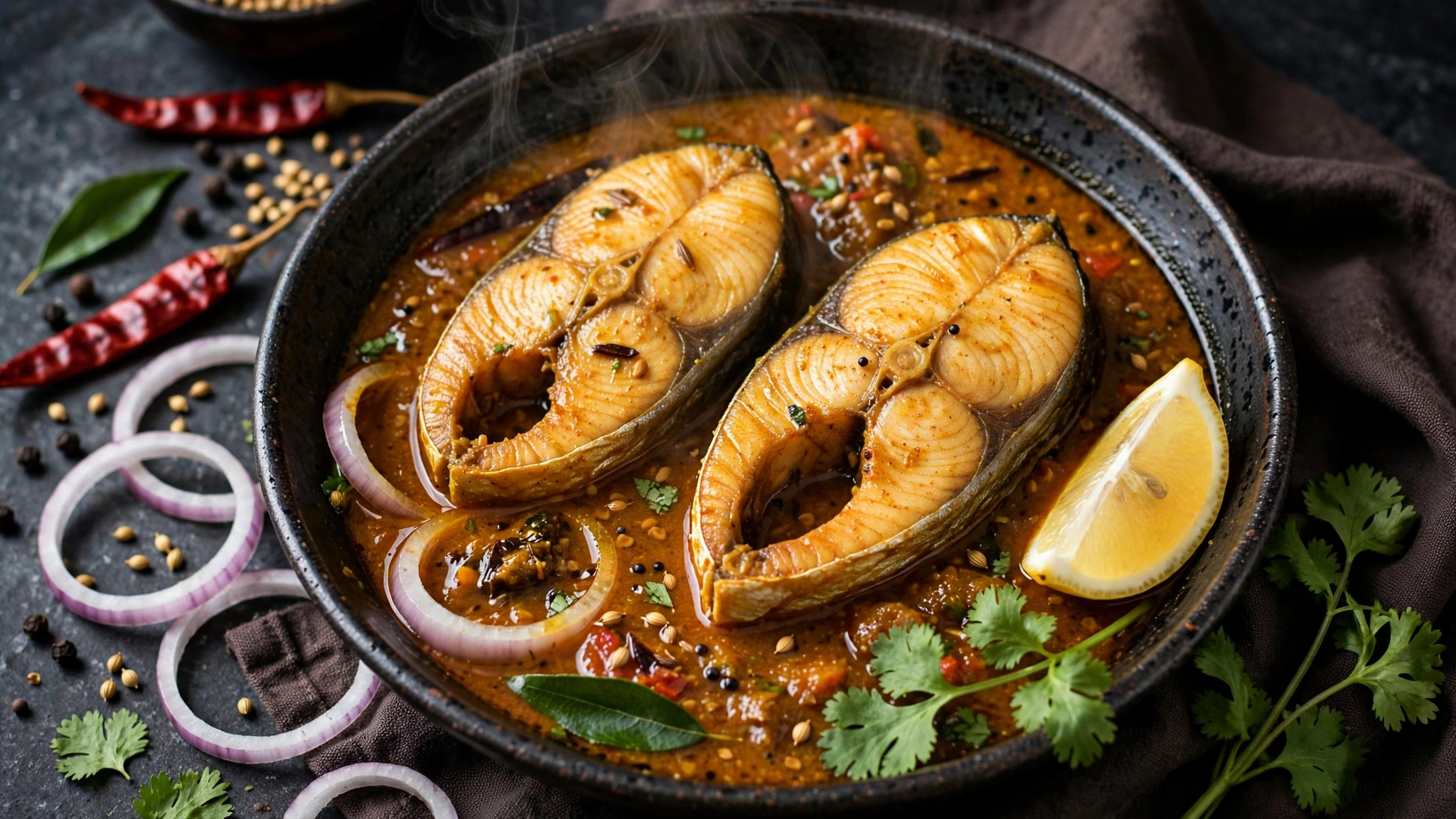
Rohu Fish: Buying and Cooking Guide (South Asian Staple)
Rohu is the fish my part of the world grows up on: the great carp of our rivers and ponds, firm-fleshed and full-flavoured, the centre of family curries and feast-day tables. It is not a mild beginner’s fillet and has never pretended to be. Buy it fresh, cook it in pieces that hold their shape, serve it to people who know how to eat it — that is the whole rohu contract, and it is a good one.
I am Wasim Abbas Bhatti, the Fish’s Chef. Rohu is my home ground — the South Asian markets I shop in and the canal waters I have fished with a net for eight years. This profile sits inside Fish Species Guide: What to Buy and How to Cook Each One, where species are matched to the jobs they do best. Rohu’s job is the family table.
Table of Contents
What Rohu Is Like
Rohu is a carp, and it tastes like a fish with something to say: firm, full-flavoured flesh — gentler than an oily sea fish, far more present than a mild farmed fillet. In a spiced curry it holds its own; the sauce seasons the fish and the fish flavours the sauce back.
In our homes rohu is the fish of the big handi — family curries and feast-day cooking, usually bought in quantity and cooked the same day. Its firm flesh forgives a confident spice hand the way delicate fish never will.
Buying Rohu in a South Asian Market
You meet rohu three ways: whole on ice, pieces or steaks cut at the counter, and pre-cut pieces packed earlier. My first choice is a whole fish cut in front of me; my last is tired pieces sitting in their own liquid.
For a whole rohu: clear bright eyes, clean red gills, tight scales, shining skin, flesh that springs back, a mild river-clean smell — never sour or heavy. Cut pieces should look moist and firm with clean edges, not grey, soft, or dried dark. Buy from the counter that turns over fast; the freshest rohu is the one still being cut.
A bigger fish gives thicker pieces with bigger bones, which many families prefer for curry. I will not give you a magic weight — size is a table decision, not a safety number. Choose pieces that suit your pot, and choose them fresh.
The Honest Part: Fine Y-Bones
Every rohu guide owes you this paragraph without decoration. Rohu carries fine, Y-shaped bones spread through the flesh, especially toward the tail and belly. No filleting, scoring, or cooking method removes them, and anyone who promises you boneless rohu is selling you something.
Our families manage it simply: serve rohu in sections, not shredded flakes, so bones stay visible; eat at an easy pace; let each person work their own piece. My table method — top fillet off, skeleton out in one piece, flesh checked section by section — is in How to Debone a Whole Cooked Fish at the Table, with the same warning: the frame lifts away whole, but the fine Y-bones stay in the flesh.
For young children and guests who did not grow up picking bones, an adult checks the flesh on a spare plate first — or serves them a different fish. That is not fuss. That is hosting.
Skin, Scales, and Prep
Rohu comes home scaled and gutted if the market did it, or whole if it did not. Either way the prep is the Prep pillar’s ground — scale, gut and clean, cut even pieces, rinse cold, pat dry — and Fish Prep and Butchery: Every Skill You Need walks every step.
Two habits from my kitchen: cut pieces close in thickness, because thick and thin pieces never finish together; and dry them well, since surface water makes fried rohu steam grey instead of browning. The skin stays on — it holds pieces together, and crisped on a fried steak it is part of the pleasure.
Best Ways to Cook Rohu
Curry: the home it was born for
This is rohu’s lead job. Build the masala first — onion cooked down, tomatoes, ginger, garlic, spices bloomed in oil — and get the sauce right before the fish arrives. Slide the pieces in, spoon sauce over, and let them poach instead of being stirred like potatoes. Firm rohu holds its shape where a delicate fillet would dissolve; that is why our curries chose this fish. To cook it the way our regions do, follow my Indian Fish Curry: Regional Styles Explained, covering Bengali, Goan, and South Indian styles.
Fried pieces and steaks
Rohu fries beautifully: a spice coat — turmeric, chilli, salt, a little mustard character if that is your house style — dried pieces, hot oil, one layer. The flesh stays firm, the edges take colour, and lemon and sliced onion at serving do the rest.
Whole and baked
A whole rohu cooked whole is feast cooking; judge it near the backbone, where the flesh is thickest. Baked steaks work too, in one layer, checked early. Rohu is forgiving for a carp, but past done is still past done.
My Rohu Curry Routine
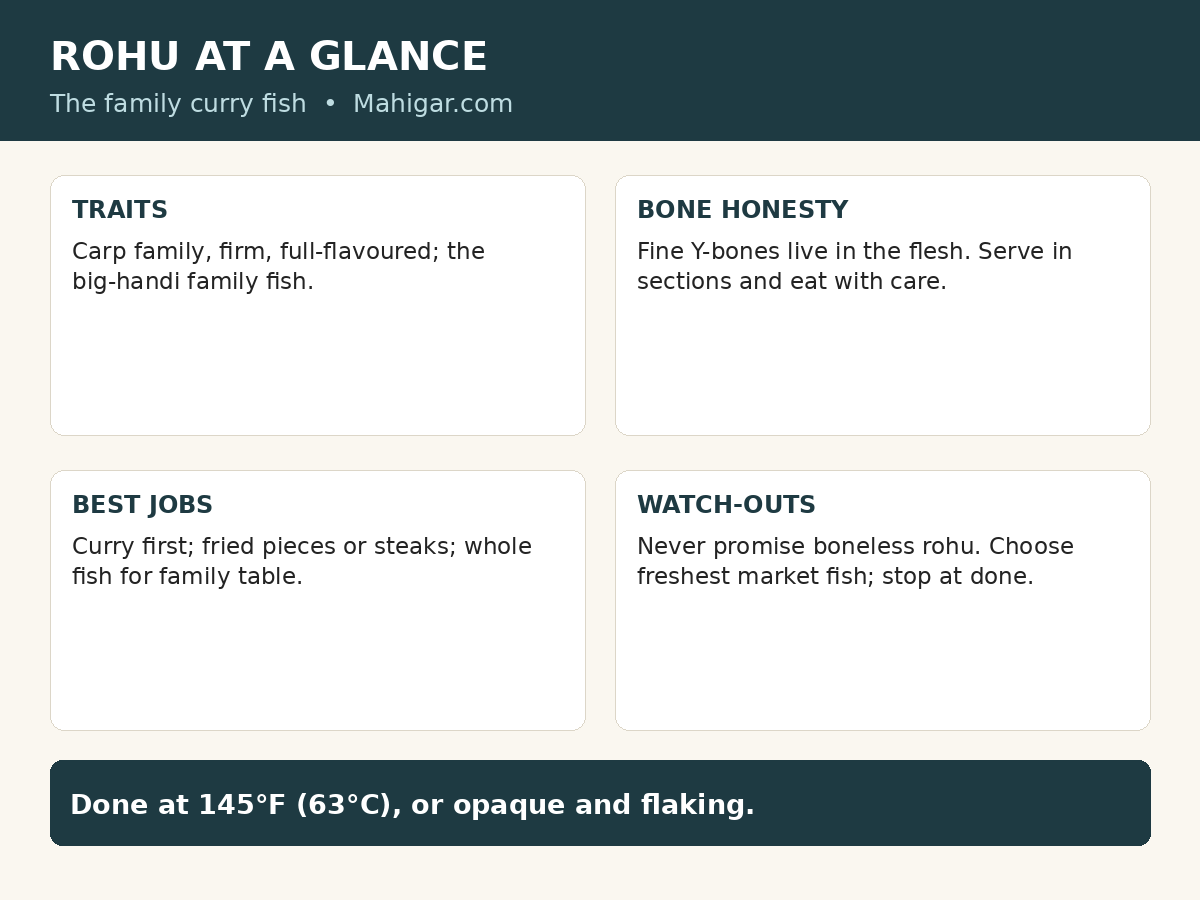
My rohu curry routine: fresh fish, even pieces, masala first, gentle cooking to 145°F (63°C).
Start with fresh fish
Start with fresh fish. Mild river-clean smell, firm flesh. If it smells heavy, choose another fish.
Cut even pieces
Cut even pieces. Steaks or chunks close in thickness, scaled, cleaned, rinsed cold.
Pat dry and season
Pat dry and season. Salt and turmeric while the masala builds.
Build the sauce first
Build the sauce first. Onion cooked down, tomatoes, ginger, garlic, spices bloomed in oil. Taste before the fish enters.
Add the rohu gently
Add the rohu gently. One layer, spoon sauce over, lid on.
Do not stir — swirl
Do not stir — swirl. Move the pot, not the spoon.
Check the thickest piece
Check the thickest piece. Done at 145°F (63°C), or opaque and flaking. Serve in sections, with the bone warning given happily.
The Safety Frame: Mercury and Doneness
On mercury, I will be as honest with rohu as with every fish here. The FDA/EPA chart does not name rohu, and I will not assign it a category or a number I do not have. Rohu feeds low in the water and is not a long-lived predator — the profile that generally collects less mercury — but the official guidance, including the closest carp-family placing, is in Mercury in Fish: Safe Levels by Species. Read that before building anyone’s weekly habit, especially for pregnancy and children.
Doneness is simpler: rohu is done at 145°F (63°C) in the thickest part, or opaque and flaking easily, checked near the bone on big steaks and whole fish.
What to Avoid With Rohu
Do not promise anyone boneless rohu — the Y-bones stay, and the promise hurries eating that should be slow. Do not buy tired rohu because the price is kind; a full-flavoured fish shows every hour of tiredness. And do not shred rohu into a curry: flakes vanish into the sauce with their hidden bones. Cook it in sections; serve it in sections.
If Rohu Is Not Available
Choose by job. Catla, rohu’s big-headed carp cousin, is the nearest stand-in — same family character, same fine-bone honesty, same curry and fry jobs.
Where bones worry you more than tradition tempts you, tilapia is the milder, easier-fleshed fish, kinder for children and guests — less flavour, a quicker hand, but the honest swap when the table decides.
Frequently Asked Questions
Does rohu have a lot of bones?
Yes, honestly. A main frame that lifts away after cooking, plus fine Y-shaped bones through the flesh that no cutting or cooking removes. Our families eat it in sections, at an easy pace, picking bones as they go. Serve checked flesh — or another fish — to young children and nervous guests.
What is the best way to cook rohu?
Curry — a properly built masala, pieces added gently, no stirring, off at done. Fried steaks with a spice coat, lemon, and onion are the other classic. Both work because rohu holds its shape and stands up to real seasoning.
How do I know if rohu is fresh?
Buy whole or cut in front of you where you can: clear bright eyes, red gills, tight shiny scales, flesh that springs back, a mild river-clean smell. Cut pieces moist and firm with clean edges. Sour smell, soft flesh, or dull grey pieces mean a different fish.
Is rohu high in mercury?
The FDA/EPA chart does not list rohu by name, and I will not invent a level for it. Rohu is not a large predator of other fish — the general low-risk profile — and the official categories with the closest carp-family guidance are in my Mercury guide. For pregnancy and children, follow that guide and your doctor.
What to Check Next
Keep the rohu order beside the stove: freshest fish in the market, even dry pieces, masala first, no stirring, off at done — and an honest word about bones before the first bite. Choosing from the whole counter tonight? Go back to the Species Guide and read the five traits. Rohu is the firm, full-flavoured, fine-boned family fish; cook it like you know that.

One Comment