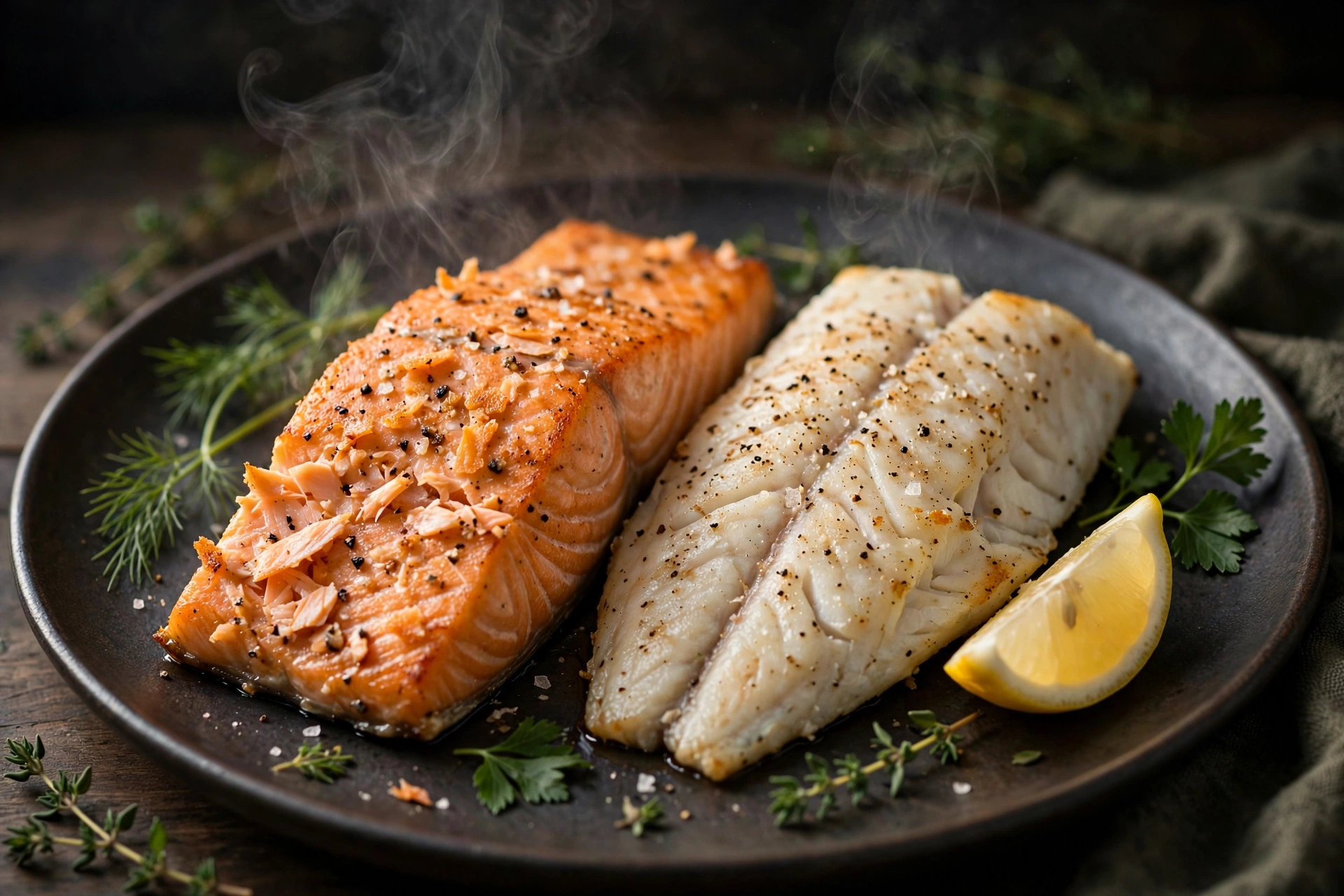
Health Benefits of Eating Fish, Backed by Research
Fish gets called a superfood so often the word has lost its meaning, and in the same breath people warn you mercury makes it dangerous. I have watched that noise stop home cooks from buying fish at all, which is the worst outcome of all. So this guide does one honest job: it walks through what the major health bodies actually say fish does for you, benefit by benefit, in plain English, with my own kitchen view on how to get those benefits in a real week.
Yes, eating fish is good for most people. That is the short answer, and the research backs it plainly. The American Heart Association says regularly eating fish and seafood is consistently associated with a lower risk of cardiovascular disease. The joint FDA/EPA advice says there is strong evidence that eating fish, as part of a healthy eating pattern, may have heart-health benefits. Fish also brings nutrients many plates lack: omega-3 fats called EPA and DHA, high-quality protein, vitamin D, vitamin B12, and selenium.
I am Wasim Abbas Bhatti, the Fish’s Chef. I have cooked fish for more than twenty years and fished local canals for eight. My confidence is in the buying, the prepping, and the cooking; health claims belong to the health bodies, so I stay close to what they actually say and translate it into kitchen decisions. This article sits inside Fish Nutrition and Health: The Complete Guide, Mahigar’s nutrition hub, and answers one question: what are the benefits of eating fish, backed by research, and where do those benefits stop?
One plain note here, and again at the end: this is general information, not medical advice. Your own doctor’s guidance comes first.
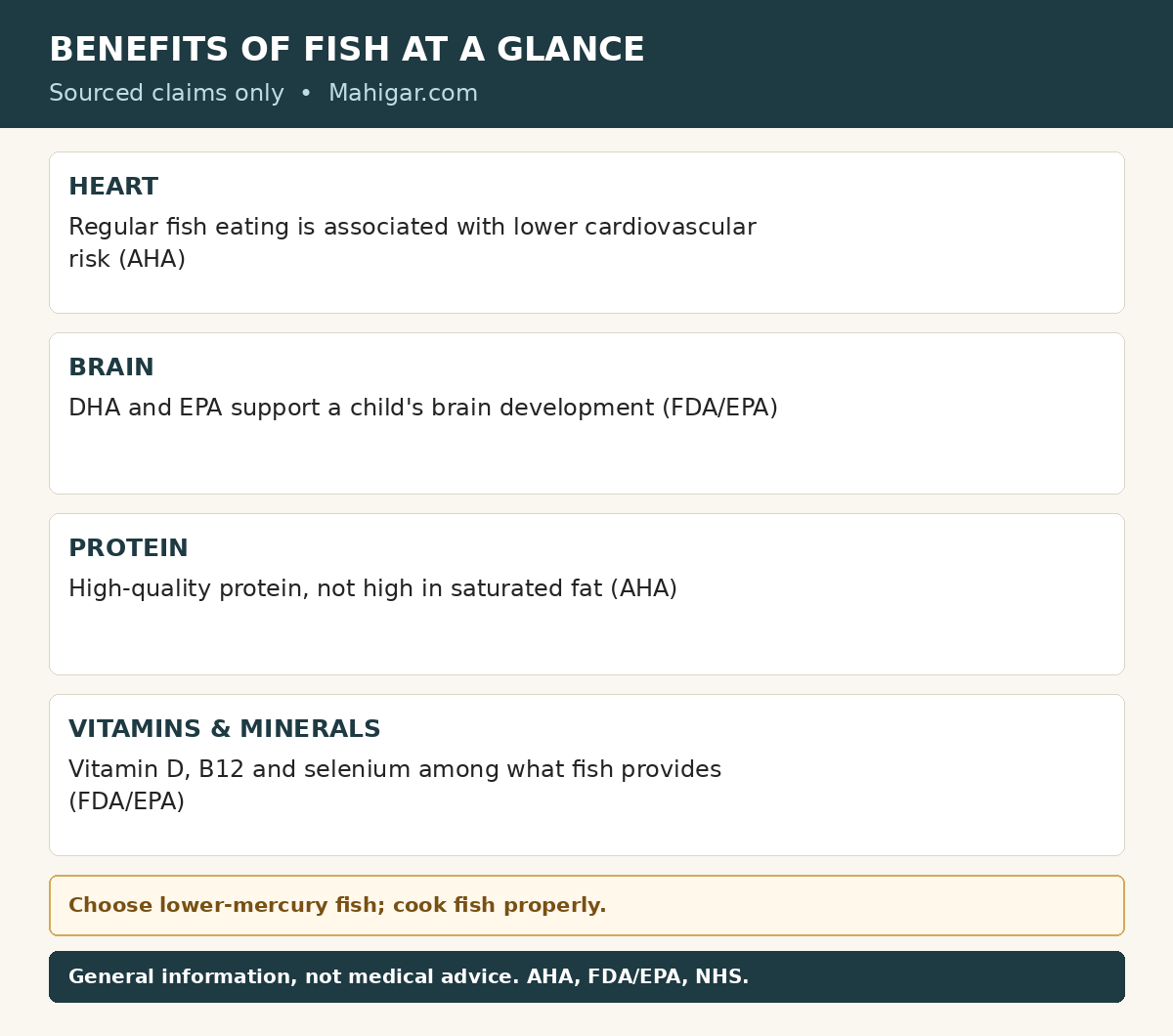
Table of Contents
The Heart: Where the Evidence Is Strongest
If fish has a headline benefit, it is the heart. Every major source I opened starts there, and this is the claim I trust most after twenty years of cooking fish, because the wording stays honest.
The American Heart Association recommends a dietary pattern that includes regularly eating fish and seafood. Its clearest number: eat 2 servings of fish, particularly fatty fish, per week, with a serving being 3 ounces cooked. The fatty fish it names are anchovies, herring, mackerel, salmon, sardines, bluefin tuna, oysters, and mussels. The EPA, carrying the joint FDA/EPA advice, puts the evidence this way: strong evidence shows that eating fish, as part of a healthy eating pattern, may have heart-health benefits. The NHS says the same in simpler language: oily fish are particularly high in long-chain omega-3 fatty acids, which can help keep your heart healthy, and a healthy, balanced diet includes at least 2 portions of fish a week, including 1 of oily fish.
Notice the honest wording, because I am keeping it: associated with, may have benefits, can help. Nobody credible says a salmon fillet cancels a lifetime of other habits. What the research supports is a pattern, fish on the plate regularly, often replacing fattier meats. And the AHA adds a replacement point I underline in my own kitchen: fish is a good source of protein and, unlike fatty meat products, is not high in saturated fat. My rule is simple: the fish replaces the meat, it does not just join the plate. That swap is part of the benefit.
The Brain: Mostly a Story About Beginnings
The brain benefit is real, but it is narrower than the headlines suggest, and the guidance is most specific where life is beginning. I will not stretch it further than the sources do.
The FDA/EPA advice says fish provide key nutrients during pregnancy, breastfeeding, and early childhood to support a child’s brain development: omega-3 fats, called DHA and EPA, plus iron, iodine during pregnancy, and choline. It adds that fish intake during pregnancy is recommended because moderate scientific evidence shows it can help the baby’s cognitive development. The NHS agrees: long-chain omega-3 is important in pregnancy and breastfeeding because it can help the baby’s nervous system develop.
For the rest of us, I claim only what the sources hold. This is not “eat fish, get smarter.” It is: during pregnancy and early childhood, fish carries building materials worth having, and I read that guidance the way a father would, with care about which fish. The right fish means the lower-mercury choices, the same Best Choices chart this site follows everywhere.
Protein, Vitamins, and the Quiet Benefits
Not every benefit needs a headline. Some are simply about what a fish portion quietly puts on the plate, and in my experience these quiet ones matter most in a family’s everyday cooking.
High-quality protein, light package. Fish gives complete, useful protein in a fillet that, the AHA notes, is not high in saturated fat. In my kitchen that shows up simply: a modest portion makes a plate feel complete without making it heavy. White fish go further, the NHS calls them low in fat and a healthier alternative to red or processed meat, which tends to be higher in fat, especially saturated fat. When my own plate already carries rich sides, a lean fillet keeps it balanced.
Vitamins and minerals with names. The FDA/EPA advice lists fish as a source of protein, vitamin B12, vitamin D, and selenium, alongside the iron, iodine, and choline already mentioned. The NHS adds that oily fish are a good source of vitamin D. And one of my favourite cheap tricks: some oily fish carry bones you can eat. Canned sardines, pilchards, and tinned salmon are sources of calcium and phosphorus for strong bones, straight from the NHS, and I keep them in my own pantry.
This page will not print grams per species from memory. I do not trust remembered numbers, and neither should you. When a nutrient number matters, it will come from a sourced data table, as the ranked and compared guides in this hub will do.
The Honest Limits: Where Benefits Stop
A benefits page earns trust by saying what fish cannot do. Three limits matter, and I want you to read them before you plan the week, not after.
Fish is not medicine. The strong claims belong to eating patterns, not single meals. The EPA’s heart language is careful: benefits appear as part of a healthy eating pattern, surrounded by vegetables, fruits, legumes, whole grains, and the rest of a sensible table. A fillet beside chips and sweet drinks is still a fine dinner; it is just not the pattern the evidence studied. I say this as a cook who loves a good fry: the treat and the everyday plate are different things, and the benefits live in the everyday plate.
The cooking method changes the plate. The NHS is blunt about this: fish that is steamed, baked, or grilled is a healthier choice than fried fish, and frying can increase the fat content of fish and shellfish, especially if they are cooked in batter. My fish-cook’s translation: a crisp battered fillet is a treat I make proudly, but the everyday benefit fish are the gently cooked ones. And done still means done: 145°F (63°C) in the thickest part, or opaque and flaking, as the full chart in Safe Internal Cooking Temperatures for Every Type of Fish lays out. One of my firm rules: nutrition never excuses undercooked fish.
Mercury sets the guest list. The same ocean that gives us omega-3s loads the big, long-lived predators with mercury, and no kitchen trick removes it. I cannot wash, trim, or cook it out. So the FDA/EPA sort fish into Best Choices (two to three servings a week), Good Choices (one serving a week), and Choices to Avoid. That chart decides which fish can carry your two weekly servings: salmon, sardines, tilapia, and canned light tuna can; shark and swordfish cannot. The full species chart, including pregnancy and child servings, is in Mercury in Fish: Safe Levels by Species. Choose by category and the trade-off mostly manages itself. The AHA adds that eating a variety of fish helps reduce potential effects of environmental pollutants, and that the benefits far outweigh the potential risks when amounts stay within the FDA/EPA recommendations.
Getting the Benefits in an Ordinary Week
Here is the whole research programme, shrunk to a family kitchen week. No supplement cabinet, no special shop, just rhythm. This is how I actually run my own week, and it satisfies every voice this article consulted.
Twice a week, roughly. The voices agree more than they argue. The Dietary Guidelines for Americans, quoted on the EPA’s advice page, recommend at least 8 ounces of seafood per week on a 2,000-calorie diet. The AHA asks for 2 servings of fish a week, particularly fatty fish, at 3 ounces cooked a serving. The NHS asks for at least 2 portions a week, including 1 of oily fish. Putting fish on the table twice satisfies all three.
Make one of them oily. One salmon, sardine, trout, or mackerel meal a week largely does the omega-3 job. The other can be lean and gentle: a white fillet, a tin of light tuna, a curry of river fish. Variety is not a garnish on this advice; it is the advice, for nutrition and mercury alike.
Choose by the chart, cook it gently. Build the week inside the FDA/EPA Best Choices, treat a Good Choice as the week’s only fish if it appears, and keep Choices to Avoid off the menu. Bake, grill, steam, or pan-cook more often than you deep-fry. Choosing species at the counter? Start at Fish Species Guide: What to Buy and How to Cook Each One, then come back here for the why.
In pregnancy, keep the fish, change the list. The FDA/EPA recommend 8 to 12 ounces of lower-mercury seafood a week during pregnancy and breastfeeding, drawn from the Best Choices. Fish is wanted there, not feared. Follow your own doctor alongside the chart.
Frequently Asked Questions
What is the biggest proven benefit of eating fish?
The heart benefit has the strongest support. The EPA, carrying the joint FDA/EPA advice, states that strong evidence shows eating fish, as part of a healthy eating pattern, may have heart-health benefits, and the AHA notes regularly eating fish is consistently associated with a lower risk of cardiovascular disease. “Proven” still means pattern-level evidence, not a promise for any one person.
How much fish do I need to eat to get the benefits?
About two servings a week covers the major guidance: 2 servings of fish, particularly fatty fish, at the AHA; at least 8 ounces of seafood a week in the Dietary Guidelines for Americans; at least 2 portions a week including 1 oily at the NHS. Make one weekly fish oily and choose lower-mercury species, and you are inside all three.
Do I need fish oil supplements if I eat fish?
The guidance this article follows is food-first: AHA, FDA/EPA, and NHS all build their advice around eating fish itself. Supplements are a personal-medical question. People who eat no fish, and anyone pregnant, should raise it with their doctor rather than self-prescribing from a food blog, mine included.
Can eating fish ever be unhealthy?
Yes, in specific ways the article names: high-mercury species eaten often (which is why the FDA/EPA Choices to Avoid exist), fish that is undercooked or spoiled, and fish buried in heavy frying most days of the week. Chosen from the Best Choices, handled fresh, and cooked to 145°F, fish sits comfortably inside a healthy eating pattern.
What to Check Next
Keep this week simple: two fish meals, one of them oily, both from the FDA/EPA Best Choices, cooked gently and finished properly. That single habit is what the research actually rewards. Then go deeper where your question lives: more guides are publishing from this hub, and each one will link back here. And bring medical questions to a doctor, not a comment box.
Sources and standards used: American Heart Association, “Fish and Omega-3 Fatty Acids”; U.S. EPA page carrying the joint FDA/EPA Advice About Eating Fish and Shellfish; NHS “Fish and shellfish” guidance; mercury handled only through the FDA/EPA categories as established on Mahigar in Article 03; cooking figure (145°F/63°C) follows FoodSafety.gov/FDA guidance as established in Mahigar Article 02. The cooking behaviour, routines, and opinions in this article are Wasim Abbas Bhatti’s own kitchen experience, written in his voice in plain language. This is general information, not medical advice; personal medical guidance comes from your own doctor.
