Pregnancy-Safe Fish Recipes (Low-Mercury Picks)
The most frightened readers who ever wrote to me were expecting mothers, scared off fish entirely by something they read online. Some had not touched fish in months. That fear is the problem this guide exists to end, gently, and with the official advice in hand.
The internet teaches pregnancy fish rules as a list of terrors: mercury, raw fish, the wrong species. The result is women who eat no fish at all and miss the nutrients the official advice wants them to have, or women who guess at species and get the mercury part wrong. Both come from the same gap. Nobody gave them the actual FDA and EPA amounts in plain words.
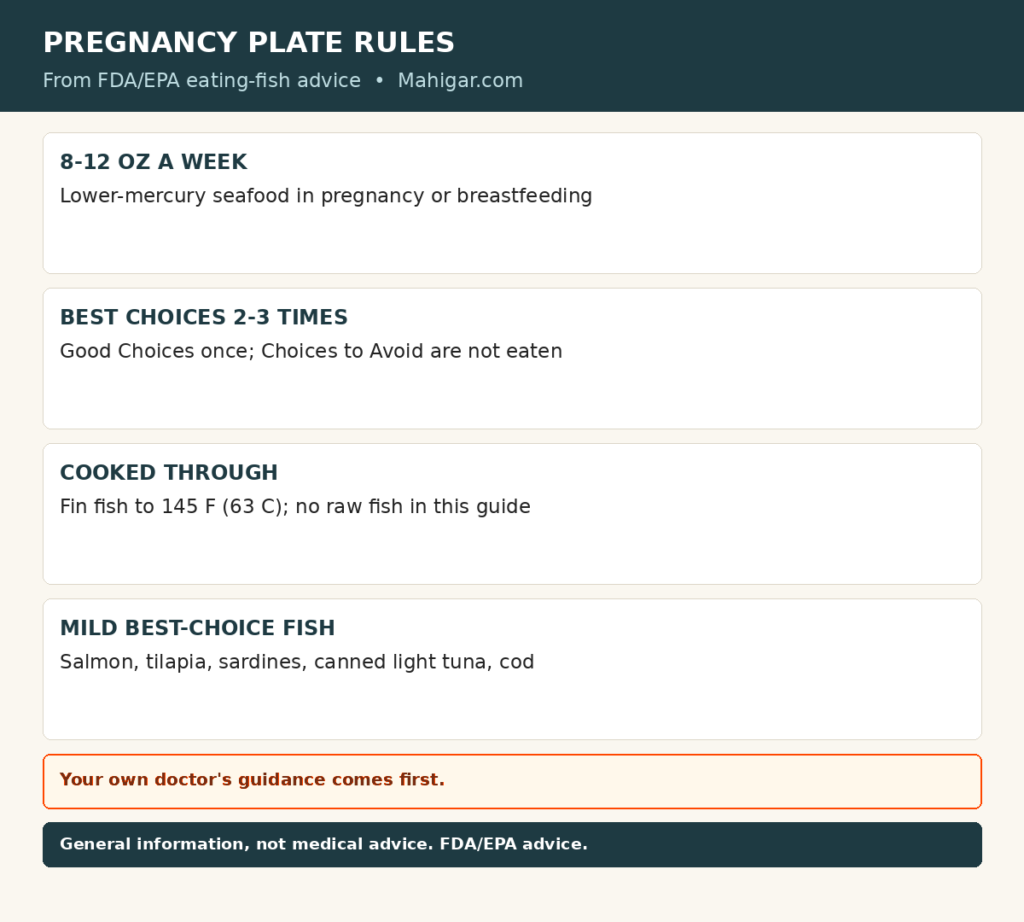
Here are those amounts, exactly as the agencies give them: 8 to 12 ounces a week of lower-mercury fish, built from the Best Choices list, cooked through every time. The right fish, not no fish. This guide sits inside Fish Recipes for Every Diet and Lifestyle, our diet hub, and every amount on this page comes from that official advice. Nothing new is invented here.
This is general information, not medical advice. Your own doctor knows your pregnancy. Where anything on this page and your doctor’s guidance disagree, your doctor wins, every time.
Table of Contents
The Amounts, Exactly as the FDA and EPA Give Them
The FDA and EPA built their Advice About Eating Fish for people who are pregnant, might become pregnant, or are breastfeeding, and for children. The pregnancy version is short enough to say in one breath.
8 to 12 ounces of lower-mercury seafood a week. That is 2 to 3 servings, with an adult serving counted as 4 ounces, roughly your palm.
Build those servings from the Best Choices. Two to three of them a week is the rhythm the advice asks for.
A Good Choice is that week’s only fish. If you eat one serving from the Good Choices list, the advice is no other fish that week.
Choices to Avoid are not eaten. Not in pregnancy, not as a treat.
The Dietary Guidelines for Americans give the same 8 to 12 ounces, and the joint EPA and FDA wording explains why fish stays on the plate rather than off it: fish provides key nutrients that support a child’s brain development, alongside the protein in every serving. That is the whole claim, and it is enough. I will not dress it up with promises. The agencies themselves speak in nutrients and patterns, and so does this page.
The servings sit inside a wider weekly picture too, and How Much Fish Should You Eat Per Week? lays out how the adult, pregnancy, and child amounts compare without mixing them up. And again, because it cannot be said too often in a pregnancy article: this is general information, not medical advice. Your doctor’s personal guidance for your pregnancy comes first.
The Low-Mercury Picks: Where Your Servings Come From
Mercury is chosen at the counter, not in the kitchen. It builds up inside the fish over its life, which is why small, short-lived fish sit low on the chart and the great old predators sit high, and why no washing, trimming, or cooking takes it out. The full chart, species by species, lives in Mercury in Fish: Safe Levels by Species. This page cooks from its safest shelf.
Your Best-Choice pool, the fish these recipes are built from, includes salmon, sardines, tilapia, catfish, cod, canned light tuna, trout, haddock, flounder, sole, shrimp, pollock, Atlantic mackerel, and anchovies, among others named on the chart. That is a generous pool: oily fish and lean fish, market fish and tins, expensive evenings and honest budget ones.
Two cautions to keep beside it. Albacore, the “white” tuna, is a Good Choice, not a Best Choice: one serving, and no other fish that week. Canned light tuna is the Best-Choice tin. The word on the tin changes the rule, so read it before the tin goes in the basket. And the Choices to Avoid, shark, swordfish, king mackerel, marlin, orange roughy, bigeye tuna, and tilefish from the Gulf of Mexico, are simply not pregnancy food, however beautifully they are cooked.
Local fish, honestly. Rohu and catla are not named on the FDA and EPA chart. The Mercury guide treats carp as the closest official placing for rohu, a Good Choice at one serving, and pangasius as unlisted: the kind of farmed, fast-growing, non-predatory fish that usually carries less, stated as a principle and not a measurement. In pregnancy, my honest kitchen advice follows from that. Lean on the named Best Choices you can check, tilapia and catfish are on that list and easy to find in our markets, and let the unlisted large local fish be occasional, smaller-portioned food, checked with your own doctor.
Cooked Through, Every Time
Pregnancy changes one kitchen habit from preference to rule: the fish is cooked through, always.
Fin fish is done at 145°F (63°C) in the thickest part, or until the flesh turns opaque and flakes cleanly with a fork. The full temperature chart, and why “just warm in the middle” is never enough, is in Safe Internal Cooking Temperatures for Every Type of Fish. At home, the practical signs are the ones I teach everywhere on Mahigar: no glassy, translucent centre; flesh that flakes rather than resists; juices that run clear and steaming, not cool.
That also means this guide teaches no raw fish and suggests none. No sushi-style plates, no “just seared” centres, nothing half-cooked dressed up as delicate. Every dinner idea below ends at the same safe finish. Gentle does not mean undercooked. It means mild flavours, honest portions, and a fish that reaches its proper temperature without being punished in a screaming pan.
Freshness closes the circle: keep fish at 40°F (4°C) or below, use raw fish within one to two days and cooked fish within three to four, and discard anything sour-smelling, slimy, or lifeless to the touch. Rules that were always wise become, in pregnancy, simply the way the kitchen runs.
Five Gentle Dinners from the Best-Choice Pool
These are dinner ideas at principle level: species, method, and company. Not measured recipes.
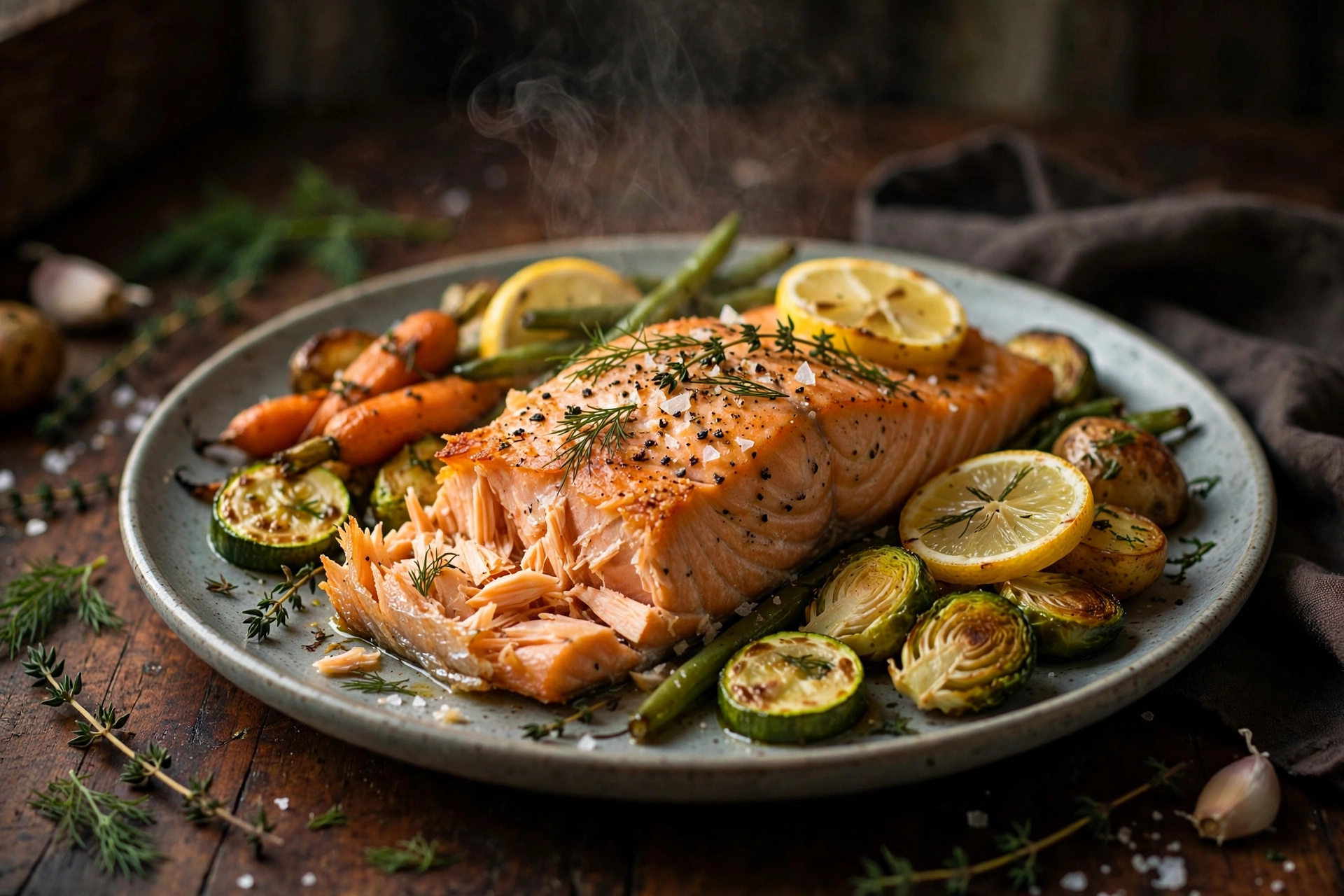
Baked salmon with lemon and soft herbs. The anchor dinner. An oily Best Choice, baked until it flakes at the centre, finished with lemon and dill or parsley. Rich enough to feel like care rather than restriction, and the nutrients salmon carries are the agencies’ nutrient point made edible. Vegetables cooked alongside keep the plate calm.
Tilapia, the mild workhorse. For days when strong flavours are unwelcome, and pregnancy has those days, tilapia is gentle in smell and taste, forgiving in the pan or oven, and squarely a Best Choice. Light home seasoning, a squeeze of lemon, cooked through. It is also one of the easiest fish to keep mild for a whole family sharing the same dinner.
A canned light tuna plate. The pantry serving: light tuna, the Best-Choice tin, flaked over salad, folded through warm potatoes, or simply served with lemon, herbs, and bread. Check the tin says light tuna. That one word is the difference between a Best Choice and the once-a-week albacore rule. An opened tin lives in the fridge like cooked fish and is used within the same three-to-four-day window.
Sardines, small fish with an honest record. Sardines sit among the lowest-mercury fish on the chart and among the richest in the nutrients the joint advice values. Served warm from the tin or gently crisped, with lemon to keep them bright, they are the smallest fish doing the largest job. If their strength is new to you, start with them as one element of a plate rather than the whole event.
Cod, trout, or catfish for rotation. Variety is part of the guidance, not decoration. Rotating species spreads both nutrients and any small risks. A baked cod night, a trout night, a catfish curry night: all Best Choices, all mild enough for a cautious appetite, all cooked to the same flaky finish. Choose by what looks best at the counter that day. The chart has already done the worrying.
Rohu and catla nights fit too, inside the honesty above. A rohu curry treated as the carp-placing once-a-week Good Choice, rather than stacked beside other fish that week. That is how a South Asian kitchen keeps its own table food inside the official advice without surrendering either.
Frequently Asked Questions
How much fish can I eat while pregnant?
The FDA and EPA advice is 8 to 12 ounces of lower-mercury seafood a week in pregnancy and breastfeeding: 2 to 3 servings of 4 ounces from the Best Choices. One serving from the Good Choices can take the place of the week’s fish, with no other fish that week, and the Choices to Avoid are not eaten. This is general information, not medical advice. Your own doctor’s guidance comes first.
Which fish are the safest picks in pregnancy?
The FDA and EPA Best Choices: salmon, sardines, tilapia, catfish, cod, canned light tuna, trout, haddock, flounder, sole, shrimp, pollock, Atlantic mackerel, and anchovies, among others on the full chart. These are the fish the advice allows 2 to 3 servings a week of. Albacore (white) tuna is a step up in mercury: a Good Choice, once a week.
Can I eat fish raw or just lightly cooked in pregnancy?
Not on this page’s advice. Every recipe idea here cooks fish through to 145°F (63°C): opaque and flaking, with no translucent centre. No raw fish is taught or suggested. Cooked-through is the rule this guide keeps for pregnancy, and personal questions about your own situation belong with your doctor.
What about my local fish: rohu, catla, pangasius?
They are not named on the FDA and EPA chart. The closest official placing is carp as a Good Choice, which the Mercury guide uses for rohu. Pangasius is unlisted and discussed there only as a lower-mercury profile, not a measurement. In pregnancy, the careful pattern is to build the week from named Best Choices like tilapia and catfish, and treat unlisted local fish as occasional, smaller portions, and to confirm your own pattern with your doctor.
What to Check Next
This week, plan two gentle fish dinners from the Best-Choice pool: one oily, like salmon or sardines, and one mild, like tilapia or cod. Cook both properly through. That is the official advice wearing an apron: 8 to 12 ounces of the right fish, chosen from the Mercury chart, finished at the right temperature. And take the personal version of every question on this page to the person who actually knows your pregnancy: your doctor.
General information only, not medical advice, now as at the start.
