Why Fish Tastes ‘Fishy’ and How to Reduce It
Fresh fish should taste clean, mild, and a little like the sea — not strong, sour, or heavy in the mouth. When fish tastes “fishy,” the usual reasons are age and handling first, then the fish itself: rich, oily species carry a stronger natural flavour, and old oil or hard overcooking can make that flavour louder. The fix is not to bury the fish in spice. The fix is to start fresh, keep it cold, cook it gently, and let lemon, herbs, and spices help at serving. I am Wasim Abbas Bhatti, the Fish’s Chef. This guide sits inside The Science of Cooking Fish: A Troubleshooting Guide, where I treat strong flavour as a clue: age, tired oil, harsh cooking, or a naturally bold species. Read the clue in that order, and most fishy taste can be reduced before it reaches the plate.
Table of Contents
First: Too Fishy, or Not Safe?
Before any fix, make the safety split. A mild sea smell is normal. A strong smell that makes you pull back is not a seasoning problem. If raw fish smells sour or like ammonia, feels slimy, stays dented when you press it, or has been left warm longer than it should have been, do not cook it and do not try to fix the taste with lemon, milk, or masala. Throw it out. Every sign is set out in How to Tell If Fish Has Gone Bad. Only fresh fish belongs in the pan. I will not teach you to mask a turning fish under a strong sauce. If the fish smells clean and the flesh springs back, read on. Now we are talking about flavour, and flavour can be guided.
Why Fish Starts Tasting Too Strong
Age and handling come first
Fish is delicate from the moment it leaves the water. Warmth, time, and poor wrapping make its smell stronger. A fillet left uncovered in the fridge picks up other smells and gives off more of its own. On Mahigar I keep the home rule tight: raw fish belongs at 40°F (4°C) or below and is best used within 1 to 2 days. Buy it late in the shopping trip, get it cold quickly, wrap it well, and cook it sooner rather than later.
Some species are naturally bolder
Not every strong taste is a fault. Oily fish carry more flavour than lean white fish. Rich fish can taste deep, full, and unmistakably of the sea, especially when the skin and darker flesh stay in the dish. That boldness is part of their character. The mistake is treating every species the same. A gentle sole and a rich oily fish do not want the same handling. Delicate fish need simple seasoning. Bolder fish can stand lemon, herbs, ginger, garlic, and warm spices — but those flavours should frame the fish, not fight it. If you want a mild plate, choose a mild fish first.
Overcooking makes flavour harsher
Fish cooked past done loses moisture, and dry flesh tastes stronger in a tired way. The flakes turn chalky, the edges harden, and any natural fish flavour feels heavier because the tender, juicy balance is gone. This is why “a few more minutes to be safe” can make a good fish taste worse. The stop point is plain: fin fish is done at 145°F (63°C) in the thickest part, or when the flesh is opaque and flakes easily. The full chart is in Safe Internal Cooking Temperatures for Every Type of Fish. Stop there. Gentle cooking protects flavour as much as texture.
Old oil leaves its own taste
Oil that has been heated too often or used for strong frying can stamp its flavour onto fresh fish. Burned crumbs do the same. Use clean, fresh oil, and wipe out old crumbs before a second batch. Fresh fat will not fix old fish, but it stops good fish picking up a flavour it never had.
My Reduce-the-Fishy-Taste Routine
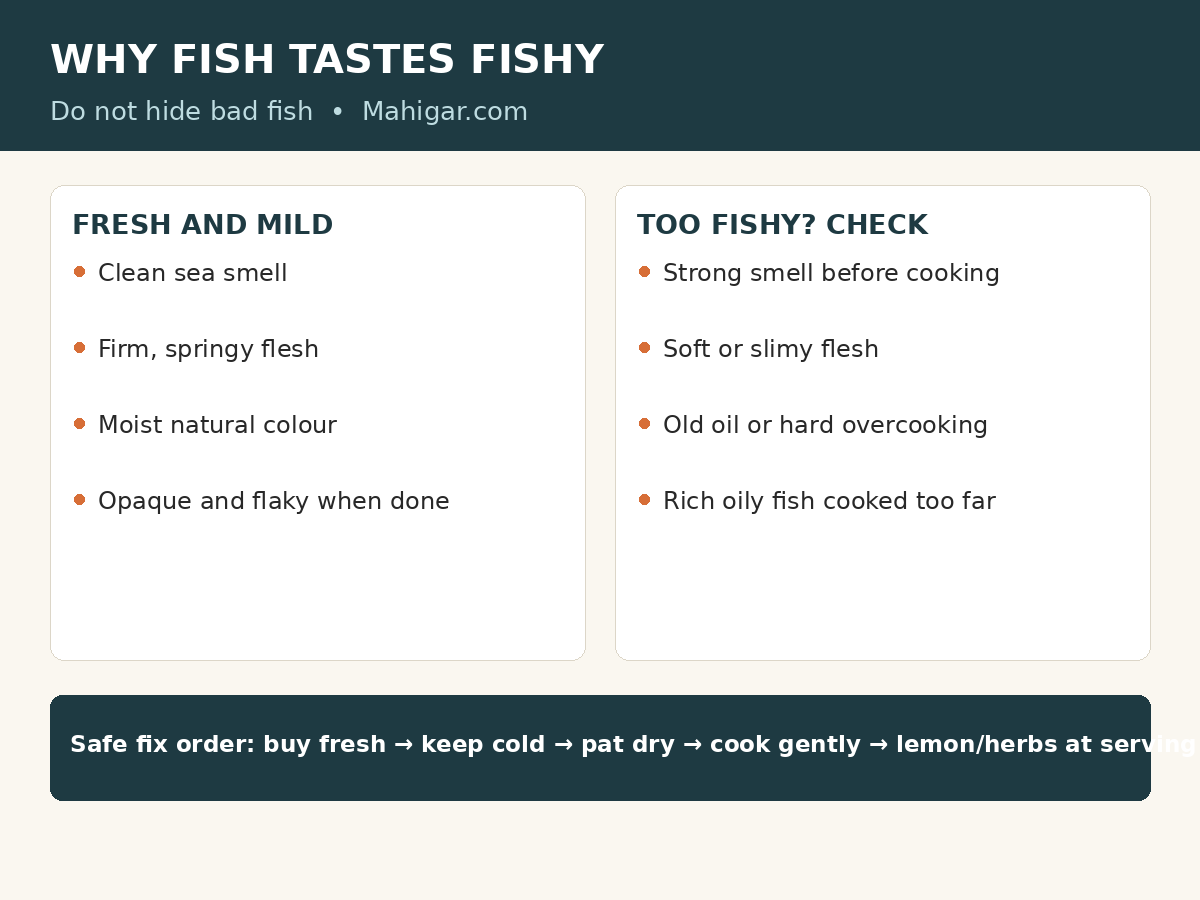
Six-step routine for milder-tasting fish.
-
Buy the freshest fish you can
Clean sea smell, firm flesh that springs back, moist natural colour. If it fails the smell or touch check, choose another fish.
-
Keep it cold and covered
Chill at 40°F (4°C) or below, wrapped so it does not dry out or perfume the fridge, and cook raw fish within 1 to 2 days.
-
Pat the surface dry before cooking
I do not try to rinse a strong smell away. For fresh fish, a dry surface cooks cleaner and browns better.
-
Use lemon and milk lightly, only on fresh fish
Milk or lemon only for fresh mild fish; lemon best at serving, never to rescue doubtful fish.
-
Cook gently and stop on time
Fresh oil, space in pan, remove when opaque and flaky.
-
Finish bright at serving
Lemon, herbs and spices at serving.
Notice what is not on that list: no long acid bath for doubtful fish, no heavy sauce to hide a smell, and no second frying to “cook the taste out.” Those moves change the surface. They do not restore freshness.
Lemon, Milk, and Spices: Help, With Honest Limits
Lemon is my first brightener, but I use it late. A squeeze over hot fish wakes the plate up without giving acid time to work on raw flesh. For a plain fried or grilled fillet, I keep acid short or save it for serving. Milk is an old home habit some cooks swear by for mild fish. I mention it as kitchen practice, not as a promise and not with a measured soak time. If you use milk, use it only on fish you would happily cook anyway, then drain and pat the fish dry. If the fish smells wrong before the milk, the answer is still the bin. Spices are the Mahigar table talking. My own blends, ginger, garlic, green herbs, and a little chilli can make bold fish feel balanced. Season honest fish boldly. Do not season a warning sign and call it dinner.
What to Do With Bold, Oily Fish
When the fish is fresh but naturally rich, cook it with respect instead of suspicion. Keep the pieces even so they finish together. Cook the skin well if the skin stays on, because crisp skin gives rich flesh a cleaner bite. Serve with lemon, herbs, onion, or a sharp salad so each bite resets the palate. Give bold fish room, use fresh oil, and serve promptly.
Frequently Asked Questions
Why does fresh fish still taste slightly fishy?
Mild sea flavour is normal; oily fish taste bolder even when fresh.
Can lemon or milk fix a bad fish smell?
No — does not make spoiled fish safe; discard if sour or slimy.
Does overcooking make fish taste more fishy?
Yes — dry flesh tastes harsher; stop when opaque and flaky.
How can fish taste milder?
Choose fresh mild fish, keep cold, cook gently, finish bright.
What to Check Next
If the strong smell is on your hands, board, or bin after prep, that is a cleanup problem, not a flavour problem — the routine is in How to Get Rid of Fishy Smell on Hands and in the Kitchen. If the smell was in the raw fish before cooking, go back to the freshness checks first and be honest about what they tell you. For the rest of the heat problems — sticking, curling, mushy flesh, and dry fish — the Cooking Science pillar holds the whole map. But this rule stands above the map: fresh fish, kept cold, cooked gently, needs very little fixing.
