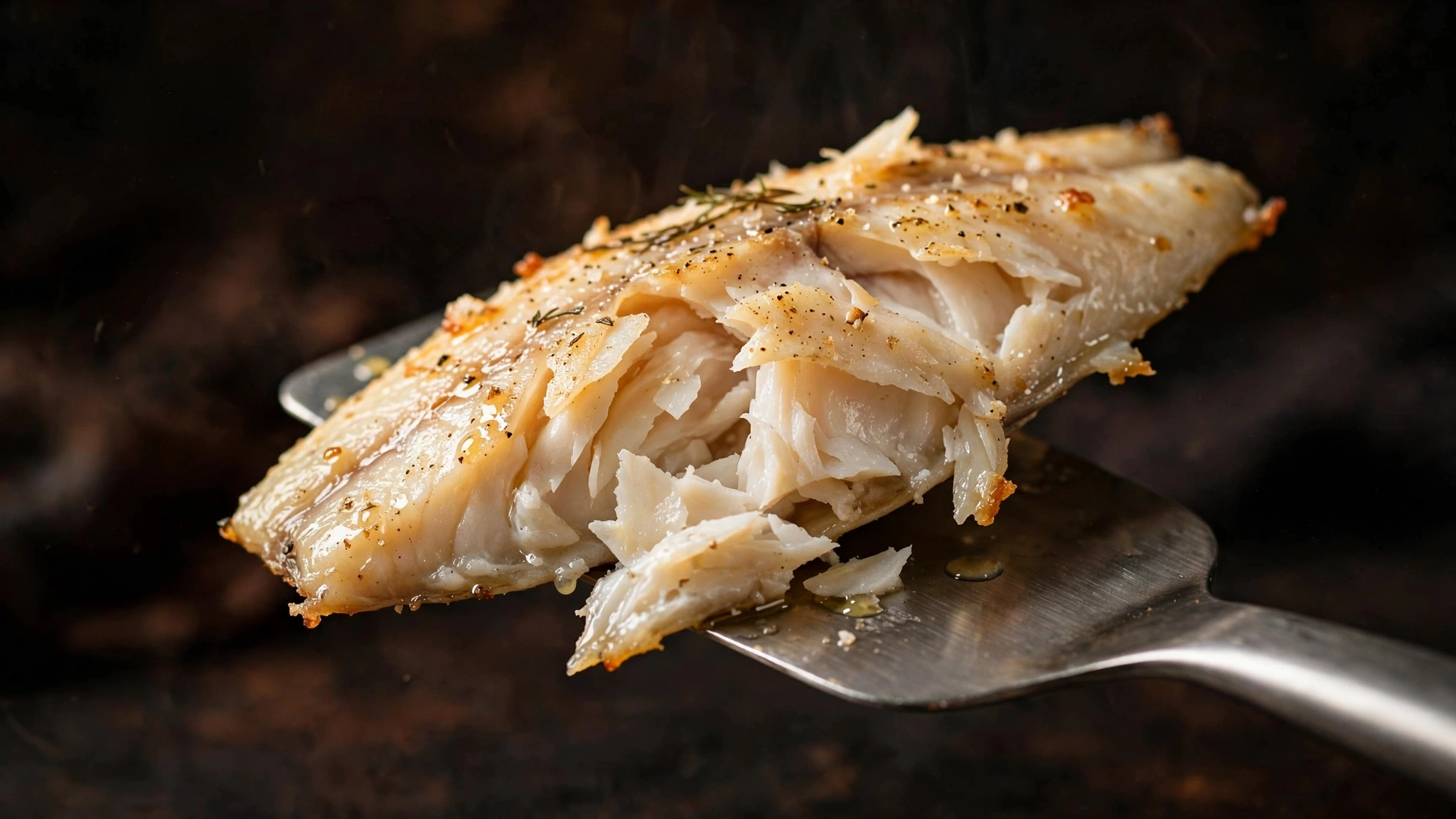
Why Is My Fish Mushy? Causes and Fixes
Your fish turned mushy because it was cooked past done, it thawed badly, it sat too long in acid, it was never firm and fresh to begin with, it was handled roughly, or it went into the pan still wet. I am Wasim Abbas Bhatti. In my kitchen, soft fish is rarely about talent. It is about one small step earlier in the chain. In this guide I help you find that step and fix it next time. This problem sits inside my full map, The Science of Cooking Fish: A Troubleshooting Guide.
Table of Contents
First: Mushy, or Unsafe?
Before you blame your cooking, check the fish itself. If it smells sour or like ammonia, feels slimy, does not spring back when you press it, or was left sitting warm on the counter, do not eat it. Throw it away. No sauce and no extra cooking can make bad fish safe. I explain every sign step by step in How to Tell If Fish Has Gone Bad. If your fish smelled clean, felt firm, and was kept cold, then your problem is technique, and technique can be fixed.
The Causes I See Most Often
1. It cooked past done
This is the cause I see most. Fish flesh is delicate. When heat keeps going after the fish is done, the flakes fall apart and the texture turns soft and wet instead of clean and firm. Stop at 145°F (63°C) in the thickest part, or stop when the flesh is opaque and flakes gently with a fork. I keep the full temperature chart in Safe Internal Cooking Temperatures for Fish. Check early, because thin and thick pieces do not finish at the same time.
2. It thawed badly
A warm counter thaw, warm water, or thawing and freezing again can soften the flesh before cooking even starts. The fish may look fine, then fall apart in the pan. Thaw your fish cold in the fridge, still wrapped, and cook it soon after it has thawed. A gentle cold thaw protects the texture. A warm thaw spends it before you begin.
3. It sat too long in acid
Lemon juice, vinegar, and other sour marinades start to change the surface of raw fish. The outside turns opaque and soft, a bit like it has begun to cook, and the texture suffers. Keep acid contact short, and use most of your lemon or sour flavour at the end of cooking. The fish gets the bright taste without sitting in acid and turning soft.
4. It was never firm fish to begin with
Old fish, soft fish, or fish that was stored badly will not turn firm in your pan. Heat cannot rebuild flesh that has already broken down. When you buy fish, look for a clean sea smell and flesh that springs back when you press it gently. If the fish is soft before cooking, expect it to be soft after cooking too.
5. Delicate fish, handled roughly
Delicate fish breaks when it is flipped again and again or stirred hard in sauce. Each turn tears the flakes a little more. Flip your fish once, with a wide spatula under the whole fillet. If you are adding sauce, add it late and do not stir the fish through it. Let the sauce coat the fish while the fish stays in one piece.
6. It went into the pan wet
Wet fish steams instead of searing. It stays pale, releases water into the pan, and ends up soft. Pat the surface dry before cooking. A dry surface gives you better contact, better colour, and firmer flakes. Wet fish is also linked to sticking, which I cover in Why Fish Sticks to the Pan (And How to Stop It).
My Firm-Fish Routine
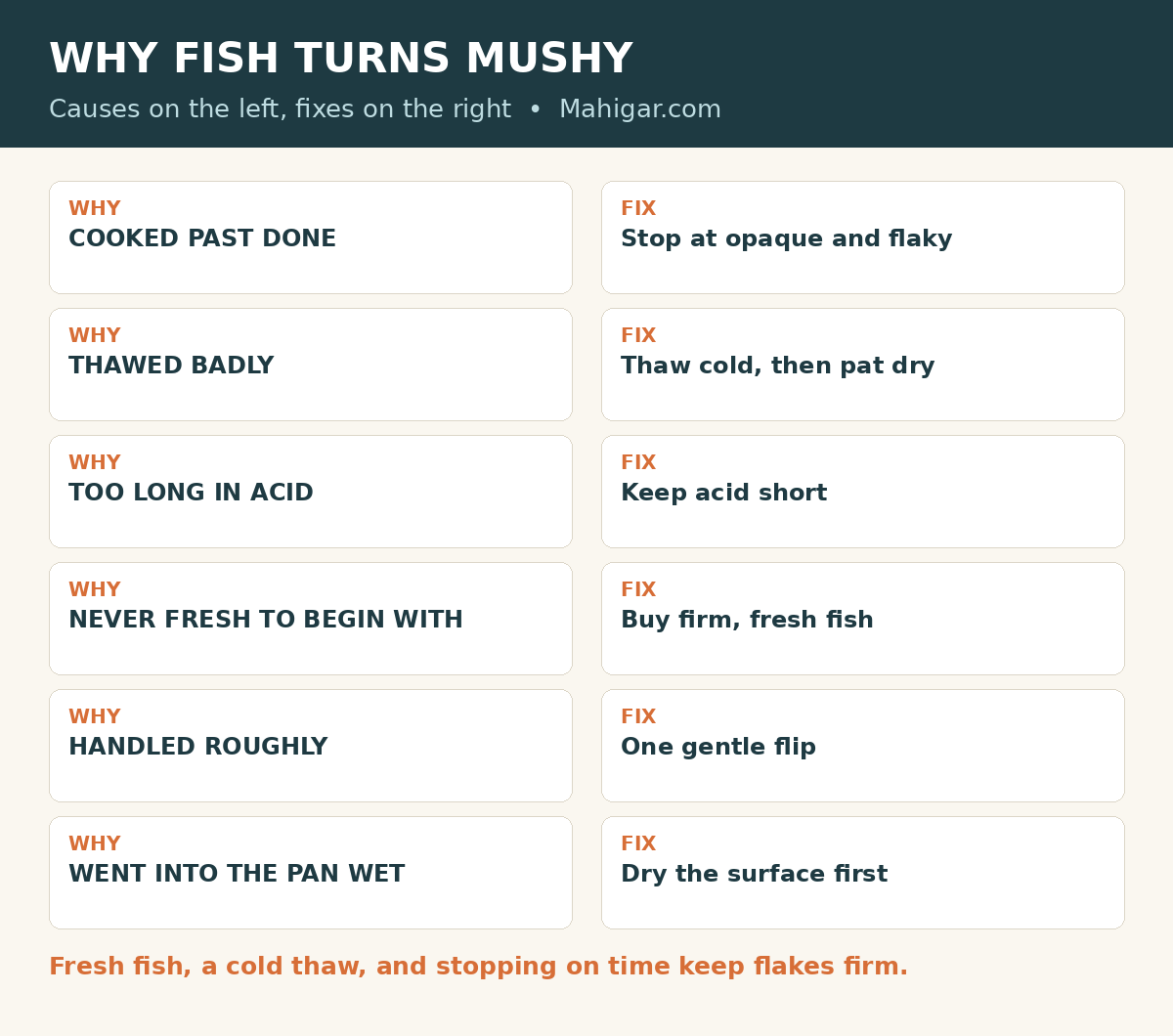
Follow these seven checks in order. Fresh fish, a cold thaw, a dry surface, short acid, the right method, stopping at done, and prompt serving keep the flakes firm.
Check fresh first
Smell the fish and press the flesh gently. A clean sea smell and flesh that springs back mean you can cook it. Sour or ammonia smell, slime, or no spring-back mean you should throw it away.
Thaw cold, never warm
Thaw frozen fish in the fridge while it is still wrapped. Cook it soon after thawing. Do not thaw it warm on the counter or in warm water, and do not freeze it again.
Pat dry
Pat the surface dry on all sides before the fish meets heat. Dry fish sears. Wet fish steams and turns soft.
Keep acid short
Keep lemon, vinegar, and sour marinades brief. Add most of the sour flavour at the end so the surface does not turn soft before cooking.
Match the method to the fish
Use gentle, moist methods for delicate fish and a hot, dry pan for firm fish. One calm layer cooks more evenly than a crowded pan.
Stop at done
Stop at 145°F (63°C) in the thickest part, or when the flesh is opaque and flakes gently. Check early so you do not cook past done.
Serve promptly
Serve the fish soon after it is done. Lift it with a wide spatula, keep the flakes together, and do not stir it hard through sauce.
If It Is Already Mushy
You cannot cook mushy fish back to firm. More heat will only break it down further. If the fish is fresh and safe, flake it gently into a sauce, fold it through rice, or shape it into fish cakes, where a soft texture is welcome. If the fish smells sour, smells like ammonia, feels slimy, or was left warm for too long, do not try to save it. Throw it away.
Frequently Asked Questions
Can you fix mushy fish after it is cooked?
No. Mushy fish will not turn firm again with more cooking. If the fish is fresh and safe, flake it into a sauce, mix it through rice, or make fish cakes. If it smells sour, smells like ammonia, feels slimy, or was left warm, throw it away.
Does frozen fish always turn mushy?
No. Fish that was frozen well can cook firm. Thaw it cold in the fridge, keep it wrapped, pat it dry, and cook it soon after thawing. A warm thaw is what softens the flesh.
Why is my fish mushy if it is not overcooked?
Look earlier in the chain. A bad thaw, a long sit in acid, fish that was not fresh, rough handling, or a wet surface going into the pan can all make fish soft even when the cooking time was right.
How do I stop fish turning mushy in curry or sauce?
Make the sauce first, then add the fish near the end. Use firm, thick pieces, lay them in one layer, and let them finish in the heat of the sauce without stirring. Serve promptly so the fish holds together.
What to Check Next
- Fresh fish with a clean sea smell and flesh that springs back.
- A cold fridge thaw, with the fish kept wrapped and cooked promptly.
- A dry surface before the fish meets the pan.
- Short acid contact, with lemon and sour flavour added near the end.
- Gentle handling: one flip, a wide spatula, no hard stirring.
- Stopping at 145°F (63°C), or opaque flesh that flakes gently.
For the full map of heat, moisture, and doneness, read The Science of Cooking Fish: A Troubleshooting Guide. Keep the temperature chart beside it: Safe Internal Cooking Temperatures for Fish. Name the problem first, then fix that one step.
Sources: FoodSafety.gov and the FDA for the 145°F (63°C) cooking temperature and for freshness and discard guidance. The causes and fixes in this guide are from my kitchen experience as Wasim Abbas Bhatti. This is general kitchen information, not medical advice.
