Overcooked vs Undercooked Fish: How to Spot the Difference
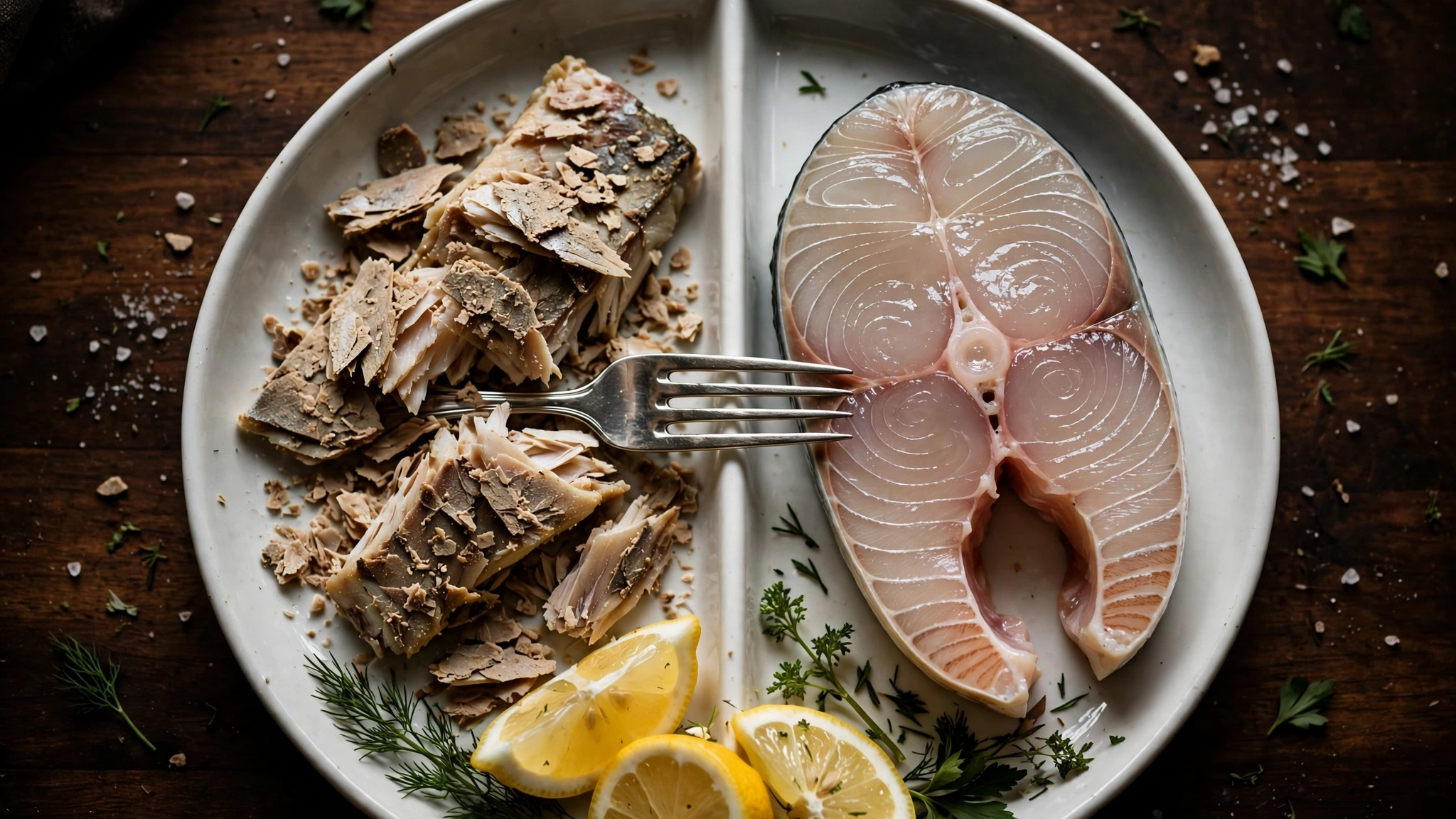
Undercooked fish is translucent, glassy, and soft in the centre. Overcooked fish is opaque all through, but dry, tight, and chalky. The fish you want sits between them: opaque at the thickest part, moist, and separating into gentle flakes. I am Wasim Abbas Bhatti, the Fish’s Chef. Most fish is ruined between “not yet” and “too far.” This guide sits inside The Science of Cooking Fish: A Troubleshooting Guide, where doneness is read, not guessed from the clock.
Table of Contents
Start With the Safety Anchor
Fin fish is done at 145°F (63°C) in the thickest part, or until the flesh is opaque and flakes easily. That is the FoodSafety.gov and FDA guidance, with the full chart in Safe Internal Cooking Temperatures for Every Type of Fish. Use a thermometer if you have one; if not, read the thickest part — not the thin tail, browned surface, or colour alone.
The Three Faces, Side by Side
| Sign | Undercooked | Done | Overcooked |
|---|---|---|---|
| Look | Translucent, glassy, shiny | Opaque, no longer see-through | Opaque, dull, dry-looking |
| Fork | Slides or resists; layers do not separate | Flakes separate gently | Flakes crumble hard |
| Moisture | Wet, raw, jelly-soft centre | Moist flakes that hold together | Dry, chalky, cottony bite |
| Juices | May look watery; not proof alone | A little moisture supports the call | Little juice left to give |
| Surface | Can be browned while centre lags | Surface and centre agree | Surface may look fine while flesh is spent |
Read the pattern, not one sign at a time. Three clues pointing the same way rarely mislead.
The Look: Glassy, Opaque, or Dull
Undercooked fish still looks raw in the middle. It shines, glassy and a little see-through, even when the outside has taken colour. Done fish has crossed over. The flesh is opaque — solid-looking and no longer translucent — through the thickest part. Opaque does not mean dry. Opaque and moist is the goal. Overcooked fish is opaque too, but dull. The flakes look tight and tired instead of soft and separate.
The Fork Test: Slide, Flake, or Crumble
Use a fork gently at the thickest part. Slip it in and lift only a little. Undercooked fish does not flake properly. The layers slide, feel soft and raw, and bend instead of separating into clean flakes. Done fish separates along its natural lines under light pressure. The flakes part, but stay moist and hold their shape. Take it off the heat. Overcooked fish flakes in the wrong way. Instead of tender flakes, you get dry bits that crumble and fall apart. More heat will not bring that back.
Moisture and Juices: Helpful, Never the Whole Answer
Undercooked fish can feel wet in a raw way — soft, slick, and not yet set. Done fish feels moist in a cooked way: tender flakes that still hold together. Overcooked fish has squeezed its moisture out and chews dry and chalky. Juices are supporting evidence only. A done fillet may release a little juice; an undercooked centre may also look wet. Never say “it leaked juice, therefore it is done.” Put juice beside opacity and flake.
The Surface and Colour Can Lie
A browned crust is not a certificate. A thick fillet can be golden outside and glassy in the centre. A pale piece cooked gently in sauce or steam may also look plain and still be done inside. The full no-probe method is in How to Tell When Fish Is Done Without a Thermometer. Colour is the weakest witness of all. Salmon can stay deeply coloured when cooked, and pale fish can hide a raw centre. Read colour last, if at all.
Whole Fish: Check Near the Backbone
Lift the flesh gently at the thickest part and look down to where it meets the backbone. Do not judge by skin or tail flesh. If that deep flesh is still translucent and glassy, the fish is undercooked, even if the skin is crisp. Give it gentle heat and check again. If it is opaque and separates cleanly, it is done. If it is dry and chalky to the bone, it is overcooked.
The Simple Check I Use
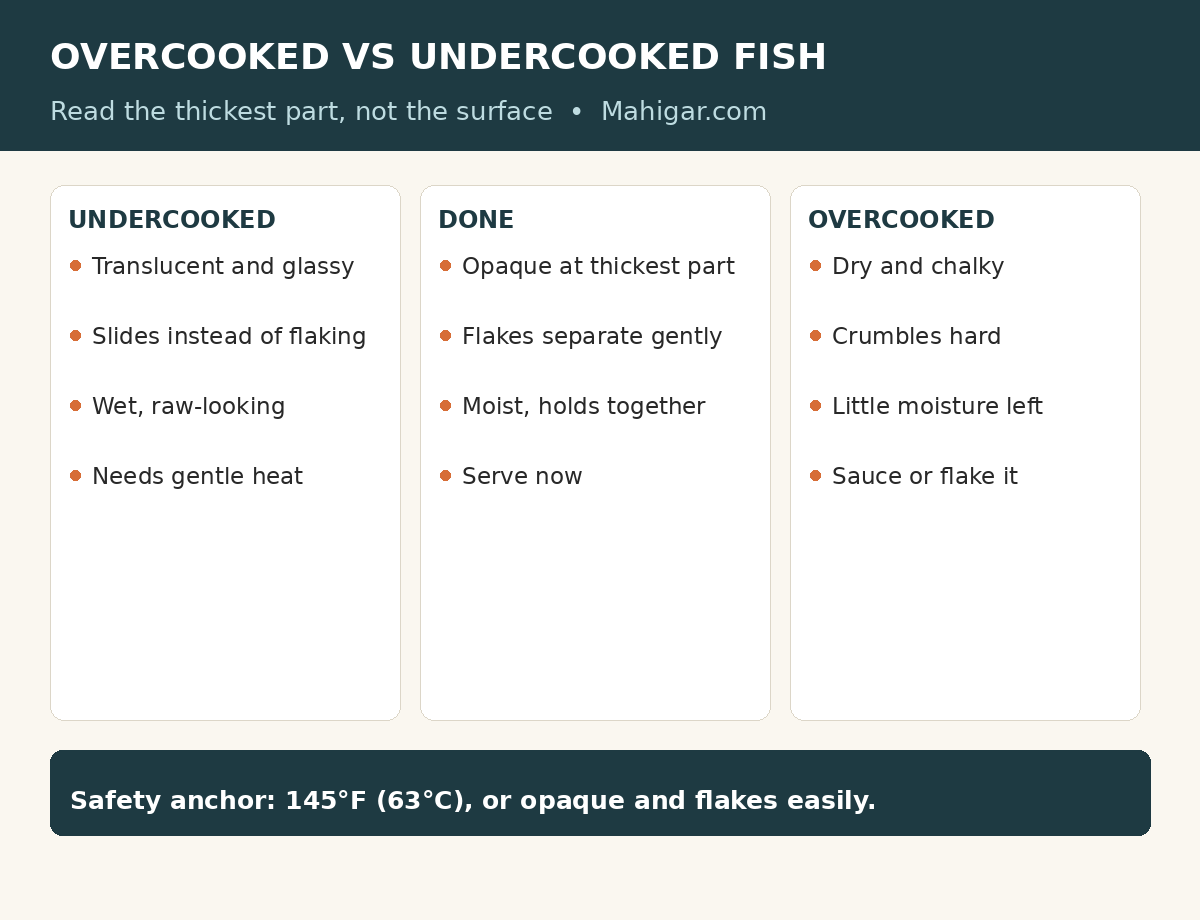
Use the thickest part to read look, flake, and moisture together, then act on what you find.
-
Go to the thickest part
Fillet centre, steak centre, or whole fish near the backbone. Ignore the thin edge.
-
Look before you touch
Translucent and glassy means undercooked. Opaque means keep checking. Dull and dry-looking warns of overcooked.
-
Lift with a fork, gently
Slides and raw-soft means not yet. Gentle flakes mean done. Hard crumble means too far.
-
Check moisture as support
Moist flakes that hold together are good. Raw slickness or chalky dryness points the other way.
-
Act on the reading
Undercooked gets gentle heat and another check. Done comes off the heat. Overcooked gets moisture at serving, not more cooking.
What to Do Next
If It Is Undercooked
Put it back on gentle heat and check again. A glassy centre needs cooking, not panic. Do not blast it hard “to be safe,” and do not use resting as the rescue. Time on the counter does not make a raw centre safe. Heat does.
If It Is Done
Serve it, or move it away from the heat so it does not keep travelling. Do not leave it sitting in a hot pan or hot sauce while you set the table. Done fish needs to stop cooking.
If It Is Overcooked
Say so honestly, then change its job. Serve it with moisture nearby: sauce, lemon, or a herbed oil. Flake it into rice or fold it through a warm sauce. If the texture has gone tired and falling apart, read Why Is My Fish Mushy? Causes and Fixes. The fuller salvage list belongs to How to Rescue Overcooked or Dry Fish when that guide joins this pillar.
Frequently Asked Questions
What does undercooked fish look like inside?
Translucent, glassy, and shiny in the thickest part. It feels soft and slick and does not separate into proper flakes.
What does overcooked fish look like?
Opaque but dry. The flakes look dull and tight, crumble instead of separating tenderly, and the bite turns chalky or cottony.
Can fish be browned outside and raw inside?
Yes. A thick fillet or whole fish can take colour on the surface while the centre stays glassy. Always check the thickest part — near the backbone on a whole fish — not the crust.
Is pink fish undercooked?
Not by colour alone. Salmon and some other fish keep colour when cooked. Judge by the safe anchor — 145°F (63°C), or opaque flesh that flakes gently at the thickest part — not by whether the fish turned pale.
What to Check Next
Keep the three faces in your head: translucent, opaque and flaky, dry and chalky. That one picture answers most “is it done?” panic at the stove. For the probe-free method, use the doneness guide. For the number and chart, use the temperature guide. For the whole heat map — sticking, curling, mushy texture, and dry fish — go back to the Cooking Science pillar. And when a piece has already gone too far, the next read is How to Rescue Overcooked or Dry Fish.

One Comment