Branzino: How to Buy and Cook European Sea Bass
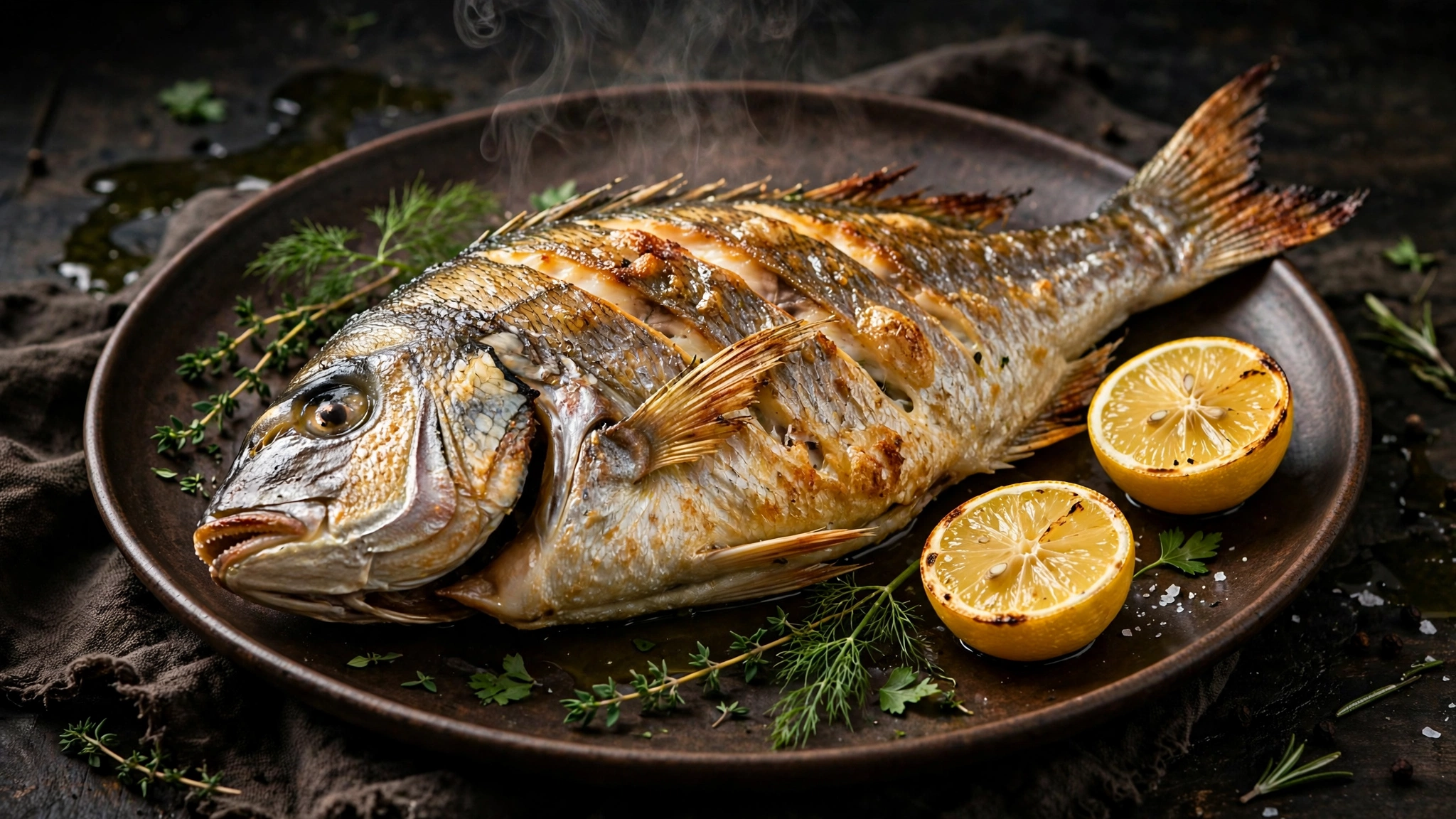
Branzino is the fish I choose when a whole fish should taste clean and calm. It is European sea bass, most often sold whole, and it asks for a simple plan: buy it bright, dry it well, score it lightly, and roast it until the flesh near the backbone just flakes.
I am Wasim Abbas Bhatti, the Fish’s Chef. This profile sits inside Fish Species Guide: What to Buy and How to Cook Each One, where each species is matched to the work it does best. Branzino’s best work is the whole-roasted plate.
Table of Contents
What Branzino Is Like
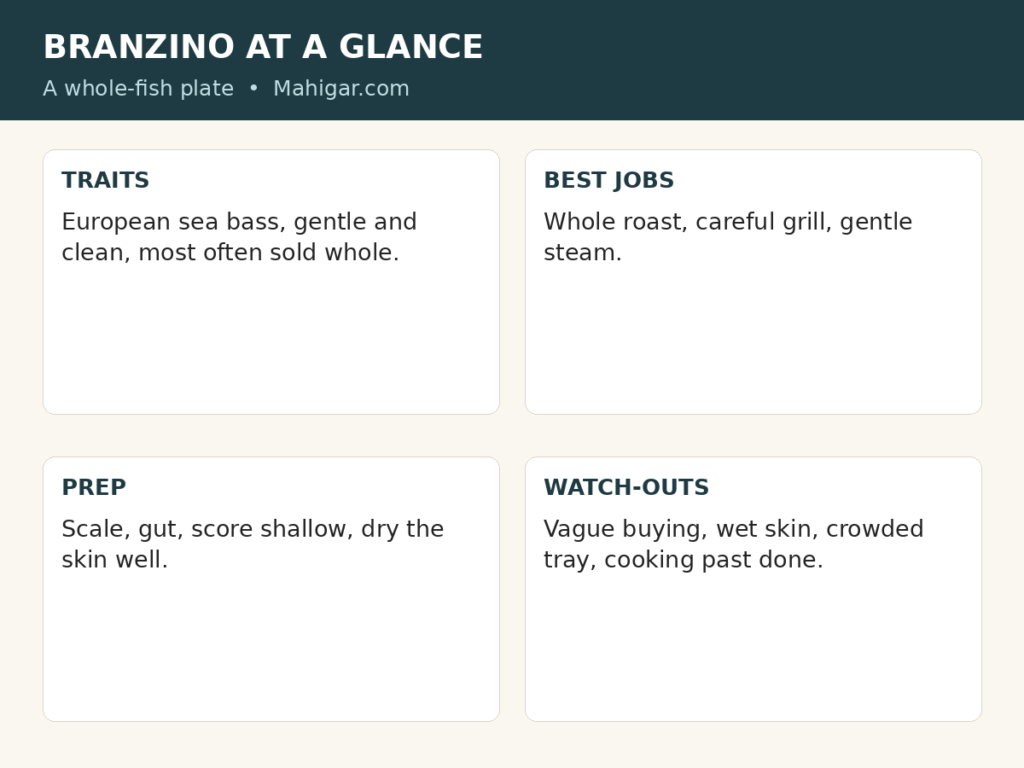
Branzino has gentle, clean-tasting white flesh that separates into soft flakes when it is cooked on time. It is milder than an oily fish and more delicate than a thick steak fish. The skin and frame protect the flesh while it cooks, and the finished fish lifts from the bone in neat sections.
You will most often meet branzino whole rather than as loose fillets. That is a good thing: a whole fish gives you more truth at the counter — eyes, gills, skin, smell, and flesh you can press gently — and more protection in the oven.
Branzino and the “Sea Bass” Name
This is where buyers get tangled, so let me keep it at kitchen level. On Mahigar, branzino means European sea bass. My separate Sea Bass: How to Buy and Cook It Well profile deals with the wider market label “sea bass,” which can be used for different fish in different places. The two are close, but not interchangeable.
A fish sold only as “sea bass” deserves one plain question: what fish is it? Do not buy a vague label expecting this exact whole-roast behaviour, and do not let a name replace freshness checks. When the Sea Bass profile is live beside this one, the two pages will cross-link so the distinction stays one click away.
Buying Checks for a Whole Branzino
Buy branzino with your eyes first. The eyes should be clear and bright, not cloudy or sunken. The gills should look clean and red. The skin should shine and sit tight, with scales in place. Press the flesh gently: it should feel firm for a delicate fish and spring back.
Smell settles the argument. Fresh branzino smells mild and clean, like sea water. A sour, heavy, or strong smell means choose another fish. Look for a body that feels solid rather than limp, and skin not torn by rough handling.
Buy from a busy counter. If you are cooking more than one, choose fish close in size so they finish together.
Bones, Skin, and Scoring
A whole branzino has one central frame. Once cooked, the top flesh lifts away in sections, the frame can be raised, and the lower flesh is checked before serving. Small pin bones can still hide, so run a fingertip over the flesh and let an adult check children’s portions carefully.
The skin is part of the pleasure when it is dry. Scaled well and patted very dry, it protects the flesh and can take a light golden edge. Wet skin steams, sticks, and tears. Scaling, gutting, cleaning, and scoring are taught in Fish Prep and Butchery: Every Skill You Need.
Score the thick part with a few shallow cuts — enough to help the flesh cook evenly and let seasoning in, not enough to carve the fish open. Season the cavity too. Lemon is kinder at serving than too early on delicate flesh.
The Safety Frame: Mercury and Doneness
On mercury, I will be plain. Mahigar’s FDA/EPA chart in Mercury in Fish: Safe Levels by Species does not name branzino or European sea bass, so this profile does not assign it a category or invent a level. Use that guide’s official framework, especially for pregnancy or children. This is general information, not medical advice.
Doneness is clearer. Like every fin fish on my site, branzino is done at 145°F (63°C) in the thickest part, or when the flesh is opaque and flakes easily. On a whole fish, check near the backbone, tip in flesh and not touching bone. The full chart is in Safe Internal Cooking Temperatures for Every Type of Fish. Start checking early; delicate fish can pass done quickly.
Best Ways to Cook Branzino
Whole roast: the lead method
This is branzino’s home. A whole fish, cleaned, scored, dried, and seasoned, roasts into a centrepiece that needs only lemon and herbs at the finish. Salt, a little fat over the skin, herbs in the cavity, and citrus at the table are enough.
For the shared baked style, see Mediterranean Baked Fish: Greek and Italian Styles
Careful grill
A whole branzino can grill well if the skin is dry and the fish is not moved before it wants to release. Give it room, turn it once with support, and check near the backbone. If the skin is damp, the oven is kinder.
Gentle steam
Steaming suits branzino when you want the cleanest flavour. The flesh stays soft, the skin will not crisp, and the seasoning should stay light. Steam is often the most honest method for this fish — still stop on time.
My Whole Roasted Branzino Routine
-
Buy it whole and bright
Clear eyes, red gills, shining skin, firm flesh, mild smell.
-
Scale, gut, and clean it
Rinse briefly, then pat very dry inside and out.
-
Score the thick part shallowly
A few light cuts on each side, through the skin only.
-
Season inside and out
Salt, gentle herbs, a little fat over the skin. Lemon at serving.
-
Roast with room around it
One layer, not crowded, so the skin dries rather than steams.
-
Check near the backbone
Done at 145°F (63°C), or opaque and flaking there.
-
Rest briefly and serve whole
Lift flesh in sections, remove the frame, check for bones.
What to Avoid With Branzino
Do not bury it. A heavy marinade or thick sauce can cover the clean flavour you bought this fish for. Season with a light hand.
Do not cook it wet or crowded. Surface water turns the skin soft, and a crowded tray traps steam. Dry skin, one layer, and room decide the plate.
Do not walk away at the finish. Check near the backbone early and serve when it flakes; delicate fish does not forgive extra time.
If Branzino Is Not Available
Choose by the job you had planned. For another gentle whole fish, my sea bass guidance is the nearest conversation on this site, with the same freshness questions. For a firmer celebration whole fish, red snapper holds together with more confidence. Match the substitute to the method — whole roast, grill, or steam — not only the name.
Frequently Asked Questions
Is branzino the same as sea bass?
On this site, branzino is European sea bass. The wider label “sea bass” can be used for different fish in different markets, so confirm what fish is actually being sold.
Why is branzino usually cooked whole?
The skin and frame protect its gentle flesh, help it stay moist, and let it lift from the bone in clean sections. Whole fish are also easier to judge for freshness.
How do I know branzino is done?
Check the thickest flesh near the backbone: 145°F (63°C), or opaque and flaking easily. Start early; delicate fish passes done quickly.
Can I eat the skin on branzino?
Yes, when the fish is fresh, scaled, dried well, and cooked until the skin is crisp at the edges. If the skin stays soft from steaming, the flesh is the better bite.
What to Check Next
Keep the branzino order simple: name first, freshness always, dry skin before heat, and doneness checked near the backbone. Roast it whole and stop on time.
