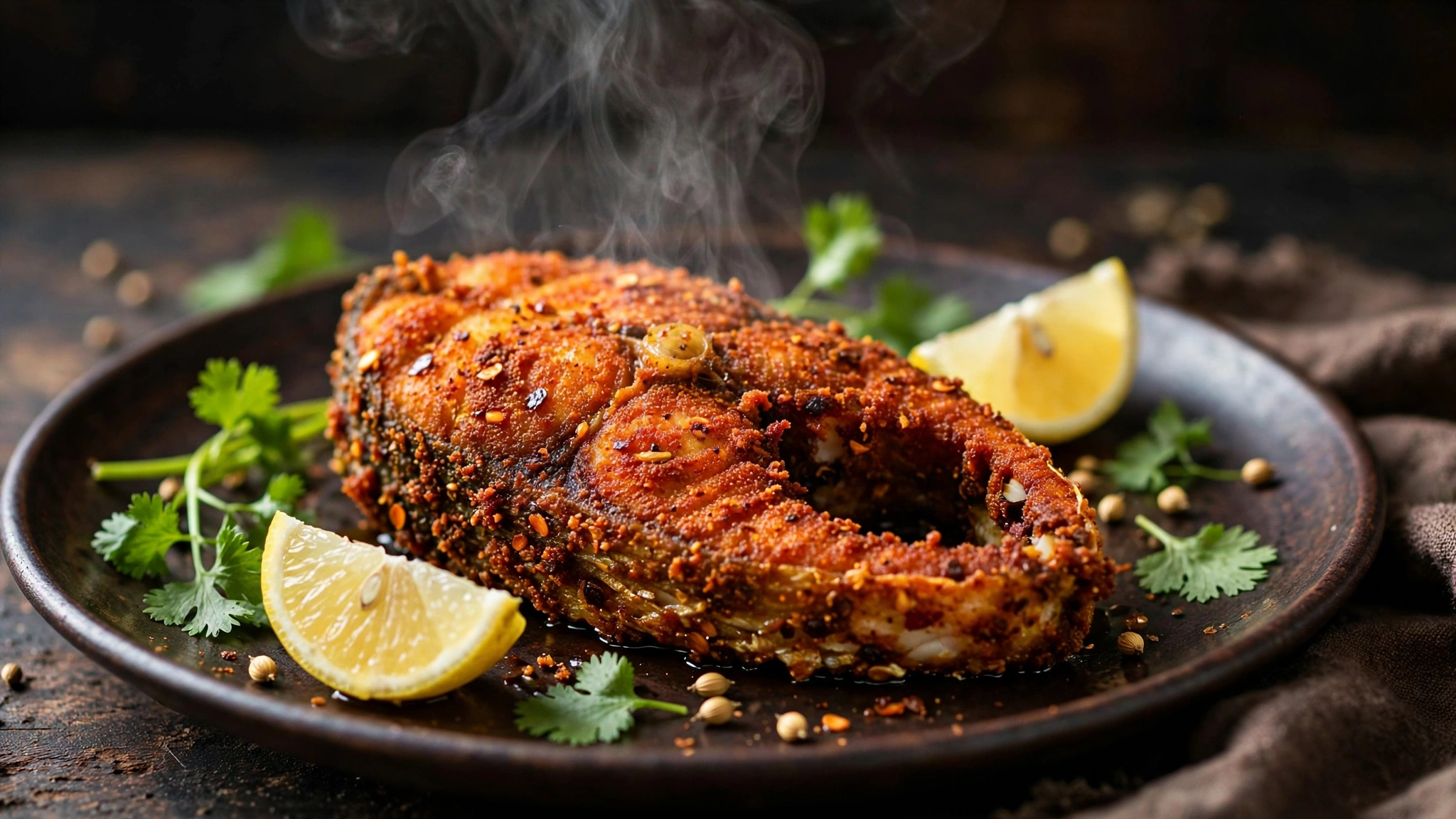
Pakistani-Style Fish Fry: Authentic Desi Masala Recipe
Ask any Pakistani family what fish means at home and most of us will not describe a sauce or a curry. We will describe the fry: fish coated in red-gold masala, crisp at the edges, soft and steaming inside, eaten hot with lemon squeezed over it and fingers doing the work no fork does as well. It is our weeknight hero and our celebration plate at the same time.
I am Wasim Abbas Bhatti, the Fish’s Chef. I have cooked fish for more than twenty years, and this is the dish my own kitchen runs on. My spice blends are my own — built over years of cooking the carp, catla, rohu, tilapia, and pangasius of our markets and the canal fish I spent eight years netting myself. This guide teaches that fry the home way: the method, the fish choice, and the handful of rules that decide whether you get a crisp, honest fry or a broken, greasy disappointment. It belongs to Mahigar’s world-cuisine hub, Fish Recipes from Around the World, where each kitchen gets its own full guide.
One honest word before we start. Every home has its own hand with spice — mine is not the only right hand. What I am giving you here is my household method and the reasons behind each step, not a rulebook for anyone else’s grandmother.
Table of Contents
Choosing the Fish: Buy by Traits, Not by Name
The fry forgives a lot, but it does not forgive the wrong fish. Choose by traits, and the plate takes care of itself.
Firm enough to turn once. The fish must survive one confident turn in the pan without falling apart. Firm and everyday-medium fish fry beautifully — thick steaks of rohu and catla from our own waters, firm fillets of tilapia and pangasius (basa), and any firm white fish cut into honest pieces. My forthcoming Rohu profile and Basa and Pangasius profile in the Species Guide choose fish this same way, trait by trait; the deep species-by-species matching lives in Fish Species Guide: What to Buy and How to Cook Each One.
Even pieces cook evenly. A thick steak beside a thin tail piece means one is done while the other is still waiting. Cut or choose pieces of a similar thickness so the whole batch finishes together — the portioning discipline is taught in my prep teaching.
Whole small fish fry well too. A small whole fish, cleaned and scored, fries into the crispiest plate of all, because the skin and frame protect the flesh. Score shallowly so heat reaches the thick part evenly — never so deep that the fish opens up and dries.
Freshness is the first ingredient. Bright eyes on whole fish, flesh that springs back when pressed, a clean sea smell. Spice will not save a tired fish; it will only make tired fish taste spiced. Buy the freshest everyday fish at the counter and let the masala make it special.
Mind the bones honestly. Carp-family fish like rohu and catla carry fine bones that no fry removes. We eat them carefully, with our hands, and we teach our children to do the same. If your eaters will not manage bones, choose a cleaner-filleting firm fish and nobody at the table has to be nervous.
Prep: Clean, Dry, and Ready Before the Pan Heats
Everything in this fry is decided before the oil warms. Do the board work calmly and the cooking becomes easy.
Scale and gut whole fish properly, rinse, and pat dry. Run a fingertip along every fillet for pin bones and pull what you feel. Cut the batch into even pieces. Then — the step home cooks skip most — dry the surface well and keep it dry. Moisture is the true enemy of this dish: wet fish steams under its spice coat, the crust slides off, and the pan fills with cloudy oil. Every board skill here — scaling, gutting, scoring, pin-boning, drying — is walked step by step in Fish Prep and Butchery: Every Skill You Need.
Season next, as a method rather than a measurement. My own blend goes on generously — turmeric for colour and warmth, chilli for heat, ground coriander for body, salt to wake it all up, and a squeeze of lemon to carry the spices onto the flesh. Your blend can lean hotter, sharper, or milder; the method is what matters. Rub the masala over every face of the fish, into the scores on a whole fish, and let it sit briefly while the pan comes to heat — long enough for the spices to cling, not so long that lemon starts working on the raw flesh like a marinade. Then pat the surface once more. Spice belongs on dry fish.
My Home Fish Fry Routine
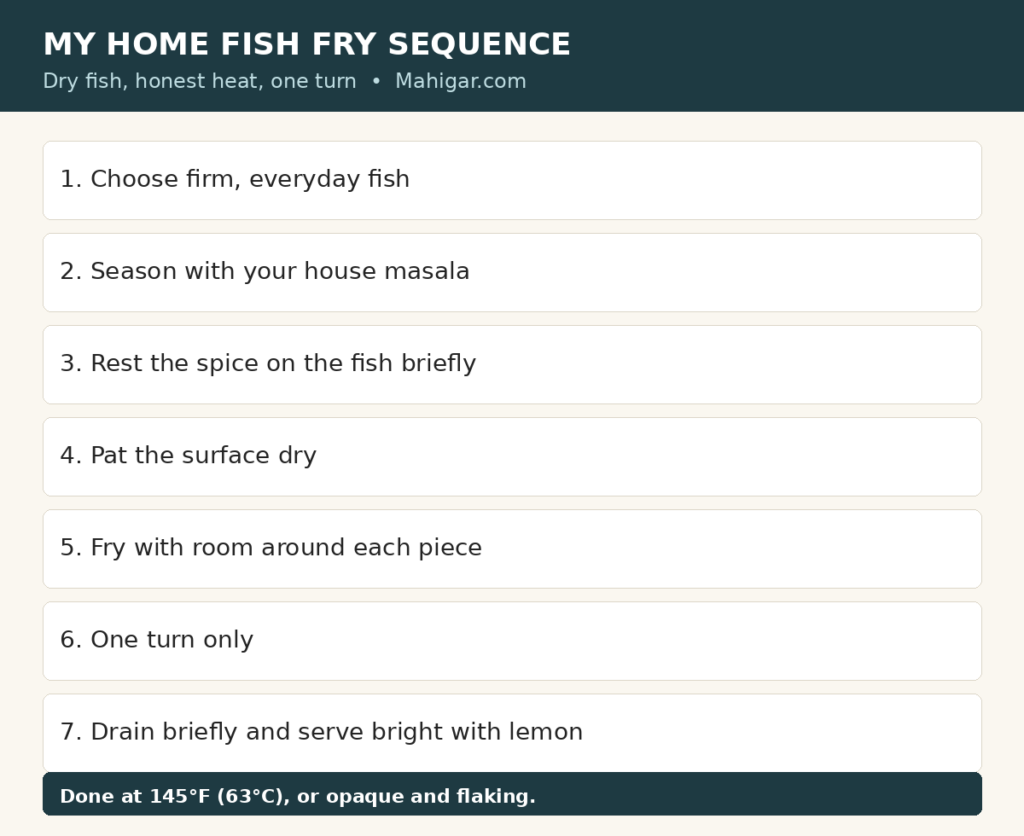
Wasim Abbas Bhatti’s home method for crispy, spice-crusted Pakistani fish fry — seven steps from fish choice to serving bright.
-
Choose firm, everyday fish
Even pieces of a similar thickness; whole small fish cleaned and scored if that is tonight’s plate.
-
Season as a home method
Rub your house masala over every face and into the scores; let it rest briefly so the spice clings.
-
Pat the surface dry
Right before the pan, always. A dry surface is what lets the crust form instead of sliding.
-
Fry with room in the pan
One honest layer, space around each piece, so the fish fries instead of steaming in a crowd.
-
Turn once, and only once
Let the first side set into a real crust before you touch it; a spatula under a piece that releases easily is a piece that was ready.
-
Check the thickest part and take it off on time
Fin fish is done at 145°F (63°C), or when the flesh is opaque and flakes easily. The full temperature chart is in SSafe Internal Cooking Temperatures for Every Type of Fish.
-
Drain briefly and serve bright
A moment on a rack or clean paper to shed loose oil, then lemon, fresh coriander, and onion at the table. Serve at once — this dish waits for nobody.
Notice what is not in that routine: no double frying to rescue a wet first fry, no stirring the fish around to “help” it, and no extra minutes “to be safe.” Extra time does not make fish safer once it is done; it makes it dry. The 145°F check, or opaque flesh that flakes easily, is the stop sign in every kitchen on earth.
What to Avoid: The Four Ways This Fry Fails
Wet fish. The commonest failure. It steams, the masala slides, the crust never forms. The fix is boring and total: dry the fish at the last moment.
A crowded pan. Pieces touching each other leak moisture into the shared space and fry pale. Fry in batches if the pan is small. Two good batches beat one sad one.
Turning too early and too often. Fish turned before its crust sets tears and leaves its coating in the oil. One side, one crust, one turn.
Cooking past done “for safety.” The safety line is 145°F (63°C) or opaque-and-flaking — past that you are only drying the fish and toughening the crust. Trust the check, not the fear.
And the quiet fifth failure: masking tired fish under extra spice. If the raw fish smelled sour or heavy before the masala went on, no blend fixes that. Choose another fish and enjoy the fry properly.
Serving the Desi Way
At my table this plate lands in the middle and hands go in. Lemon wedges to squeeze over each bite, sliced onion and green chillies for sharpness, fresh coriander scattered while the fish is still steaming. Plain rice, warm roti, or nothing at all beside it — the fry carries the meal. Eat with your fingers and mind the bones as our families always have, checking children’s portions piece by piece.
Frequently Asked Questions
What is the best fish for Pakistani-style fish fry?
A firm, everyday fish in even pieces: rohu or catla steaks from our own waters, tilapia or pangasius fillets, or any firm white fish. The traits matter more than the name — it must turn once without breaking and hold its shape while the crust forms.
Why does my spice coating fall off in the pan?
Almost always moisture. The fish went in wet, or the masala sat so long the lemon drew water to the surface. Pat the fish dry right before frying, give each piece room, and do not touch it until the first side has set into a crust.
Can I make this fry with fillets instead of whole fish or steaks?
Yes. Firm fillets fry beautifully. Keep them even in thickness, dry them well, and turn them once with a wide spatula. Delicate thin fillets need a gentler hand and are better in a pan with room around each piece.
How do I know the fried fish is safely done?
The same check as every other fin fish: 145°F (63°C) in the thickest part, or flesh that is opaque and flakes easily. On whole fried fish, check down near the backbone. Crisp outside does not tell you about the centre — the check does.
What to Check Next
Start with the fish, then the blend, then the heat. The Species Guide matches each fish to its best jobs, the Prep pillar gets a whole fish board-ready, and the Temperature guide holds the one number that ends every argument at my stove.
From here the world tour continues — the Punjab river-town styles get their own honest guide in Lahori and Multani Fish Recipes: A Regional Guide, and my Rohu, Pomfret, and Basa profiles will cross-link back to this fry when they publish. Right fish, dry surface, one turn: that is my home fry, and it is yours now too.
For the Southern-spiced counterpart to this home fry, see Cajun and Southern-Style Fish Recipes.

One Comment