
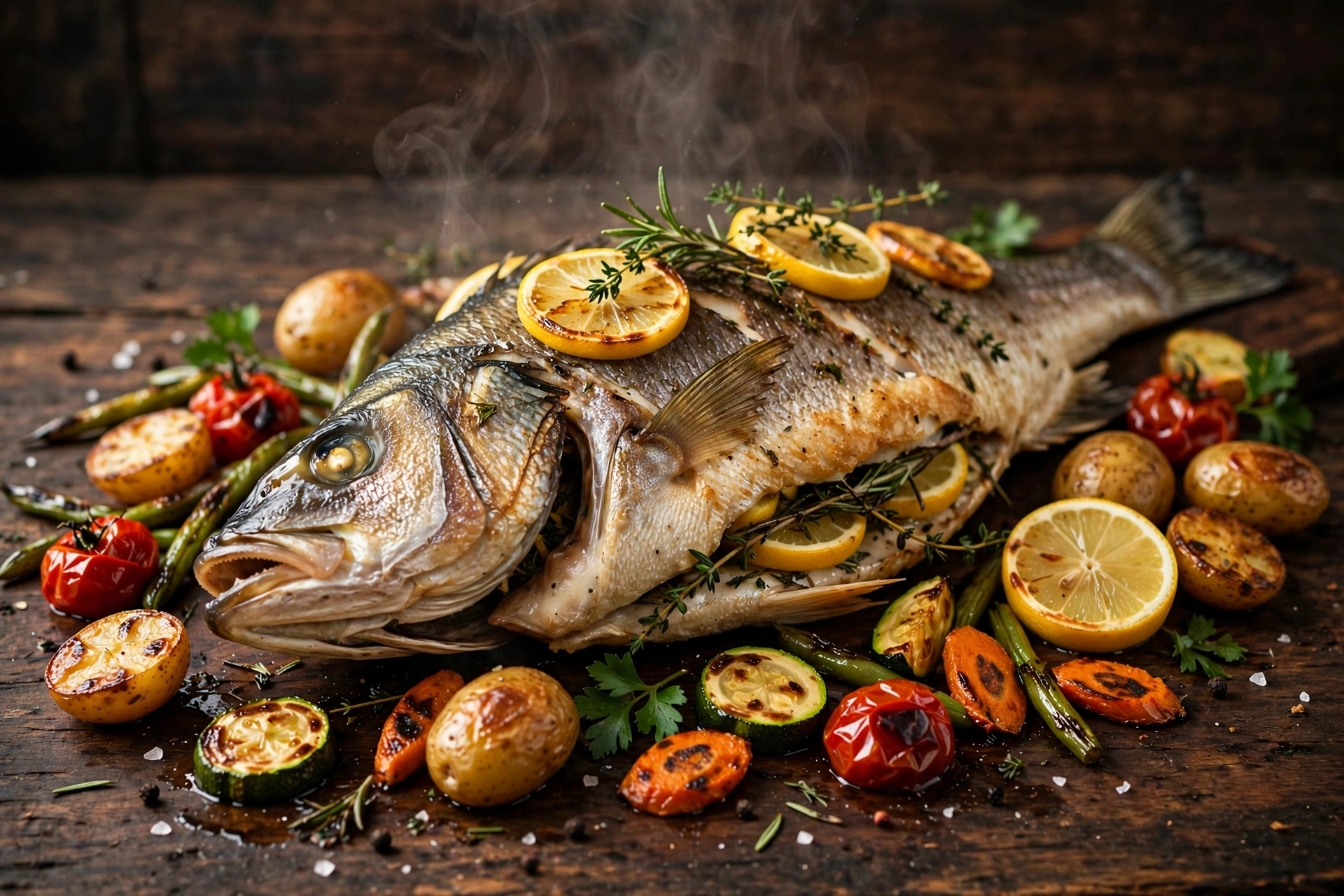
Every few years a new eating pattern arrives in my kitchen with a rulebook, and I have stopped worrying about the fish pages. Fish sits at the centre of all of them, and Whole30 and Paleo are no different: they point toward plainly cooked fish, vegetables, herbs, lemon, and good oil. That is how fish has been cooked in homes like mine for generations, long before any pattern had a name.
The problem is not the cooking. The problem is the rulebook. Programmes change their rules between editions, and a plate that a blog certified last year may not pass this year’s guide. Readers keep asking me which recipes are compliant, and no honest cook can answer that from memory. I do not follow either programme myself, and I will not print you a list of what they allow or ban, because the list is not mine to write.
The fix is to split the job honestly. Your programme’s current official guide is the only honest checker of what counts. This guide sits inside Fish Recipes for Every Diet and Lifestyle, Mahigar’s diet hub, and it teaches the kitchen half: how to cook fish plainly and well, so that whatever your current rules say, the cooking part is already done. One note before we start: this is general information, not medical advice. Your doctor, dietitian, or programme guide always outranks a food blog, including this one.
Table of Contents
What These Patterns Ask of a Fish Dinner
They ask the least of any pattern I know. The fish is cooked as itself, nothing breaded or sweet-glazed on it, vegetables doing the filling work, and flavour coming from herbs, lemon, garlic, and oil rather than from a bottle.
I keep this section deliberately short, because the fine rules are not my subject. Readers who follow Whole30 or Paleo generally build dinner around whole, simply prepared foods, and in the kitchen that direction looks like the paragraph above. The finer questions, which oils, which sauces, which extras your programme currently accepts, live in your programme’s own current guide, and they can change between editions. Check there, then come back here for the fish.
The good news is that fish needs almost nothing done to it. A fillet with crisp skin, a whole fish from the oven, a tin of sardines over vegetables: none of these is a “diet version” of dinner. They are just dinner, cooked plainly, which is exactly why they survive every pattern that passes through a kitchen.
The Shared Method: Plain Fish, Full Plate
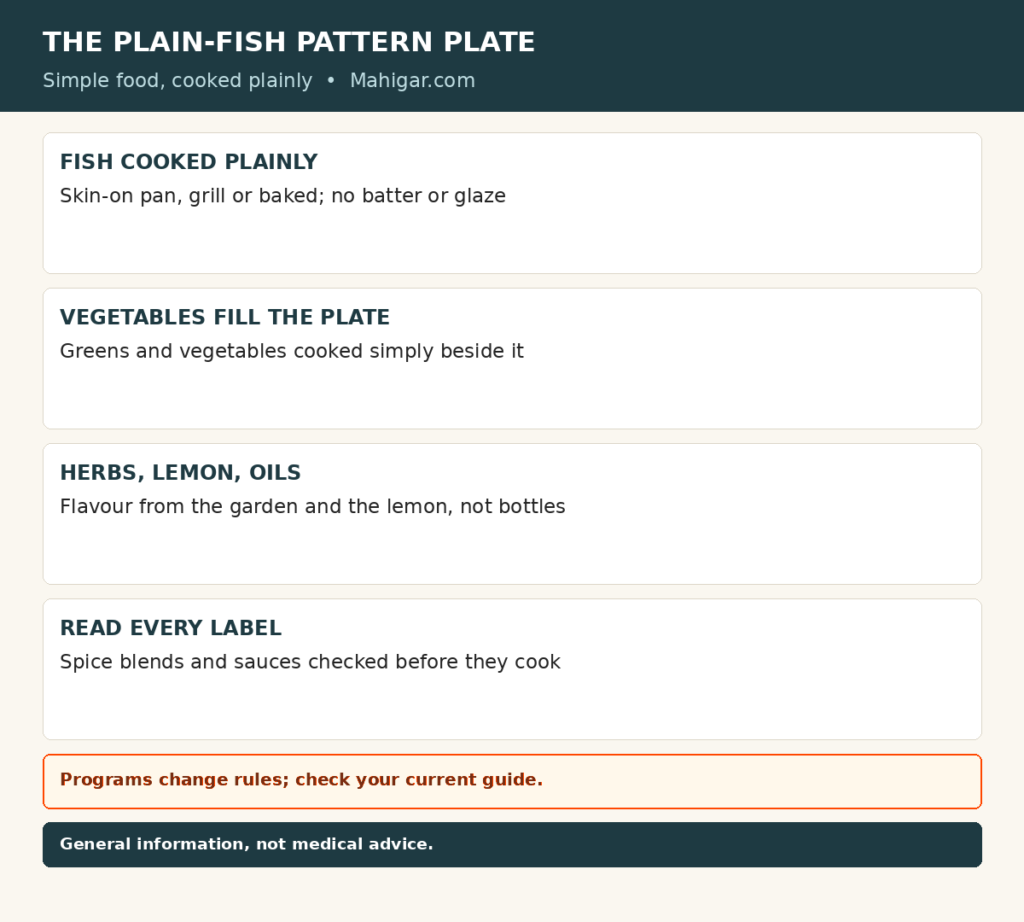
Four moves run every idea in this guide. Cook the fish plainly. Let vegetables fill the plate. Flavour from the garden, not the bottle. Read every label that enters the kitchen.
Cook the fish plainly. Skin-on in a hot pan, on the grill, baked, or steamed. The crisp skin is the coating; nothing needs to be wrapped around the fish. Dry the surface first, give the pan room, and let the fish cook undisturbed until it releases. This is the same shared method my Keto and Low-Carb Fish Recipes teaches from its own angle, because plain fish belongs to no single pattern.
Let vegetables fill the plate. Greens and vegetables cooked in the pan juices or in plain oil, or however your programme’s current guide directs. The fish is the centre, not the whole meal. The plate is full because the vegetables are generous, not because anything was added to the fish.
Flavour from the garden, not the bottle. Fresh herbs, lemon, garlic, chilli, and spice blends you have checked yourself. Salt added by your own hand, at the end, on purpose. A sauce you mixed from plain ingredients you trust beats a bottled sauce you have not read.
Read every label that enters the kitchen. This is the one habit that protects every pattern. Bottled sauces, ready spice blends, curry pastes, and even the oil a tin of fish is packed in can carry extras you were not expecting. The label tells you what is actually in your hand; your programme guide tells you whether it fits. Neither job can be outsourced to this page.
Five Dinner Ideas on the Plain-Fish Method
Five plates that run on the method above, with no recipe cards attached. Crispy-skin salmon with greens. Grilled whole fish with herbs. Spice-rubbed white fish, Desi style. Sardine and tuna tin plates. Baked cod with herb oil.
Crispy-skin salmon with greens. A salmon fillet, dried well, skin down in a hot pan until the skin is crisp and the flesh is nearly cooked through, then rested. Serve over greens wilted in the same pan with garlic and lemon. Rich fish, sharp greens, nothing from a bottle.
Grilled whole fish with herbs. A whole branzino-style fish or any firm whole fish, scored, oiled, salted, and grilled or roasted with lemon and herbs in and around it. Served whole with vegetables, this is the oldest fish dinner there is. Check the backbone flesh for doneness, and let the table share it.
Spice-rubbed white fish, Desi style. Tilapia or catfish with a dry household masala, turmeric, chilli, ground coriander, salt, rested briefly and pan-fried dry with one turn. This is my own home fry with the flour coat left off. Rohu and catla carry the family’s usual bone honesty: fine Y-bones stay in the flesh, frying does not remove them, and children’s portions are checked by an adult.
Sardine and tuna tin plates. Canned fish is already cooked, so the plate is assembly: sardines or canned light tuna over sliced vegetables and greens, with lemon and plain oil. Read the tin’s label for its packing oil and extras, and let your programme guide judge it. The fish itself asks nothing of you.
Baked cod with herb oil. A thick cod fillet baked until it flakes, finished with oil warmed with herbs and lemon zest. Lean fish, gentle method, flavour carried by the oil and herbs rather than a sauce from a jar.
Labels, Sauces, and the Hidden Extras
If a plain-fish dinner ever falls foul of a pattern, it is almost never the fish. It is the company that arrived unexamined: the sweet bottled glaze, the spice blend with fillers, the sauce whose label nobody turned over, the tin packed in something nobody checked.
So the rule in my kitchen is simple, and it applies to every pattern in the Diet pillar: fresh ingredients you can name, labels read on anything processed, and your programme’s current guide, not a blog post and not a package’s front panel, doing the final judging. That habit will still be serving you long after the current pattern has been replaced by the next one.
Eating Fish Often? Rotate the Species
Mercury collects in big, long-lived predators and cannot be cooked out, so rotate species and stay inside the FDA and EPA categories. That is the one safety habit that matters when a pattern puts fish on the table most days.
The fish in this guide, salmon, sardines, tilapia, catfish, cod, canned light tuna, sit in the Best Choices, and the full chart, including the king mackerel warning (a Choice to Avoid, and a different fish from Atlantic mackerel), lives in Mercury in Fish: Safe Levels by Species. Rotate across species through the week rather than eating one fish daily, and every pattern stays inside the same safety floor.
The Safety Floor Never Changes
Whatever pattern you follow, done is done. Fin fish is finished at 145°F (63°C) in the thickest part, or opaque and flaking, and shellfish is cooked through, pearly and opaque.
The full chart is in Safe Internal Cooking Temperatures for Every Type of Fish. Keep raw fish at 40°F (4°C) or below and use it within one to two days; cooked fish keeps three to four days. A pattern changes what you serve beside the fish. It never changes what “cooked” means.
And a separate word, because the two are often confused: avoiding certain ingredients for a pattern is not the same thing as a fish allergy. Allergy is a medical topic with its own guide on Mahigar, and anyone who reacts to fish should be reading that page and talking to a doctor, not adapting a dinner-ideas list.
Frequently Asked Questions
Is plainly cooked fish acceptable on Whole30 and Paleo?
Plain fish is the easiest part of these patterns in the kitchen, but “acceptable” is a programme word, and only your programme’s current official guide can certify it. Cook the fish plainly, read every label that comes with it, and check the guide rather than taking any blog’s word, including mine.
Can I use butter or ghee with the fish?
That depends on your programme’s current rules, which differ and change, so check the guide, not this page. In the kitchen, the method works with olive oil, with ghee, or with the fish’s own richness and a pan that is properly hot. The cooking does not need butter; whether your pattern welcomes it is your guide’s call.
What about sauces and spice blends from a shop?
Read the label, every time. Bottled sauces, pastes, and blends can carry sugars, fillers, and extras that the front of the packet does not mention. A blend you mixed yourself from spices you have checked, or oil warmed with herbs and lemon, keeps the judging in your own hands.
How often can I eat fish on these patterns?
As food, fish can anchor dinners all week, but rotate the species. Mercury is the limit that matters: stay inside the FDA/EPA categories in the Mercury guide, favour the Best Choices for regular eating, and keep the big predators off the regular rotation entirely.
What to Check Next
This guide is one of eleven in Mahigar’s diet hub, Fish Recipes for Every Diet and Lifestyle, which lays out how each pattern chooses its species, method, and sides. The closest sibling is Keto and Low-Carb Fish Recipes, which teaches this same plain-fish method from the low-carb side. Keep Mercury in Fish: Safe Levels by Species open when you shop for the week, and Safe Internal Cooking Temperatures for Every Type of Fish when you cook. Fish allergy questions belong to Mahigar’s fish allergy guide, not to any pattern page. Cook the fish plainly, fill the plate with vegetables, read every label, and let your own programme’s current guide have the last word, exactly as it should.


