Red Snapper: A Complete Buying and Cooking Guide
Red snapper is the fish I cook when the meal matters. It is firm, sweet, and handsome on the table, and a whole snapper coming out of the oven still makes a room go quiet. It also asks you to buy with your eyes open, because the name “snapper” is used loosely at too many counters.
I am Wasim Abbas Bhatti, the Fish’s Chef. I have cooked fish for more than twenty years, and snapper is one of the whole fish I trust for guests. This profile sits inside Fish Species Guide: What to Buy and How to Cook Each One, where species are sorted by the jobs they do best. Snapper’s job is clear: the celebration whole fish.
Table of Contents
What Red Snapper Is Like at the Counter
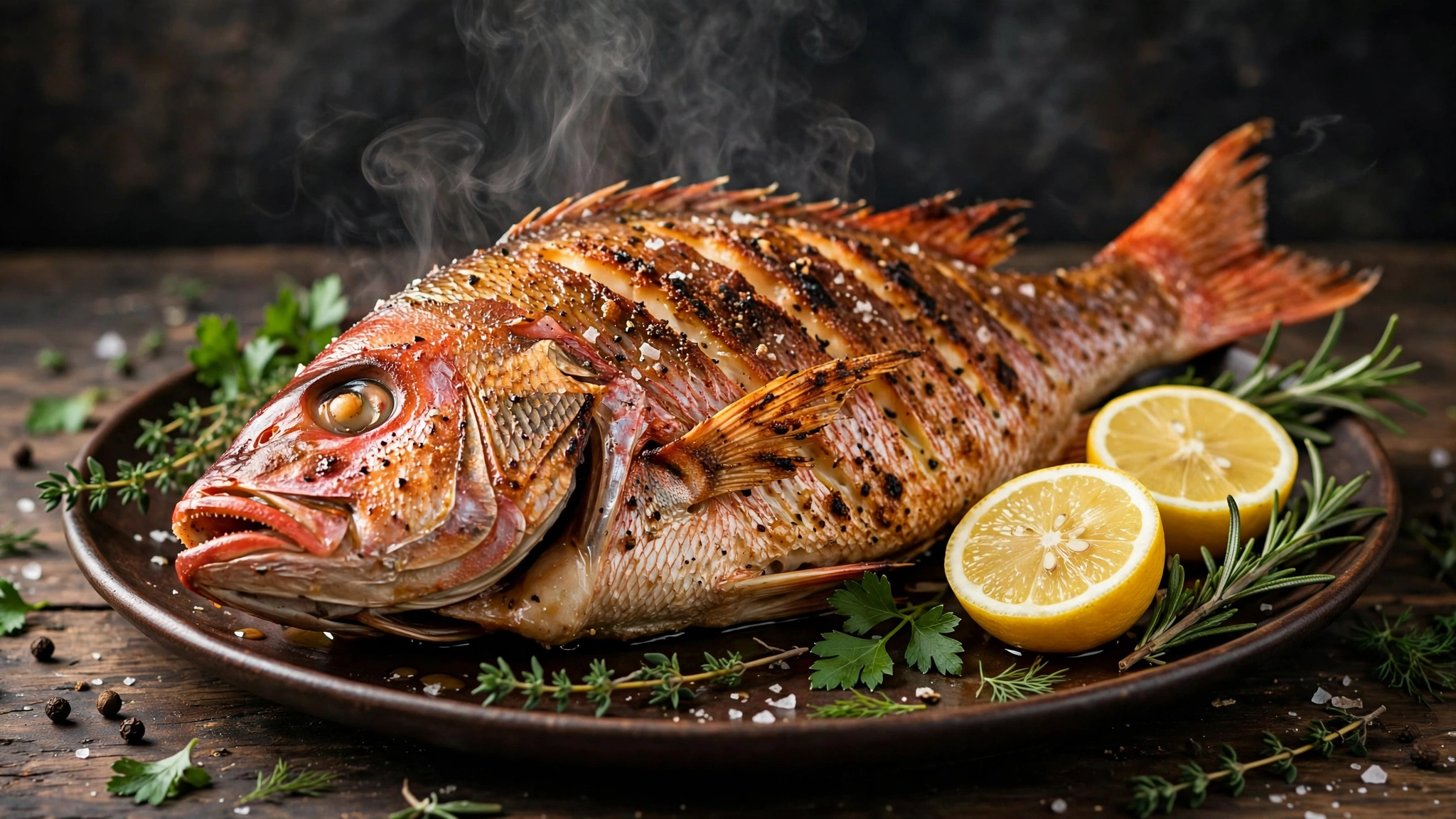
A true red snapper has pink-red skin that deepens over the back, pale fins, and firm white flesh with a sweet, clean taste. It is not oily, and not a blank fillet either. The flavour is gentle but present, the flakes firm, and the flesh holds together when lifted from the bone — which is why snapper works whole, in fillets, and where a delicate fish would fall apart.
You will meet it whole, as skin-on fillets, and as skinless fillets. My first choice is whole: eyes, gills, skin, and fins tell you the truth, while a skinless fillet asks for more trust in the seller. A whole snapper should feel heavy for its length, look moist, and smell like clean sea water. A sour or heavy smell is the counter telling you to walk away.
Buying Checks: Freshness First
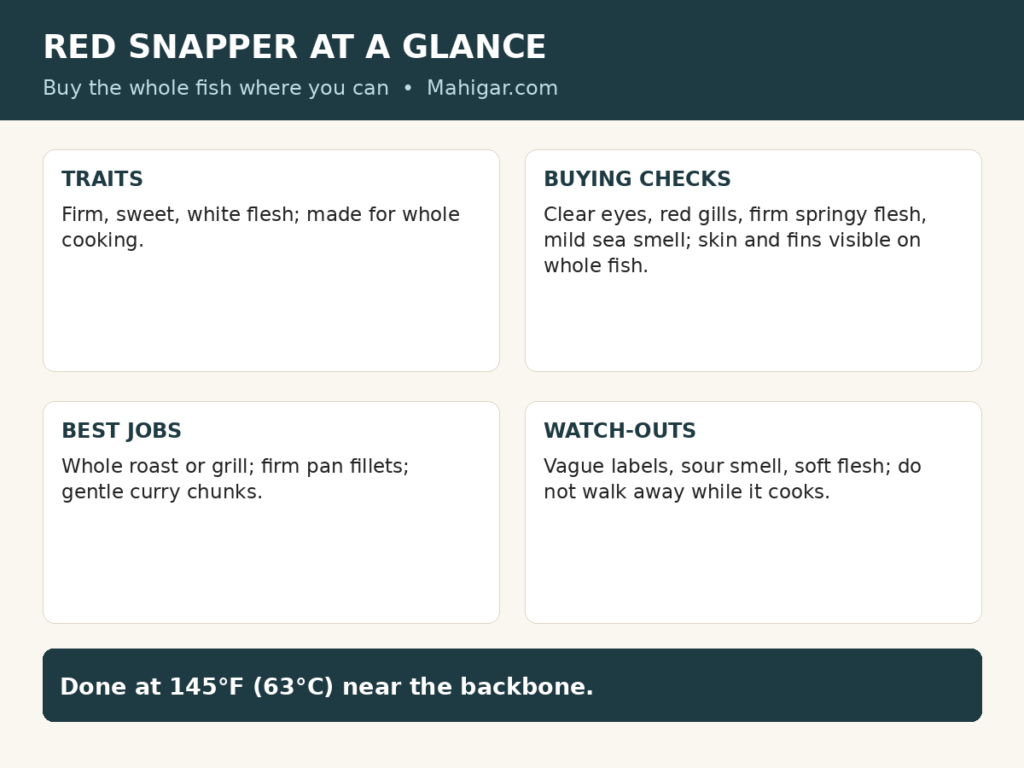
Eyes should be clear and bright, not cloudy or sunken. Gills should look clean and red, not brown, grey, or slimy. Skin should shine, scales sitting tight. Press the flesh: it should spring back. A dent that stays means the fish is tired.
Fillets need the same honesty: moist flesh, no gaping, no dry edges, no strong smell through the wrapping. On skin-on fillets, skin should look bright and sit tight, not curled or dull. Buy from a counter that turns over quickly — a firm, sweet fish becomes ordinary fast, and no marinade fixes that.
The Honest Worry: Snapper Names and Substitution
Snapper is one of the most substituted fish names in the market, and cheaper fish are sometimes sold under it. I will not throw percentages or case stories at you, because I do not quote numbers I have not verified. What I can give you is better: the counter habits that protect you.
Buy whole when you can. A whole fish shows its skin colour, eye, fins, and body shape — much harder to fake than a label on a skinless fillet. If you buy fillets, skin-on pieces tell you more than bare flesh. A vague label like “snapper” with no species or origin is a reason to ask questions, and a good fishmonger answers without irritation. If the price looks too good for true snapper, treat that as information, not luck. The same freshness checks that protect your dinner also protect your wallet.
Bones, Skin, and Scoring a Whole Snapper
A whole snapper has one central frame, and once cooked, the flesh lifts away in clean sections. Pin bones run along the fillet line, so check any fillet with a fingertip before serving, and let an adult check children’s portions. Snapper does not carry the fine Y-bone problem of rohu and catla, which makes it kinder at the table.
The skin is part of the pleasure: scaled and dried well, it protects the flesh and crisps lightly at the edges. Scaling, gutting, and whole-fish prep are taught in Fish Prep and Butchery: Every Skill You Need.
For whole cooking, I score the thick part with shallow cuts so it cooks more evenly and seasoning gets in. Dry the skin before heat, season the cavity too, and save lemon and herbs mostly for serving.
The Safety Frame: Mercury and Doneness
On mercury, I stay with the official frame used across Mahigar. In the FDA/EPA categories set out in Mercury in Fish: Safe Levels by Species, snapper is listed among the Good Choices, the group placed at one serving a week for the people that advice was written for. I will not invent a mercury number here. This is general information, not medical advice.
The third check is cooking. Like every fin fish on my site, red snapper is done at 145°F (63°C), or when the flesh is opaque and flakes easily. On a whole fish, measure the thickest flesh near the backbone, tip in flesh and not touching bone — that is where heat arrives last. The full chart is in Safe Internal Cooking Temperatures for Every Type of Fish.
Best Ways to Cook Red Snapper
Whole, roasted or grilled: the lead method
This is snapper at its best: scaled, gutted, scored, dried, and seasoned, then roasted or grilled until the flesh near the backbone turns opaque. Skin guards the flesh, bones keep it moist, and presentation does half the work.
Pan fillets, skin-on
Skin-on fillets suit a hot pan when the skin is dry and the pan has room. Lay the fillet down, leave it alone while the skin sets, and flip once with support. The flesh handles a confident pan, but still punishes crowding and rough turning.
Gentle curry and baked trays
Firm snapper chunks can sit in a curry if the sauce cooks first and the fish goes in near the end. Do not stir it like potatoes. Baked fillets work too, in one layer, checked early. Snapper’s sweetness carries spice, citrus, garlic, and herbs without disappearing.
My Whole Red Snapper Routine
My Whole Red Snapper Routine
Buy it honest and fresh.
Whole fish if you can: clear eyes, red gills, firm flesh, mild sea smell.
Scale, gut, and clean it.
Rinse briefly in cold water and pat very dry.
Score the thick part.
Two or three shallow cuts on each side.
Season inside and out.
Salt, spice blend or herbs, a little fat over the skin. Lemon at serving.
Roast or grill with room.
Crowded or steamed skin will not crisp.
Check near the backbone.
Done at 145°F (63°C) in the thickest flesh, or opaque and flaking there.
Rest briefly and serve whole.
Lift flesh from the frame in sections; check pieces for pin bones before serving children.
What to Avoid With Red Snapper
Do not walk away from it. Firm fish still dries past done, and snapper’s road from juicy to dry is shorter than its firm texture suggests. Check near the backbone early.
Do not cook it wet or crowded. A wet skin steams instead of crisping in an oven, on a grill, or in a pan. Pat it dry, season late, and give it room.
Do not buy it on the name alone. A vague label, a suspiciously low price, and a seller who will not answer questions cost nothing to notice. A whole fish from a busy, honest counter is the safer buy and the better dinner.
If Red Snapper Is Not Available
Choose by job, not by name. For a whole celebration fish, sea bass or branzino give a gentler, more delicate plate. For firm fillets that grill and pan well, mahi mahi behaves in a similar spirit. Cod or haddock are honest mild stand-ins. Tilapia is the weeknight option in my markets — milder and thinner, so it needs a quicker, gentler hand. And never accept any red-looking fillet as snapper without looking at it.
Frequently Asked Questions
How do I know my red snapper is real and fresh?
Buy whole when you can: skin colour, eyes, fins, and body shape are visible and hard to fake. Check clear eyes, clean red gills, firm springy flesh, and a mild sea smell. On fillets, prefer skin-on pieces, read the label for a specific name and origin, and ask when the label is vague.
Is red snapper high in mercury?
In the FDA/EPA categories used in my Mercury guide, snapper sits among the Good Choices, the once-a-week group for the people that advice was written for. I do not quote mercury numbers here. Read the Mercury guide for the full chart. This is general information, not medical advice.
Should I cook red snapper whole or as fillets?
Whole is my first choice: skin and bones protect the flesh, and freshness checks are easier before cooking. Skin-on fillets pan well when dry. Either way, the finish is 145°F (63°C) in the thickest part, or opaque and flaking — near the backbone on a whole fish.
Why did my snapper turn dry?
It cooked past done, or it started wet and steamed. Snapper’s firmness fools cooks into leaving it longer. Pat it dry, give it room, check near the backbone early, and take it off when it turns opaque and flakes.
What to Check Next
Keep the snapper order beside the counter and the stove: whole fish where you can, freshness before price, vague labels questioned, dry skin before heat, done checked near the backbone. Red snapper is the firm, sweet, whole-fish one. Buy it honestly and stop on time, and it will reward you.
