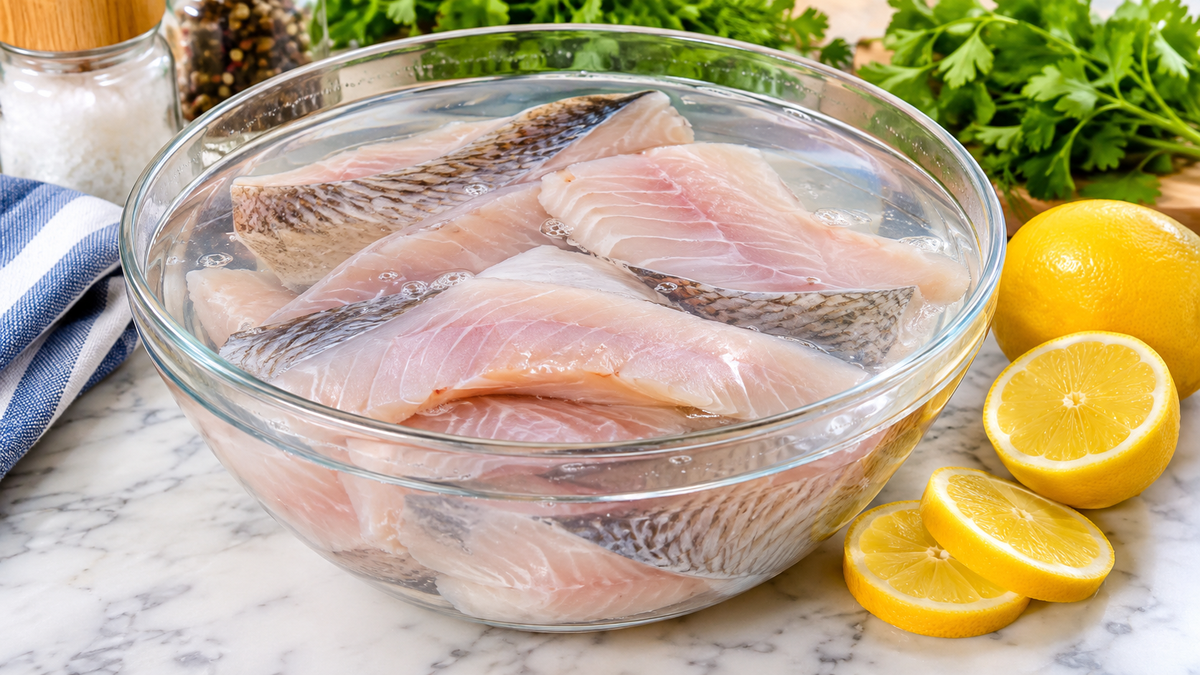
How to Remove Muddy Taste from Freshwater Fish
The first time a canal fish disappointed me, I blamed my cooking. The fish had looked fine, the pan was hot, the spices were right, and still every bite carried the taste of the muddy bank it came from, earthy and flat, like pond water on the tongue. I was young, and I did what many cooks do: I added more spice and fried it harder, and the mud sat there underneath, unbothered. Fish is the central entity in my kitchen, and freshwater fish taught me this lesson early and taught it well. Muddy taste is not a cooking failure you can shout over with masala. It is a problem with a real cause, sitting in specific parts of the fish, and it responds to specific fixes done in the right order.
This guide is the method I have settled on after years of catching, buying and cleaning river fish. It belongs to my Freshwater Fish Cooking: Carp, Catla, Catfish & River Fish pillar, and it works through the problem in the order I work at my own sink: understand the cause, prevent what you can at buying, clean and trim where the flavour hides, then use the kitchen fixes that actually help. Used together, these steps turn most muddy fish into clean, sweet eating. Used honestly, they also tell you when a fish is too far gone and no fix is worth your time.
Table of Contents
The Real Cause of Muddy Taste
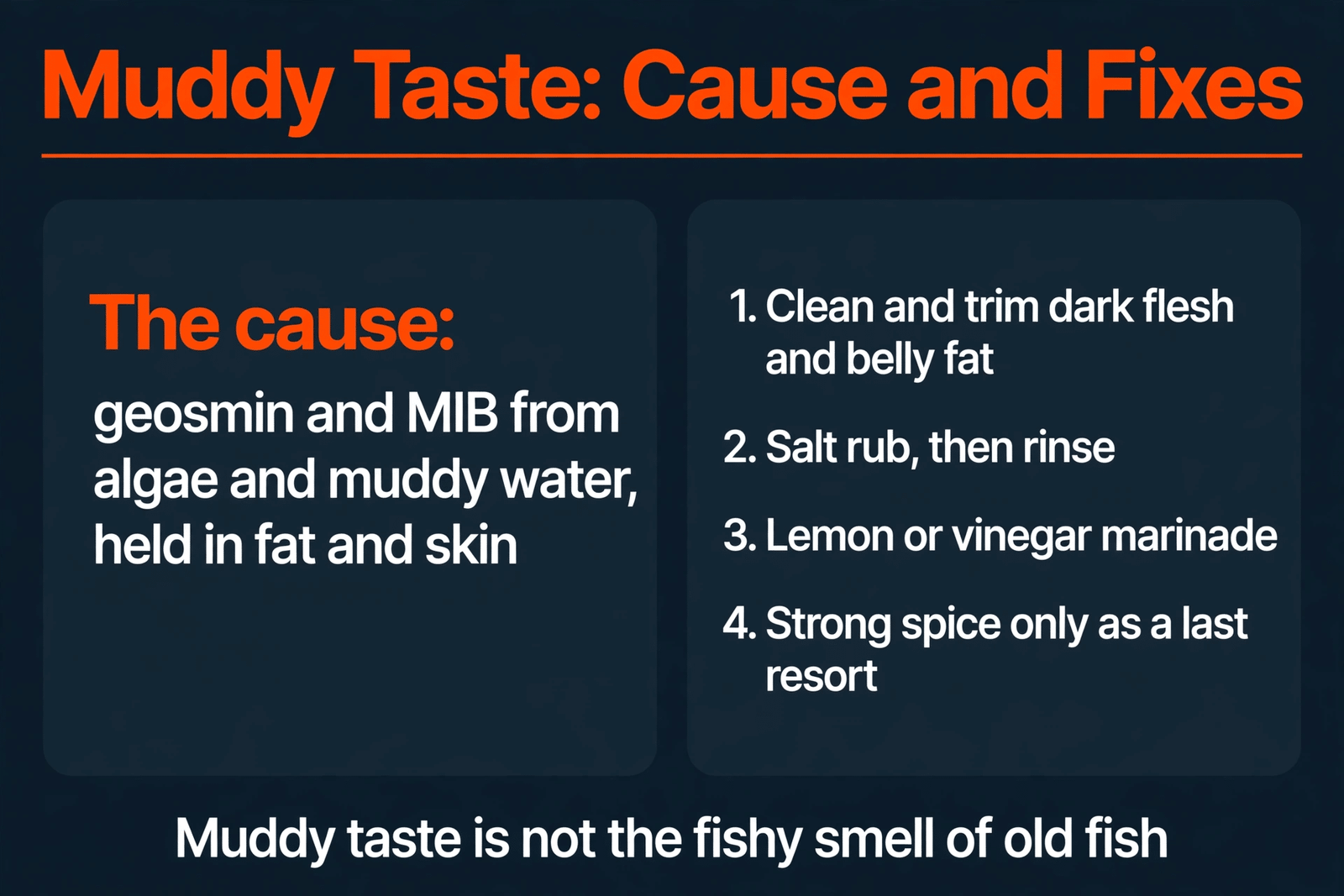
Muddy taste comes from earthy compounds called geosmin and MIB that fish absorb from algae and muddy water, and those compounds collect mainly in the fat and the skin of the fish. That is the whole cause in one sentence, and once I understood it, my fixes stopped being guesswork. Geosmin is the same compound that gives soil its earthy smell after rain. MIB is its partner, made by algae and tiny organisms living in warm, still or muddy water. The fish takes them in through its gills and its food, and because these compounds settle into fatty tissue, they stay in the fish until you remove that tissue or draw the flavour out.
This explains patterns I had noticed for years. Fish from flowing, clean water taste clean because there is less of these compounds around. Fish from still ponds in warm weather taste earthier because algae thrive there. Fatty parts taste stronger than lean parts, and a lean fillet from the same fish can taste cleaner than the belly. It is chemistry with an address, and the address is mostly fat and skin. Bottom feeding fish meet more of these compounds in daily life. That does not make them bad fish. It makes them fish that need the cleaning and trimming in this guide.
Muddy Taste Is Not the Fishy Smell of Old Fish
Muddy taste is an earthy flavour in fresh fish, while the fishy smell belongs to old fish that is breaking down, and confusing the two leads to the wrong fix. I make this distinction at my sink before I do anything else, because the treatments are different and the decision is different.
A muddy fish can be completely fresh: bright eyed, firm and safe, simply carrying the flavour of its water. A fishy smelling fish tells a different story about age and storage, and I laid out that story in Why Fish Tastes ‘Fishy’ and How to Reduce It. That sharp, stale smell is not something I try to wash away and serve anyway. If the fish smells sour or stale before I start, I do not begin the muddy taste routine at all. Learn to separate earthy from stale with your nose, and you will fix the right problem every time.
Prevention Starts Before the Kitchen
The strongest fix for muddy taste is buying or catching fish from cleaner water in the first place, choosing live fish when you can, and, as my own practice, holding live fish in clean water before cooking so they clear some of the muddy flavour. Prevention sounds dull beside clever kitchen tricks, but in my experience it does more work than every soak and rub combined.
Source water is the first decision. I ask sellers where the fish came from and I favour fish from flowing rivers and canals over fish from still, doubtful ponds. When I choose carp, my buying rules are the same ones I set out in Is Carp Good to Eat? How to Buy, Clean and Cook It: live or very fresh, clear bright eyes, firm flesh that springs back and a clean river smell. A live fish is my favourite starting point for a second reason too. A fish that is alive has not begun to break down, so I am fighting only the mud, not age as well.
Purging is a practice from my own fishing life, described honestly as practice and not as a guaranteed cure. When I bring live river fish home, I sometimes keep them for a short time in a large container of clean, fresh water before cleaning them. Fishermen I grew up around swear this clears the gut and lightens the muddy note, and the fish I have held this way have tasted cleaner. I change the water if it clouds, keep the container shaded and cool, and do not hold fish long or crowded. Treat purging as a helpful head start, not a promise.
Cleaning Fixes at the Sink
Thorough gutting, careful washing, removing the dark lateral line flesh and trimming the belly fat are the cleaning fixes that remove most muddy flavour, because that is where the compounds sit. If you only remember one section of this guide, remember this one. My knife does more against muddy taste than my spice box ever will.
I start with proper gutting. I open the belly, remove everything inside cleanly, take out the gills, and scrape away the dark blood line along the backbone. Then I wash the cavity and the whole fish until the water runs clear. Any blood, gut residue or loose membrane left behind adds its own off flavours and muddies my judgement about the flesh itself. Clean fish first, judge flavour second.
Next comes the trim, and this is the step home cooks skip most often. Along the side of many freshwater fish runs a strip of dark flesh near the lateral line. That dark flesh is rich in fat and blood, and it holds muddy flavour strongly. I slice it away in a thin strip and discard it. I do the same with the soft belly fat, trimming it back rather than leaving thick fatty edges on my pieces. Yes, I lose a little fish. I gain a lot of clean flavour, and in my kitchen that trade is always worth it. The same trimming helps small whole fish too, and when my sibling guide Small River Fish: How to Cook Roach and Other Little Fish Whole is published in a later run, I will pair it with this one, because little river fish need careful gutting and washing above all.
Skin choice is the last cleaning decision. Because compounds sit in the skin and the fat just under it, removing the skin from fillets cuts muddy flavour noticeably. For fish I plan to fry as steaks, I often keep the skin on for structure and crispness, but only after the trim, and only when the fish already smells fairly clean. For a fish with a stronger earthy note, skin off is my rule. And because cleaning river fish is messy work, I finish by cleaning the board, the knife and my hands properly, using the same routine I described in How to Get Rid of Fishy Smell on Hands and in the Kitchen, so the muddy smell does not follow the meal around my house.
Kitchen Fixes I Actually Use
After trimming, the kitchen fixes I actually use are a salt rub and rinse, an acidic marinade such as lemon or vinegar, a milk soak as my own practice for milder cases, and strong spice only as a last resort. Notice the order. Each step works on the fish itself, in a gentler to stronger sequence, and spice, the loudest tool, comes last for a reason I will explain.
The salt rub is my first move. I rub the cleaned pieces with salt all over, let them sit briefly in the fridge, then rinse them well and pat them dry. In my kitchen this firms the surface, draws out some of the earthy juices and leaves the flesh tasting cleaner and seasoning ready. I always rinse, because the point is to lift flavour out with the salt, not to serve the salt itself. Dry pieces also fry better, with less spitting and a better crust.
Acid is my second move, and it suits our cooking. A marinade with lemon juice or a splash of vinegar, left on the fish for a short rest before cooking, brightens the flavour and cuts through earthy notes on the palate. I keep acidic marinades brief in my kitchen, because acid left too long starts to change the texture of the surface and can turn delicate flesh soft. Short and purposeful is the rule: enough to lift the flavour, not enough to cook the fish in the bowl.
The milk soak is a practice I use for milder cases, presented as my practice, not as science I can prove. Soaking cleaned pieces in milk in the fridge has, in my experience, softened an earthy edge and left the fish milder. I drain the fish, pat it dry and cook it as planned. If the muddy note is strong, milk alone will not save the fish. It is a gentle tool for a gentle problem.
Spice is my last resort, not my cure. A strong, well balanced spice coating can cover a faint remaining earthiness and turn the plate toward the flavours you want, and I use it gladly at that stage. My full thinking on building those coatings lives in Fish Spice Blends, Marinades and Seasoning: The Complete Guide, which I will link here when that pillar is published. But hear my warning clearly: spice covers, it does not clean. If a fish tastes strongly of mud before cooking, spice gives you spicy mud. Trim first, soak and marinate second, spice last.
Cooking Choices That Help
Frying with a good crust, cooking in a flavourful curry, and grilling firm pieces help muddy prone fish most, because strong cooking flavours and browning move the palate away from earthy notes. Once the cleaning is done, I choose methods that add flavour rather than methods that expose the fish.
Frying is my first choice for a fish I have rescued from muddiness. A crisp, golden crust and confident seasoning give the eater crust, spice and lemon to enjoy, and any faint earthy background fades behind them. Curry is my second choice, because the gravy carries ginger, garlic, chilli and sour notes that sit happily over a mild earthy base. Grilling works for firm steaks when I want smoke and char.
What I avoid for a muddy prone fish is plain steaming or gentle poaching with little seasoning. Those honest methods show the fish exactly as it is, which is wonderful for a clean fish and unkind to a borderline one. I also avoid overcooking while I chase flavour. Extra time in the pan does not cook mud out, it only dries the flesh and can leave you with the soft, broken texture I untangled in Why Is My Fish Mushy? Causes and Fixes. Cook the fish properly to 145°F (63°C) in the thickest part, and let the trimming and marinade do the flavour work.
What Does Not Work
Heavy spice on an untrimmed fish, endless washing of the flesh, and cooking a stale fish harder do not work, and I have tested all three so you do not have to. Let me save you the fish I wasted learning this.
Spice on an untrimmed fish fails because the muddy compounds are still sitting in the fat and dark flesh under the coating. You taste spice first, then mud, in every bite. Endless washing fails in the other direction: running water over flesh for a long time does not reach compounds held inside the fat, and it washes the fish waterlogged, dull and prone to breaking in the pan. Wash the cavity clean, rinse the pieces with purpose, then stop. And cooking a stale fish harder fails because staleness is not muddiness. Heat does not rewind age. If the fish was old, more heat only gives you hot, old fish.
One more honest failure: expecting one trick to do everything. No single soak fixes a strongly muddy fish from dirty water. The method here is a chain: source, purge if live, gut, trim, salt, acid, cook with flavour.
When the Fish Is Too Far Gone
A fish is too far gone when it smells sour or stale before cleaning, when the flesh is soft and leaves a pit under your finger, or when a small cooked test piece still tastes strongly of mud after trimming. At that point my rule is to stop, because good cooking begins with honest judging.
I use a test piece when I am unsure. After cleaning and trimming, I cook one small plain piece first and taste it. If it is mild and clean, I season the rest with confidence. If the mud is still loud, a curry is my only real option, and if it tastes stale rather than earthy, I throw the fish away without regret.
Keep the fish cold while you work, with your fridge at or below 40°F (4°C). Raw fish keeps 1 to 2 days refrigerated, and I cook freshwater fish on the first day whenever I can. Cooked fish keeps 3 to 4 days refrigerated, sealed well. And whatever the flavour problem, I cook fish to 145°F (63°C) in the thickest part.
Frequently Asked Questions
Why does my freshwater fish taste like mud?
Your fish tastes like mud because it absorbed earthy compounds called geosmin and MIB from algae and muddy water, and those compounds collect in the fat and skin. Fish from still, warm or muddy water carry more of them. Thorough gutting, trimming the dark flesh and belly fat, and a salt rub and rinse remove most of the flavour in my kitchen.
Does soaking fish in milk remove muddy taste?
A milk soak helps milder cases in my own practice. I soak cleaned, trimmed pieces in milk in the fridge, then drain and pat them dry before cooking, and the earthy edge softens. For a strongly muddy fish, milk alone is not enough. Trimming the fat and dark flesh does the heavy work, and the soak is a finishing help.
How long should I marinate fish in lemon or vinegar?
Keep acidic marinades short and purposeful. In my kitchen a lemon or vinegar marinade rests on the fish briefly, just long enough to brighten the flavour and cut the earthy note. Leaving acid on too long changes the surface texture and can make the flesh soft, so I marinate, then cook, rather than leaving fish sitting in acid.
Can spices completely remove muddy taste?
No, spices cover muddy taste, they do not remove it. The compounds sit in the fat and skin, so only trimming and cleaning actually take them out of the fish. I use strong spice as a last resort over a faint remaining note, after trimming, a salt rub and an acidic marinade have done the real work.
My Final Word on Muddy Taste
Muddy taste stopped ruining fish in my kitchen the day I stopped treating it as bad luck and started treating it as a cause with an address. The cause is geosmin and MIB from the water, the address is the fat, the skin and the dark flesh, and the fixes follow that map in order: choose cleaner fish, purge live fish in clean water as I do, gut and wash with care, trim without mercy, then salt, acid and flavourful cooking. Do that chain honestly and most river fish will reward you with clean, sweet flesh that tastes of the river in the best way, not the bank in the worst way. And keep the other half of the lesson too: know the smell of a stale fish, and walk away from it. A cook who can fix mud and refuse staleness is a cook whose freshwater fish people ask for twice.

One Comment