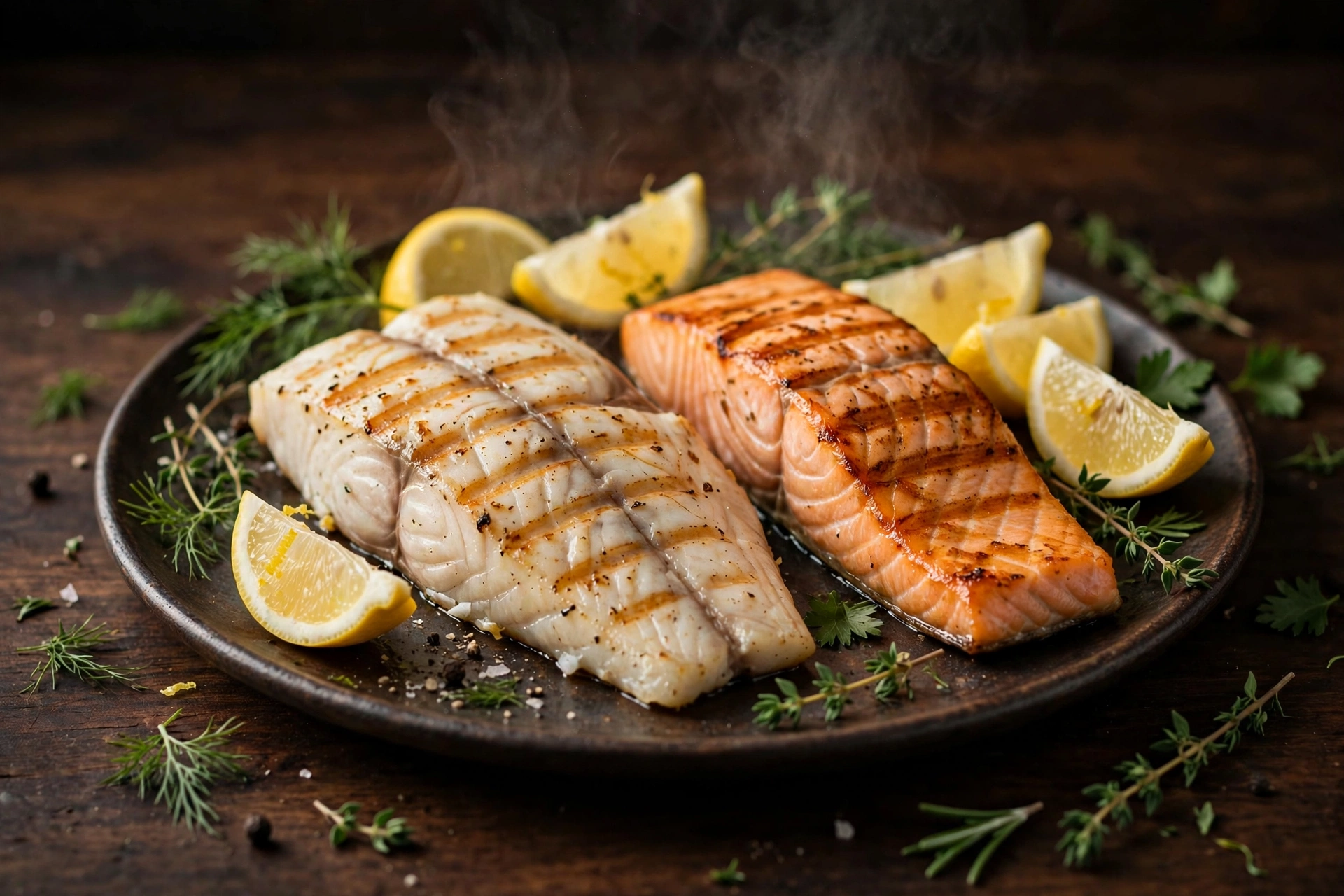
Best Fish for Low-Cholesterol Diets
If you are watching cholesterol, the fish counter is mostly good news. Every fish I could verify sits in a moderate cholesterol range, the lean white fish are genuinely low in saturated fat, and the two surprises, shrimp and sardines, are not the villains their cholesterol numbers suggest. The species you choose matters, but how you cook it matters just as much.
I checked every figure below in USDA FoodData Central, the US government’s food database, entry by entry. No numbers from memory, no rounded guesses from other blogs.
I am Wasim Abbas Bhatti, the Fish’s Chef, with more than twenty years cooking fish and eight years fishing local canals. This guide sits inside Fish Nutrition and Health: The Complete Guide, Mahigar’s nutrition hub. One note before the list, and it matters on this topic most: this is general information, not medical advice. If you are managing cholesterol, your own doctor’s guidance comes first.
Table of Contents
Two Numbers, Not One: Cholesterol and Saturated Fat
A low-cholesterol diet is really a conversation about two different numbers, and fish scores differently on each.
The cholesterol in the fish itself. This is the milligram figure on the chart below. Fish is moderate here: nothing in my table is extreme in either direction, and the lean everyday fish sit at the lower end.
The saturated fat. This is the lever the heart guidance keeps pointing at. The American Heart Association’s simple framing: fish is a good source of protein and, unlike fatty meat products, is not high in saturated fat. The NHS makes the replacement point too: white fish are a low-fat alternative to red or processed meat, which tends to be higher in fat, especially saturated fat. In other words, part of fish’s value on this diet is what it replaces on the plate. That is the honest claim, and it is as far as the sources go; no credible body promises that eating fish lowers your blood cholesterol. The wider evidence picture is in Health Benefits of Eating Fish, Backed by Research.
Watch both numbers together and the list below starts to make sense, including why shrimp, with the table’s highest cholesterol, still shows up in heart-conscious kitchens: its saturated fat is among the very lowest of all ten.
The List: Fish by Cholesterol Content
All figures are USDA FoodData Central values per 100 grams, raw, except the two canned entries, which are labelled canned because that is the form in the database and the form most of us buy. The full entry-by-entry table is kept with this article’s notes. One comfort before the numbers: every fish below is an FDA/EPA Best Choice for mercury, the group the joint advice says can be eaten two to three times a week.
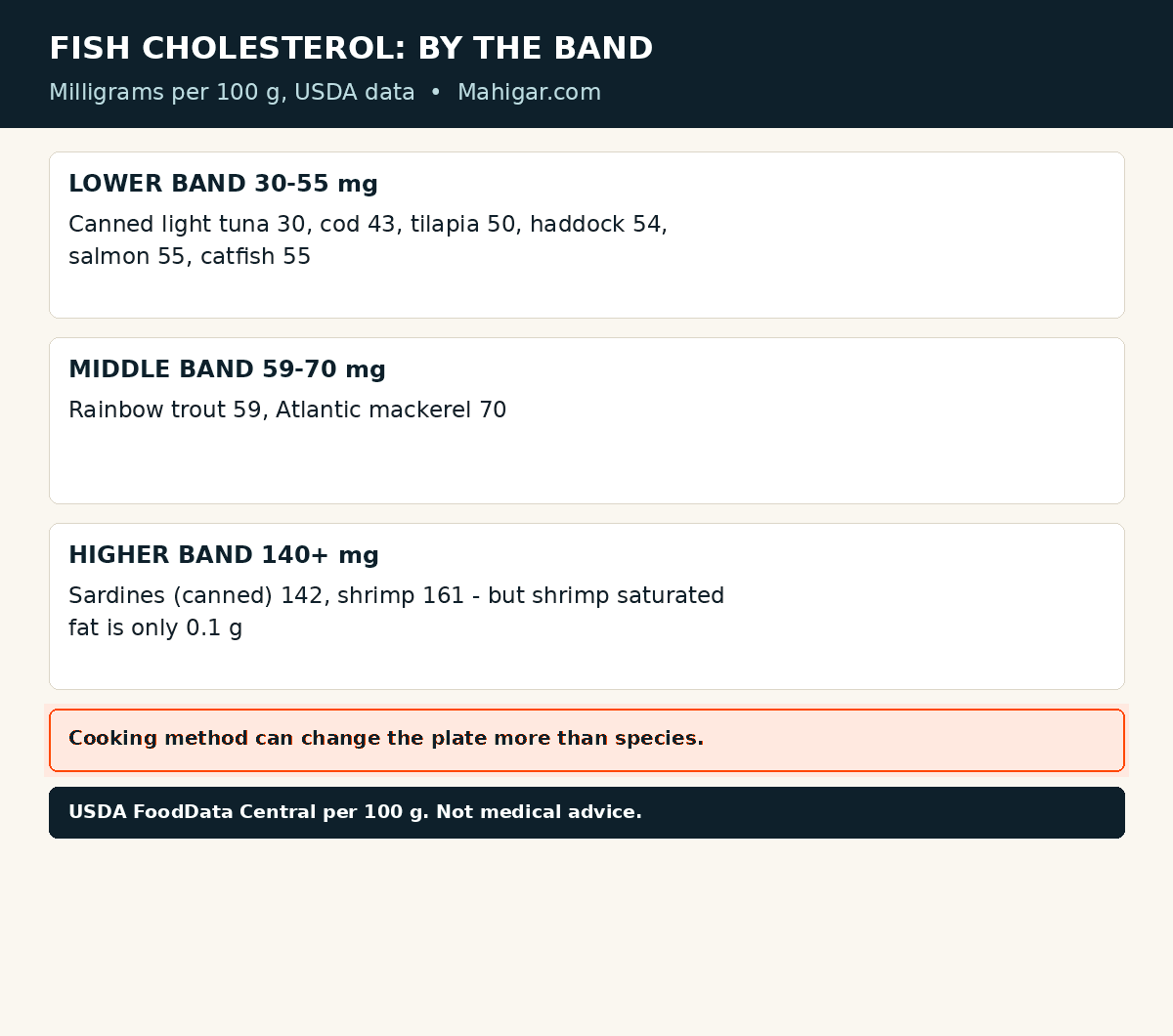
1. Canned light tuna: about 30 mg cholesterol, 0.23 g saturated fat
The lowest cholesterol figure on the chart, with lean saturated fat besides. Drain it well and it is one of the easiest regulars on a careful plate.
2. Atlantic cod: about 43 mg, 0.13 g saturated fat
The classic lean fillet. Very little fat of any kind, gentle flavour, and the fish that proves “low” does not have to mean bland: it means cook it kindly and season it well.
3. Tilapia: about 50 mg, 0.59 g saturated fat
Mild, lean, affordable, and easy to cook without drying. Its saturated fat is the highest of the lean group but still under 0.6 grams: a modest figure by any plate standard.
4. Haddock: about 54 mg, 0.09 g saturated fat
The lowest saturated fat in the whole table. A sweet, fine-flaked white fish that asks for gentle heat and rewards it.
5. Atlantic salmon (farmed): about 55 mg, 3.05 g saturated fat
The honest exception, and the one that needs a sentence of explanation. Salmon’s saturated fat is higher because salmon is an oily fish, and that fat is exactly where its omega-3 EPA and DHA live (about 1.96 grams per 100 grams, from our omega-3 ranking research). The AHA recommends two servings of fish a week, particularly fatty fish, precisely because of fish like this. Moderate cholesterol, real omega-3: salmon earns its place on this list rather than apologising on it.
6. Channel catfish (farmed): about 55 mg, 1.31 g saturated fat
Tied with salmon on cholesterol, with a middle saturated-fat figure. A gentle, forgiving fish for weeknight cooking.
7. Rainbow trout (farmed): about 59 mg, 1.38 g saturated fat
Salmon’s smaller cousin in every sense: moderate cholesterol, moderate saturated fat, and a lighter share of omega-3 than salmon brings.
8. Atlantic mackerel: about 70 mg, 3.26 g saturated fat
The highest cholesterol and saturated fat among the finned fish here, and still moderate. Mackerel is the strongest omega-3 fish on our USDA ranking, so this is a fish to enjoy in its place rather than fear: rich, bold, and a little goes a long way. (Atlantic mackerel, always. King mackerel is a different, mercury-heavy fish and a Choice to Avoid.)
9. Sardines (canned): about 142 mg, 1.53 g saturated fat
Now the surprises. Sardines carry the second-highest cholesterol in the table. They also bring high omega-3, calcium from the soft bones, and a saturated-fat figure no worse than trout’s. The cholesterol number alone would mislead you about this little fish; the whole line is the story.
10. Shrimp: about 161 mg, 0.10 g saturated fat
And the biggest surprise last. Shrimp has the highest cholesterol of the ten, with saturated fat of only about a tenth of a gram, close to the lowest in the table (haddock, at 0.09 g). Both numbers are true at once, which is why this guide prints both. Whether shrimp belongs on your personal plate is a question your own clinician knows best; what I can tell you is that the saturated-fat column, the one heart guidance emphasises, is where shrimp quietly wins.
The Cooking Method Moves the Plate
Species is only half the story. The NHS puts it plainly: fish that is steamed, baked, or grilled is a healthier choice than fried fish, and frying can increase the fat content, especially in batter. Twenty years at the stove agrees. A fillet of cod grilled with lemon and herbs is a light plate; the same cod in thick batter, fried and salted, is a different meal wearing the same fish’s name.
So on this diet, cook the way the lean fish want to be cooked anyway: grill, bake, steam, or pan-sear gently, and keep batter for an occasional treat rather than the default. However you cook it, done still means done: 145°F (63°C) in the thickest part, or opaque and flaking, as the full chart in Safe Internal Cooking Temperatures for Every Type of Fish sets out.
How This Fits an Ordinary Week
The AHA’s rhythm is simple: fish twice a week. For a cholesterol-aware plate, my own kitchen reads that as one lean fish and one oily fish: cod or tuna on one day, salmon or trout on the other, both grilled or baked, both inside the FDA/EPA Best Choices. Add shrimp with a clear conscience about its saturated fat and an honest eye on its cholesterol, and rotate so no single fish carries the whole week. If you are also chasing protein, the per-species chart in Fish Protein Content Compared by Species sits beside this one.
What to Check Next
This guide is one branch of the nutrition hub. For the mercury side of species choice, follow the FDA/EPA category framing used across the hub: Best Choices freely, Good Choices once a week, Choices to Avoid not at all. When the Diet and Lifestyle hub publishes, Heart-Healthy Fish Recipes will be the cooking companion to this page. Until then: choose from the lower bands most days, keep the oily fish in the week, and cook them gently.
And the closing note, one more time: general information, not medical advice. Cholesterol is personal: your clinician, your numbers, your call.
Frequently Asked Questions
Which fish has the least cholesterol?
Of the fish I verified in USDA FoodData Central, canned light tuna is lowest at about 30 milligrams per 100 grams, then Atlantic cod at about 43. The everyday lean fish (tilapia, haddock, salmon, catfish) cluster between about 50 and 55 milligrams.
Is shrimp bad if I am watching my cholesterol?
Shrimp has the highest cholesterol in my table (about 161 milligrams per 100 grams) and saturated fat of only about 0.10 grams, close to the lowest in the table. Both facts are real, and which one matters more for you is a question for your own doctor: this article deliberately does not answer it for you.
Does eating fish lower your cholesterol?
No honest source promises that. The AHA and NHS describe fish as part of a heart-healthy eating pattern: protein that is not high in saturated fat, often replacing fattier meats. That pattern framing is the supported claim; a direct cholesterol-lowering promise is not.
Is fried fish all right on a low-cholesterol diet?
The NHS advises that steamed, baked, or grilled fish is the healthier choice, because frying can increase the fat content, especially in batter. Keep the battered fish as the occasional treat and the grilled fillet as the habit. General information only: not medical advice.
Sources and standards used (framing only, never for numbers): American Heart Association, “Fish and Omega-3 Fatty Acids” (fish as a good source of protein and, unlike fatty meat products, not high in saturated fat; fatty fish as a good source of omega-3, mackerel, salmon, and sardines named; regularly eating fish consistently associated with lower cardiovascular disease risk; 2 servings of fish, particularly fatty fish, per week, a serving being 3 ounces cooked). NHS, “Fish and shellfish” nutrition guidance (at least 2 portions of fish a week, including 1 oily; oily fish high in long-chain omega-3 which can help keep the heart healthy, and a good source of vitamin D; white fish as a low-fat alternative to red or processed meat; steamed, baked, or grilled as a healthier choice than fried, especially battered). Nutrient figures come only from the USDA FoodData Central SR Legacy table in the article notes (ten entries). Mercury handled only through the FDA/EPA categories as established on Mahigar in Article 03 (Best Choices 2 to 3 servings, Good Choices 1 serving, Choices to Avoid none; all ten fish here are Best Choices; no mercury levels stated). Cooking figure (145°F/63°C) follows FoodSafety.gov/FDA guidance as established in Mahigar Article 02. The cooking behaviour, routines, and opinions in this article are Wasim Abbas Bhatti’s own kitchen experience, written in his voice in plain language. This is general information, not medical advice; personal medical guidance comes from your own doctor.
